
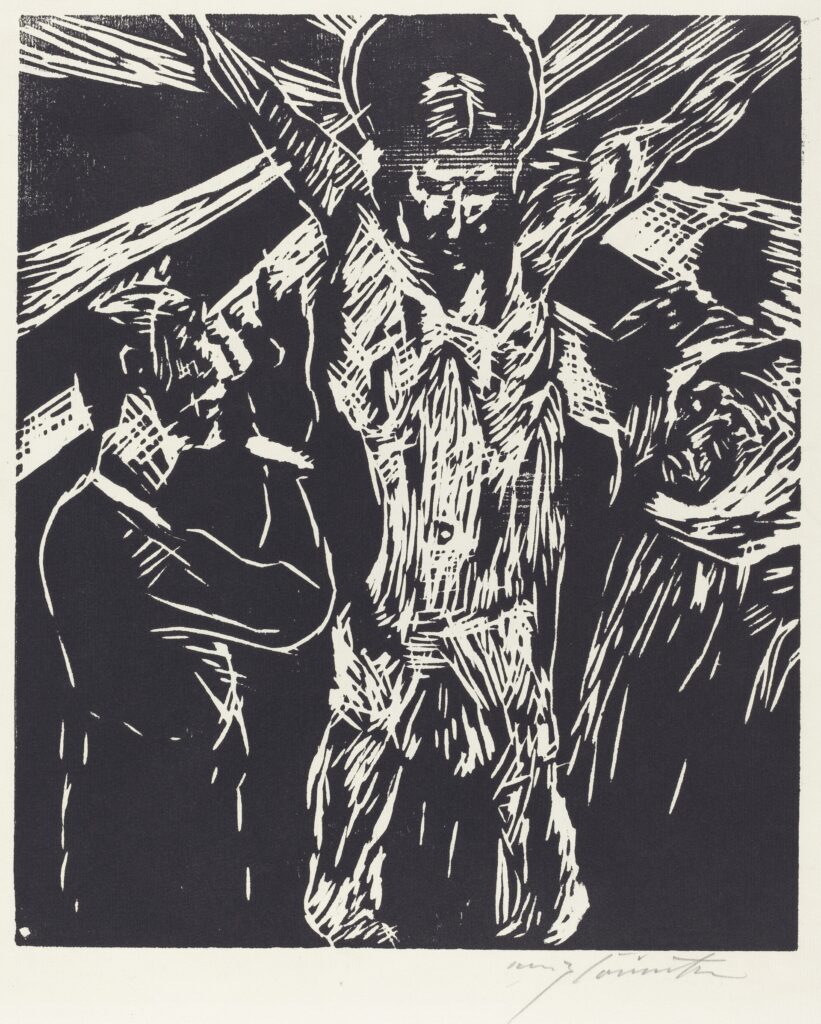
The Question at the Heart of Christianity
If you’ve ever wondered why Christianity centers on a brutal execution, you’re asking the right question.
Why couldn’t God just forgive us?
Why did Jesus have to die such a horrific death?
Why couldn’t there be another way?
These are the questions that separate Christianity from every other religion.
Every other religion says: Do this, and you’ll be acceptable to God.
Christianity says: You can’t. So God did it for you.
The cross isn’t plan B. It’s not a tragic accident. It’s the only way infinite justice and infinite mercy could meet.
Let me show you why Jesus had to die—and why no other solution would work.
The Problem: Sin Separates Us from God
Here’s the fundamental problem every human faces:
We are sinners in the presence of a holy God.
“For all have sinned and fall short of the glory of God.” (Romans 3:23)
What Is Sin?
Sin isn’t just “bad behavior.” Sin is cosmic treason—rebellion against the God who created you.
- When you lie, you reject God’s truth.
- When you lust, you reject God’s purity.
- When you hate, you reject God’s love.
- When you elevate yourself, you reject God’s supremacy.
Sin is saying to God: “I don’t want You. I want to be my own god.”
And the result? Separation.
“But your iniquities have made a separation between you and your God, and your sins have hidden his face from you.” (Isaiah 59:2)
The Requirement: Justice Demands Payment
Here’s where most people stumble:
Why can’t God just forgive us without Jesus dying?
Answer: Because God is not only loving—He is also just.
God’s Justice Cannot Be Ignored
“The soul who sins shall die.” (Ezekiel 18:20)
“For the wages of sin is death.” (Romans 6:23)
God is infinitely holy. He cannot tolerate sin. He cannot look the other way. His justice demands payment.
Think of it this way:
Imagine a judge in a courtroom. A man has committed murder. He stands before the judge, guilty.
The judge has two options:
- Enforce justice (sentence him to life in prison)
- Show mercy (let him go free)
Question: If the judge just lets the murderer walk free, is that justice?
No. It’s a corrupt judge.
A good judge must uphold the law. If he doesn’t, he’s not merciful—he’s unjust.
Now apply this to God:
- God is the perfectly just Judge.
- We are guilty of cosmic treason (sin).
- God’s justice demands payment.
If God just “let us off the hook,” He would be an unjust God—and the universe would collapse into moral chaos.
The Solution: Substitutionary Atonement
So we have a dilemma:
- God’s justice demands payment for sin (death).
- God’s mercy desires to save sinners.
How can both be satisfied?
Answer: Someone has to pay the penalty in our place. That’s substitutionary atonement.
Substitutionary atonement = Jesus taking our place, bearing the punishment we deserve, so we can receive the righteousness we don’t deserve. He substitutes Himself for us.
“For our sake he made him to be sin who knew no sin, so that in him we might become the righteousness of God.” (2 Corinthians 5:21)
Jesus takes our place.
- We deserve death → Jesus dies instead.
- We deserve punishment → Jesus absorbs God’s wrath instead.
- We deserve separation from God → Jesus cries, “My God, my God, why have you forsaken me?” (Matthew 27:46)
The cross is the moment where God’s justice and God’s mercy meet.
- Justice is satisfied (sin is punished—on Jesus).
- Mercy is extended (we go free because Jesus paid the price).
Anselm of Canterbury (11th century) explained: “The price paid for the sin of man was so great that only God could pay it, yet man owed the debt—therefore God became man to pay what man owed but could not pay.”
Charles Spurgeon preached: “God will not, cannot, must not forgive sin without an atonement. If He did, the universe would be thrown into chaos, for if God can forgive sin without justice, then there is no certainty left in all the world.”
Why Jesus Had to Be Human
Question: Why couldn’t God just forgive us from heaven? Why did Jesus have to become human?
Answer: Because the penalty for sin is human death.
“For since death came through a man, the resurrection of the dead comes also through a man.” (1 Corinthians 15:21)
Humans sinned. Therefore, a human must pay the penalty.
If God had just declared, “I forgive you” from heaven without sending Jesus, justice would not be satisfied. The debt would still be unpaid.
Jesus had to become fully human to stand in our place as our representative.
“Since therefore the children share in flesh and blood, he himself likewise partook of the same things, that through death he might destroy the one who has the power of death, that is, the devil.” (Hebrews 2:14)
Jesus became what we are (human) so we could become what He is (righteous before God).
Why Jesus Had to Be Sinless
Question: Why couldn’t any human die in our place? Why did it have to be Jesus?
Answer: Because every other human is already guilty of their own sin.
If I’m guilty, I can’t pay for your guilt. I already owe a debt I can’t pay.
Jesus is the only human who ever lived a perfectly sinless life.
“For we do not have a high priest who is unable to sympathize with our weaknesses, but one who in every respect has been tempted as we are, yet without sin.” (Hebrews 4:15)
Jesus lived the life we should have lived.
- He perfectly obeyed God’s law (we didn’t).
- He never sinned in thought, word, or deed (we do constantly).
- He loved God with all His heart, soul, mind, and strength (we don’t).
Because Jesus is sinless, He has no debt of His own. Therefore, His death can count for someone else—for us.
Why Jesus Had to Be God
Question: If Jesus is just a good man who died in our place, why does He have to be God?
Answer: Because the offense is infinite, and only an infinite being can satisfy infinite justice.
The Logic of Infinite Offense
Premise 1: The severity of a crime is determined by the worth of the one offended.
- Insult your neighbor → small fine.
- Insult a police officer → bigger fine.
- Insult a judge → contempt of court, jail time.
- Insult a king → treason, execution.
Premise 2: God is infinitely valuable, infinitely holy, infinitely worthy.
Conclusion: Therefore, sin against God is infinitely offensive and requires infinite payment.
Problem: No finite human can pay an infinite debt.
Solution: Only an infinite being (God) can pay the infinite debt.
That’s why Jesus had to be fully God and fully man.
“In the beginning was the Word, and the Word was with God, and the Word was God… And the Word became flesh and dwelt among us.” (John 1:1, 14)
Jesus is God in the flesh. His death has infinite value because He is infinite.
Why Jesus Had to Rise from the Dead
The death of Jesus pays for our sin. But the resurrection proves the payment was accepted.
“[Jesus] was delivered up for our trespasses and raised for our justification.” (Romans 4:25)
If Jesus stayed dead:
- It would mean death defeated Him.
- It would mean His sacrifice wasn’t enough.
- It would mean we have no hope beyond the grave.
But Jesus rose from the dead on the third day.
- Death could not hold Him because He conquered sin.
- The Father accepted His sacrifice by raising Him to life.
- We have hope because He promises we will also rise.
“For as in Adam all die, so also in Christ shall all be made alive.” (1 Corinthians 15:22)
The resurrection is God’s receipt: “Payment accepted. Death defeated. Sinners justified.”
Why No Other Religion Can Save You
Every other religion offers a works-based system:
- Islam: Do enough good deeds, and maybe Allah will accept you.
- Hinduism/Buddhism: Achieve enlightenment through many lifetimes.
- Mormonism: Obey all the commandments, and earn your way to godhood.
- Judaism (without Christ): Keep the Law perfectly.
Problem: None of us can keep the Law perfectly. None of us can earn our way to God.
“For by works of the law no human being will be justified in his sight.” (Romans 3:20)
Christianity is the only religion where God does the saving—not us.
- Every other religion: Human effort + good works = salvation (maybe).
- Christianity: Jesus’ work + nothing = salvation (guaranteed).
That’s why Jesus had to die. Because we couldn’t save ourselves.
The Greatest Exchange in History
Here’s what happened at the cross:
Jesus took what we deserve (death, wrath, separation) so we could receive what He deserves (life, love, acceptance).
“For you know the grace of our Lord Jesus Christ, that though he was rich, yet for your sake he became poor, so that you by his poverty might become rich.” (2 Corinthians 8:9)
The Great Exchange:
- Our sin → Placed on Jesus
- His righteousness → Credited to us
- Our guilt → Punished in Him
- His innocence → Imputed to us
- Our death → He died
- His life → We live
This is called “double imputation.”
Imputation = legally crediting or charging someone’s account. In the gospel, our sin is credited to Jesus (He bears our guilt), and His righteousness is credited to us (we receive His perfect record).
- Our sin is imputed to Christ (He bears our guilt).
- Christ’s righteousness is imputed to us (we are declared righteous).
At the cross, God treated Jesus as if He lived our life—so He could treat us as if we lived Jesus’ life.
What This Means for You
If Jesus died in your place, here’s what changes:
1. You Are Forgiven (Not Because You’re Good, But Because Jesus Paid)
“In him we have redemption through his blood, the forgiveness of our trespasses, according to the riches of his grace.” (Ephesians 1:7)
You don’t have to earn forgiveness. It’s already purchased.
2. You Are Declared Righteous (Not Guilty)
“There is therefore now no condemnation for those who are in Christ Jesus.” (Romans 8:1)
When God looks at you, He doesn’t see your sin. He sees Jesus’ righteousness.
3. You Are Reconciled to God (Not Separated)
“For if while we were enemies we were reconciled to God by the death of his Son, much more, now that we are reconciled, shall we be saved by his life.” (Romans 5:10)
You are no longer God’s enemy. You are His child.
4. You Are Adopted into God’s Family
“But to all who did receive him, who believed in his name, he gave the right to become children of God.” (John 1:12)
You don’t just get forgiveness. You get a Father.
5. You Have Eternal Life (Not Death)
“For God so loved the world, that he gave his only Son, that whoever believes in him should not perish but have eternal life.” (John 3:16)
Jesus didn’t just save you from hell. He saved you for eternal life with God.
How Do You Receive This?
Not by works. Not by effort. By faith alone.
“For by grace you have been saved through faith. And this is not your own doing; it is the gift of God, not a result of works, so that no one may boast.” (Ephesians 2:8-9)
Faith = trusting that Jesus’ death is sufficient to save you.
It’s not:
- Faith + good works
- Faith + baptism
- Faith + church attendance
- Faith + trying really hard
It’s faith alone in Christ alone.
If you’ve never trusted Christ, here’s how:
- Acknowledge you’re a sinner (Romans 3:23).
- Believe Jesus died for your sins and rose again (1 Corinthians 15:3-4).
- Receive Him as your Lord and Savior (John 1:12).
That’s it. Not complicated. Not a 12-step program. Believe and receive.
Why the Cross Changes Everything
Once you understand why Jesus had to die, everything else makes sense:
- Why the gospel is good news (because we couldn’t save ourselves).
- Why grace is amazing (because we don’t deserve it).
- Why Christians worship Jesus (because He’s not just a teacher—He’s our Savior).
- Why we don’t boast in ourselves (because we contributed nothing to our salvation).
- Why we live differently (because we’re responding to His sacrifice, not earning His favor).
The cross is the centerpiece of Christianity. Remove it, and the whole thing collapses.
But embrace it—and you discover the most beautiful truth in the universe:
God loved you so much that He would rather die than live without you.
Final Thought
Why did Jesus have to die?
Because justice demanded payment for sin. Because mercy desired to save sinners. Because love compelled God to become human and absorb the wrath we deserved.
The cross is where savage justice and infinite mercy collide.
And when you stand before that cross, you have two options:
- Reject it (and face justice on your own—which you cannot survive).
- Receive it (and let Jesus’ death count for you).
Which will you choose?