
John 2 Commentary: Water, Wine, and the Wrath of Holy Love
Introduction: Two Revelations
John 1 ended with a promise. Jesus looked at Nathanael and said, “You will see greater things than these… you shall see heaven opened, and the angels of God ascending and descending upon the Son of Man” (1:50–51). John 2 begins to deliver on that promise — but not the way anyone expected.
There are no angels in John 2. No heavens splitting open. No cosmic fireworks. Instead, there is a wedding running out of wine and a temple overrun with livestock. And in these two utterly human situations, Jesus reveals more about the nature of God than most people can absorb in a lifetime.
The chapter divides into two movements that form a deliberate contrast:
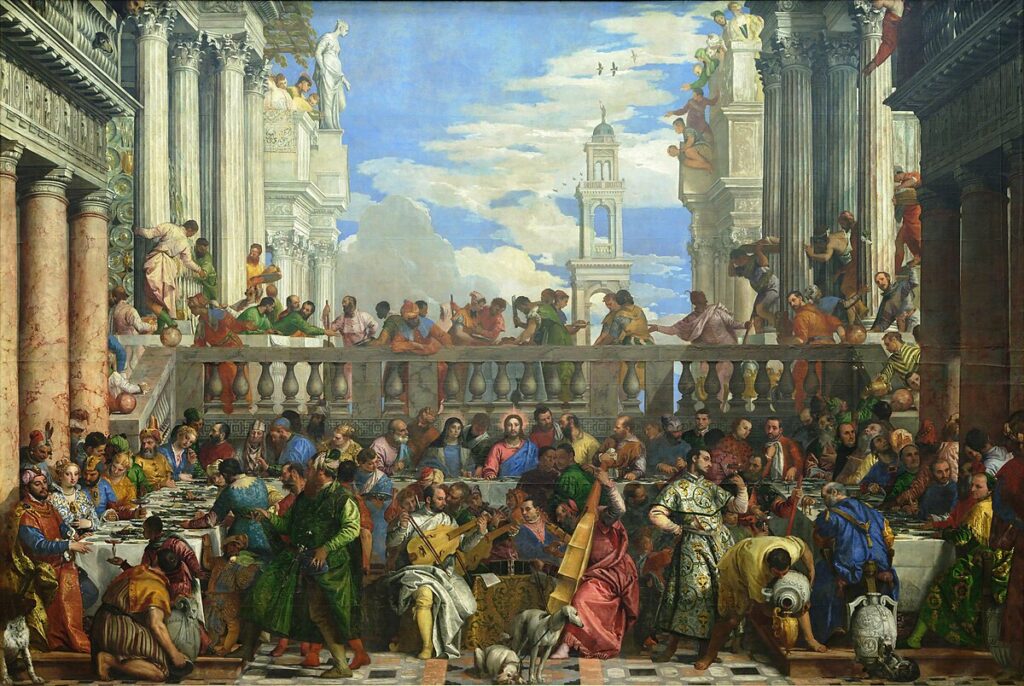
- The Wedding at Cana (2:1–11) — Jesus creates. He transforms water into wine, quietly, privately, revealing His glory to a handful of disciples. It is an act of abundance, generosity, and joy.
- The Temple Cleansing (2:12–25) — Jesus destroys. He fashions a whip, overturns tables, scatters money, and drives out livestock. It is an act of holy wrath, prophetic authority, and devastating judgment.
Both scenes answer the same question: Who is this man? The wedding reveals Him as the Creator who brings superabundant life. The temple reveals Him as the Lord who will not tolerate the corruption of His Father’s house. Together they give us a portrait of Jesus that is neither the sentimental friend of popular Christianity nor the angry judge of caricature — but something far more dangerous and far more beautiful: the Holy One of Israel, walking among His people, burning with love and burning with wrath, and the two are the same fire.
John structures this chapter with the precision of a master architect. The first sign at Cana bookends with a chronological marker — “On the third day” (2:1) — and closes with an editorial comment about glory and belief (2:11). The temple scene opens with another temporal marker — “Now the Passover of the Jews was at hand” (2:13) — and closes with Jesus’ omniscient knowledge of what is in man (2:25). Between these two panels, John weaves themes that will echo through the remaining nineteen chapters: signs, faith, the temple, the body, the hour, glory, and the devastating difference between those who truly believe and those who merely watch.
Every verse. Every word that matters. Let’s begin where John begins — at a wedding that almost ended in disaster.
The First Sign: Water Into Wine (2:1–11)
Verses 1–2: The Wedding at Cana
“On the third day there was a wedding in Cana of Galilee, and the mother of Jesus was there. Now both Jesus and His disciples were invited to the wedding.” — John 2:1–2 (NKJV)
“On the third day” (“tēGreek“τῇ“tē“dative“on) — third day from what? From the events of chapter 1. John has been counting days carefully: day one (1:19–28), day two (1:29–34), day three (1:35–42), day four (1:43–51), and now “the third day” after that sequence. This yields approximately one week from the Baptist’s first testimony to the wedding — a creation week, echoing Genesis. Strack and Billerbeck draw attention to the rabbinic regulations surrounding wedding festivities, noting that the Tosefta Baba Mesi’a 8.28 records borrowing garments “in order to go into the wedding house again… for at least seven days,” confirming the extended multi-day celebration presumed in this narrative (Commentary on the New Testament from the Talmud and Midrash, p.278). John opened his Gospel with “In the beginning” (1:1), and now his narrative reaches a seventh day. The first creation week ended with God resting after declaring everything “very good.” This new creation week ends with a wedding feast and the first revelation of the Son’s glory. The parallel is deliberate.
But “the third day” carries another resonance that the reader cannot yet grasp. It will become the most important temporal marker in all of Scripture — the day of resurrection (cf. 2:19). John plants seeds early.
Cana of Galilee was a small village in the hill country, probably modern Khirbet Qana, about nine miles north of Nazareth. It was Nathanael’s hometown (21:2). MacArthur notes that “the fact that Jesus, His mother, and His disciples all attended the wedding suggests that the wedding may have been for a relative or close family friend. The disciples that accompanied Him are the 5 mentioned in chap. 1: Andrew, Simon Peter, Philip, Nathanael, and the unnamed disciple (1:35) who was surely John, who also witnessed this miracle” (The MacArthur Study Bible, NKJV, p.3). This was not a celebrity appearance. Jesus attended a local wedding in a rural village because He was part of a community.
“The mother of Jesus was there.” John never names Mary. Throughout his Gospel, she appears as “the mother of Jesus” (2:1, 3) or “His mother” (2:5, 12; 19:25–26). This is not disrespect but theological framing — her significance lies not in her personal identity but in her relationship to the Son. She was already present at the wedding when Jesus arrived with His newly called disciples, suggesting she may have had a role in the celebration, possibly helping with arrangements.
“Both Jesus and His disciples were invited.” The Greek “eklēthē”Greek“ἐκλήθη”“eklēthē”“verb,“was is the same root as ekklēsia — “the called ones,” the church. Jesus was called to a wedding. He accepted. He attended. He participated. The incarnate God did not withdraw from ordinary human celebration. He showed up at parties. He ate and drank with people. His enemies later used this against Him — “Look, a glutton and a winebibber, a friend of tax collectors and sinners!” (Matthew 11:19). They meant it as an insult. It was actually a summary of the gospel: God comes to where the people are.
Jesus begins His ministry not in the temple or the synagogue but at a wedding — a celebration of human joy, community, and covenant. His presence sanctifies the ordinary. The Son of God, who existed before creation, attends a village party in rural Galilee because He is genuinely, fully, irreversibly human.
Verses 3–5: The Crisis and the Mother’s Faith
“And when they ran out of wine, the mother of Jesus said to Him, ‘They have no wine.’ Jesus said to her, ‘Woman, what does your concern have to do with Me? My hour has not yet come.’ His mother said to the servants, ‘Whatever He says to you, do it.’” — John 2:3–5 (NKJV)
“When they ran out of wine” — this was not a minor inconvenience. In first-century Jewish culture, a wedding feast could last up to seven days. The host family was responsible for providing food and wine for all guests throughout the celebration. Running out of wine was a catastrophic social failure — a humiliation that would follow the family for years. Some scholars suggest the host could even face a lawsuit for breach of hospitality obligations. The stakes were higher than modern readers typically realize.
MacArthur observes that “a wedding was a major social event in first-century Palestine, and the ensuing celebration could last as long as a week. It marked the culmination of the betrothal period, which often lasted for several months” (Daily Readings from the Life of Christ, vol. 1, p.280). Why did the wine run out? Possibly because Jesus brought additional guests — His newly called disciples — who were not in the original count. If so, there is a beautiful irony: the presence of Jesus created the crisis that only Jesus could solve. This pattern recurs throughout the Christian life. God often brings us to the end of our resources precisely so that we will discover the sufficiency of His.
“The mother of Jesus said to Him, ‘They have no wine.’” Mary does not make a request. She does not tell Jesus what to do. She simply presents the need: They have no wine. This is the model of intercessory prayer — bringing the needs of others before the One who has the power to meet them, without dictating the method or the timing. Mary knew her Son. She had pondered things in her heart for thirty years (Luke 2:19, 51). She knew He was more than a carpenter’s son. And so she brought the problem to Him and left it there.
“Woman, what does your concern have to do with Me?” — The English makes this sound harsh. The Greek is less so, but still surprising. Kittel’s Theological Dictionary of the New Testament observes that while “the Synoptists mention Jesus’ own mother only in the infancy stories apart from Mt. 12:46ff. and parallels,” John uniquely structures Mary’s appearances at two critical junctures — Cana and the cross — bracketing the entire public ministry with the address gynai (TDNT, p.338). The address “gynai”Greek“γύναι”“gynai”“noun,“woman, was a term of respectful address in the ancient world — equivalent to “Madam” or “Ma’am.” Jesus uses it again when He speaks to Mary from the cross (19:26). It was not rude, but it was distancing. Jesus was gently establishing that His ministry decisions were not governed by family ties but by the Father’s will.
The phrase “what does your concern have to do with Me?” (Greek: “tiGreek“τί“ti“Hebrew“what) is a Semitic idiom meaning “what is there between us?” or “what business is this of ours?” It appears in the Old Testament (Judges 11:12; 2 Samuel 16:10; 1 Kings 17:18) and always signals a boundary — a gentle refusal to be directed by someone else’s agenda. Jesus was saying: I love you, but I do not take My orders from you. I take them from My Father.
“My hour has not yet come.” This is the first appearance of one of the most theologically loaded phrases in John’s Gospel. “hēGreek“ἡ“hē“noun“my appears repeatedly, always pointing toward the cross and glorification (7:30; 8:20; 12:23, 27; 13:1; 17:1). The “hour” is the appointed time in the Father’s sovereign plan for Jesus’ death, resurrection, and exaltation. Jesus lived His entire earthly life according to a divine timetable. Beeke writes that Jesus “knew that His mission was eternally ordained and that a time had been set for all of His works (4:21, 23; 5:25; 7:6, 8), especially His death (7:30; 8:20; 12:23, 27; 13:1; 16:32; 17:1)” (Reformation Heritage KJV Study Bible, p.3282). He could not be rushed, delayed, or redirected. Every miracle, every teaching, every journey was calibrated to the Father’s predetermined schedule.
Yet — and this is crucial — Jesus does perform the miracle. His statement was not a refusal but a clarification of authority. He would act, but on the Father’s terms, not Mary’s. The miracle at Cana was not a response to maternal pressure but an expression of divine purpose.
“Whatever He says to you, do it.” These are Mary’s last recorded words in Scripture, and they are the finest words she ever spoke. Beeke’s comment is characteristically concise: “Mary’s advice is good for us all” (Reformation Heritage KJV Study Bible, p.3282). They are the perfect summary of discipleship. Not “do what seems reasonable.” Not “do what makes you comfortable.” But whatever He says to you, do it. Immediate. Complete. Unquestioning. Mary trusted that Jesus would act — in His way, in His time — and she prepared others to obey when He did.
Verses 6–8: Obedience Before Understanding
“Now there were set there six waterpots of stone, according to the manner of purification of the Jews, containing twenty or thirty gallons apiece. Jesus said to them, ‘Fill the waterpots with water.’ And they filled them up to the brim. And He said to them, ‘Draw some out now, and take it to the master of the feast.’ And they took it.” — John 2:6–8 (NKJV)
“Six waterpots of stone” — John provides precise detail that an eyewitness would notice: the number (six), the material (stone), the purpose (Jewish purification), and the capacity (twenty to thirty gallons each). Beeke notes simply that “stone pots were used for Mosaic ceremonial cleansing” (Reformation Heritage KJV Study Bible, p.3282) — unlike clay pots, stone was considered ritually clean and could not contract impurity under Jewish law.1 These were not drinking vessels but purification containers — used for the ritual hand-washing that the Pharisees meticulously observed (Mark 7:3–4).
The early church father Epiphanius of Salamis perceived in this scene a dual symbolic purpose: “Jesus performed a first miracle there in Cana of Galilee, by turning the water into wine… to honor virginity by his conception and the ray of light that dawned through” his coming — and equally “to stop the mouths of those who speak against the truth” by attending a wedding, thereby blessing marriage itself (The Panarion, III, p.341). The number six is significant. In Jewish numerology, six represents incompleteness — one short of the perfect seven. Six stone jars of ceremonial water symbolize the old covenant’s purification system: real, God-given, but incomplete. What Jesus is about to do with these jars is a parable in action — the old, incomplete system of ritual purification will be transformed into the new, superabundant reality of grace.
“Containing twenty or thirty gallons apiece” — at six jars, this is 120 to 180 gallons total. That is an astonishing quantity of wine — far more than any wedding could consume. The abundance is the point. When God gives, He gives extravagantly. He does not measure out blessing with a dropper. He floods. Ephesians 3:20 — “exceedingly abundantly above all that we ask or think” — is the theological principle; Cana is its first physical demonstration in John’s Gospel.
“Fill the waterpots with water.” The command must have seemed absurd. The crisis was wine, not water. The servants needed to solve a catering shortage, and Jesus told them to fill ritual purification jars with more water. This is the pattern of divine instruction throughout Scripture: it often makes no sense on the surface. March around a city seven times. Dip in a muddy river seven times. Throw a stick into bitter water. Smear mud on blind eyes. The logic of God’s commands is hidden from us until after we obey.
“And they filled them up to the brim.” The servants obeyed completely — not halfway, not approximately, but to the brim (Greek: “heōsGreek“ἕως“heōs“adverbial“up). This detail matters. Full obedience precedes full blessing. Partial obedience would have meant less wine. These anonymous servants, who never spoke a recorded word, demonstrated the kind of discipleship that Mary had just commanded: whatever He says, do it. Completely.
“Draw some out now, and take it to the master of the feast.” Another step of faith. Jesus did not say, “Good news — I turned it into wine.” He simply told them to draw from the jars and serve it. They had to act on His word before they could see the result. They had to carry water to the most important person at the wedding and present it as wine, trusting that somewhere between the jar and the cup, the impossible had happened.
When did the water become wine? John does not say. There is no thunderclap, no flash of light, no visible moment of transformation. The miracle happened in the hidden space between obedience and delivery. This is how God often works — not in the dramatic public spectacle but in the quiet intersection of human obedience and divine power.
The servants filled purification jars with water when wine was needed, then served it to the master of the feast without knowing it had changed. The miracle happened between obedience and delivery — in the hidden space where human faithfulness meets divine power. Full obedience preceded full blessing: they filled the jars to the brim.
Verses 9–10: The Master’s Verdict
“When the master of the feast had tasted the water that was made wine, and did not know where it came from (but the servants who had drawn the water knew), the master of the feast called the bridegroom. And he said to him, ‘Every man at the beginning sets out the good wine, and when the guests have well drunk, then the inferior. You have kept the good wine until now!’” — John 2:9–10 (NKJV)
“The master of the feast” (“architriklinos”Greek“ἀρχιτρίκλινος”“architriklinos”“noun,“master) was the person responsible for overseeing the celebration — managing the food, the wine, the entertainment, and the proper ordering of events. He was essentially the wedding coordinator. His palate was trustworthy; his judgment carried authority.
“And did not know where it came from (but the servants who had drawn the water knew).” John inserts a parenthetical that is theologically loaded. The one with authority and position — the architriklinos — is ignorant. The ones with no status — unnamed servants — possess the knowledge. This is the gospel in miniature. The wise and powerful are often blind to what God is doing, while the humble and obedient see everything. “God has chosen the foolish things of the world to put to shame the wise, and God has chosen the weak things of the world to put to shame the things which are mighty” (1 Corinthians 1:27).
“Every man at the beginning sets out the good wine, and when the guests have well drunk, then the inferior.” The master states common practice: serve the best wine first, when palates are fresh, and bring out the cheaper wine later when guests are less discriminating. The Greek “methysthōsin”Greek“μεθυσθῶσιν”“methysthōsin”“verb,“have is frank — after the guests have drunk freely, their taste buds are dulled, and lesser wine suffices.
“You have kept the good wine until now!” The master’s verdict is the climax of the narrative. The wine Jesus made was not merely adequate — it was superior. Beeke observes that “the taste of the wine was noticeably better than that served earlier, which was against custom, drawing attention to its high quality” (Reformation Heritage KJV Study Bible, p.3282). Better than anything the host had served. Better than the original. This is God’s pattern: He saves the best for last. The old covenant was good — genuinely given by God, genuinely revelatory. But the new covenant is better. The law was given through Moses; grace and truth came through Jesus Christ (1:17). The ceremonial water of purification becomes the wine of messianic celebration.
The prophets had foretold this. MacArthur draws the connection explicitly: “Since the prophets characterized the messianic age as a time when wine would flow liberally (Jer. 31:12; Hos. 14:7; Amos 9:13, 14), Jesus was likely referring to the fact that the necessity of the cross must come before the blessings of the millennial age” (The MacArthur Study Bible, NKJV, p.7174). Amos described the messianic age as a time when “the mountains shall drip with sweet wine, and all the hills shall flow with it” (Amos 9:13). Isaiah envisioned a great feast with “well-refined wines on the lees” (Isaiah 25:6). Joel promised, “The mountains shall drip with new wine, the hills shall flow with milk” (Joel 3:18). Superabundant wine was a symbol of the messianic kingdom. At Cana, that kingdom broke into history in a small village in Galilee, and only the servants noticed.
Verse 11: The Sign
“This beginning of signs Jesus did in Cana of Galilee, and manifested His glory; and His disciples believed in Him.” — John 2:11 (NKJV)
“This beginning of signs” (“archēnGreek“ἀρχὴν“archēn“noun“beginning) — John calls this the first sign, emphatically placing it at the head of the series. The word “sēmeion”Greek“σημεῖον”“sēmeion”“noun,“sign, is crucial for understanding John’s entire Gospel. The Holman Illustrated Bible Dictionary notes that “John was particularly fond of using ‘sign’ to denote miraculous activity (2:11,18,23; 3:2; 4:54; 6:2,14,26; 7:31; 9:16; 10:41; 11:47; 12:18; 20:30)” and that “John’s use of ‘sign’ for miracle puts the focus on what the miracle signifies rather than upon the supernatural act itself. That significance is the identity of Jesus and the work of God through Him” (Holman Illustrated Bible Dictionary, p.1520). Walvoord and Zuck explain that “John used the word ‘signs’ (sēmeion) because he was seeking to draw attention away from the miracles as such and to point up their significance. A miracle is also a ‘wonder’ (teras), a ‘power’ (dynamis), and a ‘strange event’ (paradoxos)” (Bible Knowledge Commentary, p.232). Spicq traces the word’s semantic range further: a sēmeion “is noetic; developed from sēma, it is very close to ‘signal,’ ‘writing,’ and ‘message’; literary and papyrological texts often treat ‘sign’ as the equivalent of ‘proof’” (Theological Lexicon of the New Testament, vol. 3, p.590). John never uses the word “miracle” (dynamis, “work of power”) that the Synoptic Gospels prefer. He uses sēmeion — a sign. A miracle is about power. A sign is about meaning. Kittel’s Theological Dictionary of the New Testament underscores this distinction: “In John, as distinct from the Synoptics, Acts, or the surrounding world, the term is a key one in theological interpretation,” and the erga (works) “are semeia as God’s own erga” — Jesus “does them only when his hour comes (2:4), but he knows this hour (13:1)” (TDNT, p.590). Every sign in John points beyond itself to a deeper truth about who Jesus is. The water-to-wine miracle is not primarily about solving a catering crisis. It is a sign that the Messiah has arrived, the old order is giving way to the new, and the bridegroom of Israel has come to His wedding.
“And manifested His glory.” The verb “ephanerōsen”Greek“ἐφανέρωσεν”“ephanerōsen”“verb,“manifested, means to make visible what was previously hidden. Jensen identifies Cana as “a key, initial event of Christ’s epiphany,” noting that “most early Christian writers saw this story as having eucharistic, rather than baptismal, symbolism” — Irenaeus claimed Mary desired to “drink from the emblematic cup,” while Cyprian interpreted the water as “representing God’s people and the wine the blood of Christ” (Baptismal Imagery in Early Christianity, p.221). Jesus’ divine glory — the doxa that John identified in the prologue as “the glory as of the only begotten of the Father” (1:14) — was veiled in human flesh. At Cana, the veil slipped. For a moment, through the transformation of water into wine, the Creator’s power shone through the carpenter’s hands. The disciples saw it. Nobody else did.
“And His disciples believed in Him.” This is the intended response to a sign — faith. Not mere astonishment, not entertainment, not thrill-seeking, but genuine belief in the person the sign reveals. The disciples’ faith was not created by the miracle but deepened by it. They had already followed Jesus based on John the Baptist’s testimony and Jesus’ personal call. Now they saw His glory, and their faith took root at a deeper level. This is how signs are supposed to function — not as substitutes for faith but as confirmations of it.
John calls Cana the “beginning of signs” — miracles that point beyond themselves to reveal who Jesus is. This sign manifested His glory: the Creator’s power visible through the carpenter’s hands. The proper response is not astonishment but faith — believing in the person the sign reveals. The disciples saw, and they believed.
The Temple Cleansed: Zeal for My Father’s House (2:12–25)
Verse 12: The Brief Interlude
“After this He went down to Capernaum, He, His mother, His brothers, and His disciples; and they did not stay there many days.” — John 2:12 (NKJV)
The transitional phrase “after this” (Greek: “metaGreek“μετὰ“meta“prepositional“after) connects the present narrative to the wedding miracle at Cana, marking a shift in both geography and purpose. The verb “went down” (“katebē”Greek“κατέβη”“katebē”“verb,“went) is geographically precise — Capernaum sits approximately 680 feet below sea level on the northwestern shore of the Sea of Galilee, while Cana was situated in the hill country. John’s attention to topographical detail reflects eyewitness accuracy.
Capernaum would become Jesus’ ministry headquarters, “His own city” (Matthew 9:1), strategically positioned on major trade routes. Archaeological excavations have confirmed its first-century significance, including the discovery of a large synagogue and what appears to be Peter’s house.
The composition of Jesus’ traveling party is noteworthy: Jesus Himself, His mother Mary, His brothers, and His disciples. The reference to “His brothers” (Greek: “adelphoi”Greek“ἀδελφοί”“adelphoi”“noun,“brothers”) indicates Mary’s other children, born after Jesus in the normal course of her marriage to Joseph. The most natural reading of the Greek term, coupled with references to Jesus as Mary’s “firstborn” (Luke 2:7) and the later note that His brothers did not believe in Him (John 7:5), strongly supports this interpretation. Calvin noted that “the perpetual virginity of Mary is neither found in Scripture nor necessary for maintaining the singular dignity of Christ’s miraculous conception.”2
The brief stay — “they did not stay there many days” — indicates this was not yet the time for establishing a permanent base. The Passover was approaching, and Jesus’ face was set toward Jerusalem.
Verses 13–14: The Passover Market
“Now the Passover of the Jews was at hand, and Jesus went up to Jerusalem. And He found in the temple those who sold oxen and sheep and doves, and the money changers doing business.” — John 2:13–14 (NKJV)
“The Passover of the Jews” — John’s characteristic distancing language, reflecting the post-resurrection perspective from which he writes. By the time of John’s composition (likely AD 85–95), Christianity had largely separated from Judaism, and John writes as one explaining Jewish customs to a predominantly Gentile audience. This is the first of three Passovers in John’s Gospel (see also 6:4 and 11:55), providing the chronological framework for Jesus’ approximately three-year public ministry.
The Passover commemorated Israel’s deliverance from Egyptian bondage (Exodus 12), when the angel of death “passed over” homes marked with lamb’s blood. The Anchor Bible Dictionary notes that the peaceful conditions of the pax Romana “strengthened the ties between Judea and the Diaspora” and that “pilgrimages to the Holy” city became increasingly frequent under Herod’s expansive building programs, which were funded by diverse sources of revenue (ABD, p.3531). Josephus records that during Passover the population of Jerusalem could swell from approximately 40,000 to 180,000–200,000 pilgrims.3 The city became a pressure cooker of religious fervor, nationalistic aspirations, and Roman military vigilance.
“Jesus went up to Jerusalem” — the verb “anebē”Greek“ἀνέβη”“anebē”“verb,“went reflects both the physical ascent (Jerusalem sits approximately 2,500 feet above sea level) and the theological significance of ascending to God’s dwelling place. As the God-Man, Jesus perfectly embodied the covenant faithfulness that Israel had failed to demonstrate. Where Israel rebelled, Jesus obeyed. Where Israel desecrated the temple, Jesus cleansed it.
The timing carries profound significance. John the Baptist had already identified Jesus as “the Lamb of God who takes away the sin of the world” (1:29). Now the true Passover Lamb approaches the place where He will ultimately be sacrificed. Paul crystallizes the typology: “Christ, our Passover, was sacrificed for us” (1 Corinthians 5:7).
“He found in the temple” — the location was almost certainly the Court of the Gentiles, the outermost court of Herod’s massive temple complex. This was the only area where Gentiles were permitted to worship. A stone balustrade separated it from the inner courts, bearing inscriptions warning Gentiles against proceeding further under penalty of death — two of these warning inscriptions have been discovered by archaeologists.4
The animals being sold — oxen, sheep, and doves — represented the three tiers of sacrificial offerings corresponding to economic status. The wealthy could afford oxen, the middle class brought sheep, and the poor offered doves (Leviticus 5:7; 12:8). The commercial logic was compelling: pilgrims traveling hundreds of miles could not reasonably transport sacrificial animals. But the temple authorities had created a monopoly. Animals had to meet priestly standards of ritual purity, and the priests conveniently found defects in animals purchased elsewhere, forcing pilgrims to buy from temple vendors at inflated prices.
Historical sources suggest this enterprise was controlled by the family of Annas, the former high priest. The Talmud preserves a folk lament: “Woe to me because of the house of Annas! Woe to me because of their serpent’s hiss!” (Pesahim 57a).5
The money changers (“kollybistai”Greek“κολλυβισταί”“kollybistai”“noun,“money) provided exchange services because the annual temple tax of one-half shekel (Exodus 30:13) had to be paid in Tyrian coinage, prized for its high silver content. Roman currency bearing Caesar’s image was considered idolatrous. Philip Harland observes that “the yearly temple contribution or first-fruits offering… was a half-shekel (approximately 2 drachmas or 2 denarii in the first century) that was, in theory, paid by male Israelites who were more than 20 years old,” and that “the Tyrian shekel – often used by those who actually made the trip to Jerusalem in order to pay the temple contribution” – was the standard currency for this purpose (Group Survival in the Ancient Mediterranean, p.148). The money changers charged a commission estimated at 12–15 percent.
Walvoord and Zuck note that “in it the high priest Caiaphas had authorized a market (probably a recent economic innovation) for the sale of ritually pure items necessary for temple sacrifice: wine, oil, salt, approved sacrificial animals and birds” (Bible Knowledge Commentary, p.135). They also observe that “probably there were two cleansings, for there are differences in the narrations. The first cleansing caught the people by surprise. The second cleansing, about three years later, was one of the immediate causes of His death” (Bible Knowledge Commentary, p.233). Originally, these commercial activities occurred outside the temple complex, across the Kidron Valley on the slopes of the Mount of Olives. At some point — likely for “convenience” and increased revenue — the merchants had been permitted to set up within the sacred Court of the Gentiles itself. The sounds of bleating sheep, lowing cattle, and haggling merchants replaced the prayers of Gentile seekers. The stench of animals fouled the air where incense should have risen. R.C. Sproul captured it perfectly: approaching this place for worship would have been like entering a church sanctuary filled with livestock and vendors rather than silence and solemnity.
Verses 15–16: The Whip of Cords
“When He had made a whip of cords, He drove them all out of the temple, with the sheep and the oxen, and poured out the changers’ money and overturned the tables. And He said to those who sold doves, ‘Take these things away! Do not make My Father’s house a house of merchandise!’” — John 2:15–16 (NKJV)
“When He had made a whip of cords” — the deliberateness is striking. This was no impulsive outburst. Jesus took time to gather materials — likely discarded rope used for tying animals — and “poiēsas”Greek“ποιήσας”“poiēsas”“verb,“having fashion a whip. The premeditation distinguishes righteous anger from sinful wrath. Jesus’ zeal burned with holy indignation, not personal offense. He acted as the Lord of the temple, exercising His divine prerogative to cleanse His Father’s house.
The whip (“phragellion”Greek“φραγέλλιον”“phragellion”“noun,“whip,) served primarily to drive out the animals, not to strike people. The scene must have been chaotic — animals stampeding, vendors chasing livestock, the carefully ordered commercial enterprise dissolving into pandemonium. Yet this chaos served to restore order, for what appeared orderly commerce was actually spiritual disorder.
“Poured out the changers’ money” — the verb “execheen”Greek“ἐξέχεεν”“execheen”“verb,“poured suggests forceful scattering. Imagine carefully organized coins cascading across the stone floor, rolling in every direction, merchants scrambling on hands and knees.
“And overturned the tables” — the verb “anestrepen”Greek“ἀνέστρεψεν”“anestrepen”“verb,“overturned, carries connotations of revolutionary disruption. The same root appears in Acts 17:6 where Paul and Silas are accused of having “turned the world upside down.”
Calvin comments: “Here we see the divine power of Christ shining forth, that a single man could put to flight a great multitude of people, as if he had been furnished with an armed force.” MacArthur draws out the picture: “In the midst of it, Jesus appears unruffled — fierce in His anger, perhaps, but resolute, single-minded, stoic, and wholly composed. He is the very picture of self-control. (This is truly righteous indignation, not a violent temper that has gotten out of hand)” (The Jesus You Can’t Ignore, p.26). Jesus possessed no earthly authority, no official position, no temple police force. Yet His moral authority, radiating from His divine nature, proved irresistible.
“He said to those who sold doves, ‘Take these things away!’” — Jesus’ treatment of the dove sellers reveals pastoral sensitivity even in judgment. Unlike the oxen and sheep, which He drove out with the whip, He commands the dove sellers to remove their merchandise themselves. Doves were the offering of the poor (Leviticus 12:8; Luke 2:24). These vendors served the most economically vulnerable worshipers. Jesus’ zeal was tempered with compassion for the poor who depended on their services.
“Do not make My Father’s house a house of merchandise!” — The command “mēGreek“μὴ“mē“verb,“stop employs the present imperative with the negative particle, meaning “stop doing what you are currently doing.” They were in the process of something that must cease immediately.
The theological heart of Jesus’ objection is the contrast: “My Father’s house” versus “a house of merchandise” (“oikonGreek“οἶκον“oikon“noun“house). By calling the temple “My Father’s house,” Jesus claims divine sonship and proprietary rights. This is not merely “a temple” but My Father’s house — language of intimate relationship and family authority. The implicit claim is staggering: Jesus positions Himself as the Son with authority over the Father’s household.
The description “house of merchandise” echoes prophetic denunciations. Isaiah declared God’s intention to make His house “a house of prayer for all nations” (56:7). Jeremiah condemned it as “a den of thieves” (7:11). The Greek emporion — from which we derive “emporium” — denotes a trading house or market. The temple had been reduced from its exalted purpose to crass commercialism.
Jesus’ temple cleansing was not a loss of composure but an exercise of divine authority. He deliberately fashioned a whip, drove out the animals, scattered the money, and overturned the tables — all while showing gentleness toward the poor. His objection was not to commerce itself but to commerce in sacred space. The temple, consecrated for communion with God, had been reduced to an emporium. By calling it “My Father’s house,” Jesus claimed authority as the Son over the Father’s household.
Verse 17: The Consuming Fire
“Then His disciples remembered that it was written, ‘Zeal for Your house has eaten Me up.’” — John 2:17 (NKJV)
The verb “remembered” (“emnēsthēsan”Greek“ἐμνήσθησαν”“emnēsthēsan”“verb,“remembered,) is in the aorist passive — the Spirit brought this Scripture to their minds rather than their active recollection. This pattern recurs throughout John’s Gospel: the disciples witnessed events whose significance they grasped only after the resurrection when the Holy Spirit illuminated their understanding (cf. 2:22; 12:16).
The quotation comes from Psalm 69:9, a lament of David experiencing persecution for his devotion to God. The complete verse reads: “Because zeal for Your house has eaten me up, and the reproaches of those who reproach You have fallen on me.” This is a Messianic Psalm — one that, while originally describing David’s experience, finds its ultimate fulfillment in David’s greater Son. Other portions of Psalm 69 are explicitly applied to Christ elsewhere in the New Testament: Psalm 69:4 in John 15:25; Psalm 69:21 in John 19:28–29; Psalm 69:25 in Acts 1:20; and Psalm 69:9b in Romans 15:3.
The word “zeal” (“zēlos”Greek“ζῆλος”“zēlos”“noun,“zeal,) denotes consuming devotion and jealous concern. It is the same word used of God’s own jealousy for His glory (Exodus 20:5; Deuteronomy 4:24). The metaphor “has eaten Me up” is graphic — zeal devoured Him from within like a consuming fire. Warren Wiersbe draws out the full messianic scope of the Psalm: “Psalm 69 is definitely a messianic psalm that is quoted several times in the New Testament: Psalm 69:4 (John 15:25); Psalm 69:8 (John 7:3-5); Psalm 69:9 (John 2:17; Rom. 15:3); Psalm 69:21 (Matt. 27:34, 48); and Psalm 69:22 (Rom. 11:9-10).” He adds pointedly: “When Jesus cleansed the temple, He ‘declared war’ on the hypocritical religious leaders (Matt. 23), and this ultimately led to His death. Indeed, His zeal for God’s house did eat Him up!” (The Wiersbe Bible Commentary: New Testament, p.236). This was not peripheral to Jesus’ identity but central. He was not a mild teacher who occasionally got upset. He was a burning fire of holy love who occasionally appeared calm.
J. C. Ryle captured the spirit of this consuming devotion: “Of Him it was written hundreds of years before He came upon earth, that He was ‘clad with zeal as with a cloak,’ and ‘the zeal of your house has consumed me.’” Ryle then presses the challenge: “Where shall we begin, if we try to give examples of his zeal? Where should we end, if we once began? Trace all the narratives of His life in the four Gospels” (The Complete Works of J. C. Ryle, p.1572).
The nature of Jesus’ anger deserves careful theological reflection. Scripture commands, “Be angry, and do not sin” (Ephesians 4:26), distinguishing righteous indignation from sinful wrath. Sinful anger is self-centered — arising from wounded pride, personal offense, or thwarted desires. Righteous anger is God-centered — provoked by sin against God’s holiness, violations of His glory, or oppression of the vulnerable. Jesus was never angry at personal slights (1 Peter 2:23), but He burned with holy fury at the profanation of His Father’s house and the exploitation of worshipers. His anger was perfectly calibrated, proportionate to the offense, controlled rather than controlling Him, and aimed at restoration rather than mere destruction.
Verses 18–22: The Sign of the Temple
“So the Jews answered and said to Him, ‘What sign do You show to us, since You do these things?’ Jesus answered and said to them, ‘Destroy this temple, and in three days I will raise it up.’ Then the Jews said, ‘It has taken forty-six years to build this temple, and will You raise it up in three days?’ But He was speaking of the temple of His body. Therefore, when He had risen from the dead, His disciples remembered that He had said this to them; and they believed the Scripture and the word which Jesus had said.” — John 2:18–22 (NKJV)
“What sign do You show to us?” — their question was technically legitimate. Spicq notes that with “the prophets, a ‘sign’ is proof that a message is truly from God (Exod 3:12; 4:19; Judg 6:17),” and that according to Josephus, “God uses miracles to convince people” (Ant. 2.274, 280) — “hence the persistent demand of Jesus’ contemporaries: ‘We want to see a sign from you’” (Theological Lexicon of the New Testament, vol. 3, p.591). According to Deuteronomy 13:1–5, one claiming to speak for God must authenticate his message. By disrupting temple operations, Jesus had made a dramatic public statement. The leaders asked for credentials. The irony is profound — they were asking for a sign while the sign stood before them. Malachi had foretold: “The Lord, whom you seek, will suddenly come to His temple… He is like a refiner’s fire… He will purify the sons of Levi” (Malachi 3:1–3). The temple cleansing was the fulfillment. They failed to see it.
“Destroy this temple, and in three days I will raise it up.” Jesus’ response is intentionally enigmatic. MacArthur observes: “The Jewish authorities completely missed the point of Jesus’ statement, incorrectly applying it to the Herodian temple. But as John points out, Jesus ‘was speaking of the temple of His body.’ The sign He would give was His own resurrection” (Daily Readings from the Life of Christ, p.533). The command “destroy” (“lysate”Greek“λύσατε”“lysate”“verb,“destroy,) employs the aorist imperative, functioning as a permissive or prophetic imperative: “Go ahead and destroy this…” Jesus was not commanding them to destroy the temple but acknowledging what they would in fact do.
The word for temple here is “naos”Greek“ναός”“naos”“noun,“temple — not hieron (the entire temple complex) but naos (the inner sanctuary where God’s presence dwelt). Jesus was speaking about the most sacred space — and He was speaking about His own body.
“In three days I will raise it up” — the active voice is revolutionary. “I will raise” (“egerō”Greek“ἐγερῶ”“egerō”“verb,“I). Jesus claims personal agency in His own resurrection. While Scripture also attributes the resurrection to the Father (Acts 2:24; Romans 6:4) and the Spirit (Romans 8:11), Jesus asserts His own power to raise Himself. This is consistent with John 10:17–18: “I have power to lay it down, and I have power to take it again.” Only one possessing divine nature could make such a claim.
“Forty-six years” — the chronological marker is invaluable. Herod the Great began reconstructing the temple around 20–19 BC (Josephus, Antiquities 15.380). If this Passover was AD 27, approximately 46 years had elapsed. The construction continued for decades more — Josephus records the entire complex was finally completed in AD 64 (Antiquities 20.219), a mere six years before its destruction by Rome in AD 70. John’s precision argues strongly for eyewitness testimony.
“But He was speaking of the temple of His body.” John provides the interpretive key. Jesus identifies His physical body as the true temple — the actual dwelling place of God among humanity. The implications cascade:
First, it affirms the Incarnation. The temple was where God’s glory dwelt among His people (1 Kings 8:10–11). By identifying His body as the temple, Jesus declares that God’s fullness dwells in Him bodily (Colossians 2:9). The Word became flesh and “tabernacled” among us (1:14).
Second, it prophesies His death and resurrection. The “destruction” of this temple refers to His crucifixion. The “raising up” in three days points to bodily resurrection — the ultimate sign authenticating all His claims.
Third, it establishes Jesus as the fulfillment and replacement of the temple system. The earthly temple was always temporary, a shadow pointing to Christ (Hebrews 8:1–5; 10:1). When Jesus rose, the veil tore (Matthew 27:51), symbolizing direct access to God through Christ.
Fourth, it extends to the church as Christ’s body. Paul develops this: believers are the temple of the Holy Spirit (1 Corinthians 6:19), and corporately the church is “built together for a dwelling place of God in the Spirit” (Ephesians 2:22).
R.C. Sproul pressed this point in his exposition: “Don’t you realize that the temple has already been rebuilt? Christ is the temple. And the rebuilding of the temple took place on the day of resurrection. He is the living presence of God in the midst of His people.”
“When He had risen from the dead, His disciples remembered.” The progression of understanding is critical. The disciples heard these words and stored them without comprehension. Only after the resurrection — when they had seen the crucified Christ alive again — did the Spirit illuminate the meaning (cf. 14:26). The result was faith: “they believed the Scripture and the word which Jesus had said.” Genuine faith encompasses both the written Word (Old Testament prophecy) and the spoken Word of Christ. The resurrection became the interpretive key unlocking everything.
Jesus answered the demand for a sign with the greatest sign of all: His own death and resurrection. By identifying His body as the true temple, He declared Himself the dwelling place of God, the fulfillment of the entire sacrificial system, and the one who possesses divine power to raise Himself from the dead. The disciples understood this only after the resurrection, when the Spirit illuminated what they had heard but not yet grasped.
Verses 23–25: The Danger of Sign-Faith
“Now when He was in Jerusalem at the Passover, during the feast, many believed in His name when they saw the signs which He did. But Jesus did not commit Himself to them, because He knew all men, and had no need that anyone should testify of man, for He knew what was in man.” — John 2:23–25 (NKJV)
“Many believed in His name when they saw the signs.” The phrase sounds positive — belief in Jesus is the stated goal of John’s Gospel (20:31). The Anchor Bible Dictionary clarifies the tension: “the Johannine Jesus is critical of response to his semeia” of a certain kind — “it is untrustworthy (2:24) and wrongly motivated (6:26); ultimately, it fails (12:37).” Yet “there are those who see Jesus’ miracles for what they are, signs identifying him as the life and light of the world, the bread from heaven, the one sent by the Father (2:11; 6:69; 9:38; 11:41-42)” (ABD, p.6062). But the basis for their belief reveals its inadequacy: they believed when they saw the signs (“theōrountes”Greek“θεωροῦντες”“theōrountes”“verb,“observing,). Their faith rested on miraculous demonstrations rather than on Christ Himself. They wanted benefits without surrender, miracles without discipleship, blessing without the Blesser.
John distinguishes between genuine faith and sign-dependent faith throughout his Gospel. In chapter 6, crowds follow Jesus after He feeds the five thousand, but when He gives the hard teaching about eating His flesh and drinking His blood, “many of His disciples went back and walked with Him no more” (6:66). In chapter 8, many who initially “believed in Him” (8:30) end up picking up stones to kill Him by the end of the chapter (8:59). Superficial faith is temporary enthusiasm for Jesus based on what He can do rather than who He is.
“But Jesus did not commit Himself to them.” The connective “but” (de) signals a devastating contrast. The verb “commit” is the same Greek word “episteuen”Greek“ἐπίστευεν”“episteuen”“verb,“entrusted, translated “believed” in the previous verse — a wordplay that works in Greek though not easily in English. Many believed (episteusan) in Him, but He did not believe/entrust (episteuen) Himself to them. They professed faith in Jesus, but Jesus did not entrust Himself to their profession. He did not accept at face value every claim of discipleship. He maintained discernment toward superficial followers.
“Because He knew all men” — the verb “ginōskein”Greek“γινώσκειν”“ginōskein”“verb,“to indicates deep, penetrating knowledge. This knowledge was comprehensive (“all men”) and inherent to Christ’s divine nature. He needed no investigation, no trial period. His omniscience penetrated to the core of human hearts. This has Old Testament roots: “I, the LORD, search the heart, I test the mind” (Jeremiah 17:10). “Man looks at the outward appearance, but the LORD looks at the heart” (1 Samuel 16:7).
“For He knew what was in man.” The phrase “tiGreek“τί“ti“clause”“what encompasses the full biblical anthropology of the fall: universal guilt, total depravity, the capacity for self-deception, and the need for supernatural transformation. Jeremiah’s assessment rings true: “The heart is deceitful above all things, and desperately wicked; who can know it?” (Jeremiah 17:9). The answer: only God. And Jesus, being God incarnate, possessed this knowledge fully.
This verse sets the stage perfectly for John 3. The very next words are: “There was a man of the Pharisees named Nicodemus.” After telling us that Jesus knew “what was in man,” John introduces us to a specific man — the most religious, educated, morally upright kind of man available — and Jesus will tell him: “You must be born again” (3:7). Because Jesus knew that religious credentials, moral achievement, and theological education cannot save. Only the new birth from above can transform what He sees when He looks into the human heart.
Many believed in Jesus based on His signs, but Jesus did not entrust Himself to their profession. Sign-dependent faith is superficial — it wants miracles without discipleship, benefits without surrender. Jesus’ omniscience saw through every profession to the heart beneath. This sets up the encounter with Nicodemus in chapter 3, where even the most educated and morally upright man in Israel will be told: You must be born again.
Conclusion: The Two Faces of Grace
John 2 gives us the full Jesus — and the full Jesus is more dangerous than the tamed version we prefer.
At Cana, He is the Creator who transforms the ordinary into the extraordinary, who floods a failing celebration with superabundant wine, who manifests His glory not on a mountaintop but at a village wedding. He is patient with His mother, obedient to the Father’s timing, generous beyond all calculation.
At the temple, He is the Judge who will not tolerate the corruption of worship, who braids a whip with His own hands, who overturns tables and drives out livestock, who claims the temple as His Father’s house and acts as its Lord. He is fierce in His holiness, precise in His wrath, unbowed by the religious establishment.
Both scenes are acts of love. The wine is love expressed as generosity. The whip is love expressed as zeal. The God who gives the best wine is the same God who cleanses the temple, and He does both because He is holy and because He is good. To have one without the other is to worship an idol — either the sentimental Jesus who would never overturn your table, or the angry Jesus who would never turn your water into wine.
The chapter closes with the most sobering note in the Gospel so far: Jesus knew what was in man. He knew the difference between genuine faith and the kind that evaporates when the signs stop. He knows the same about you. He sees past every profession, every Sunday attendance, every theological opinion, every prayer offered with divided loyalty.
And yet — He still came to the wedding. He still turned the water into wine. He still offered Himself as the true temple, the dwelling place of God, destroyed and raised for the salvation of people He knew would fail Him. That is the scandal of grace: not that God loves people who deserve it, but that God becomes flesh and pitches His tent among people He knows will betray, deny, and abandon Him — and He does it with joy, because the Father’s will is His delight, and the glory of the Father is His consuming fire.
Sources Cited
- Beeke, Joel R. Reformation Heritage KJV Study Bible. Reformation Heritage Books, 2014.
- Brand, Chad, Charles W. Draper, et al. Holman Illustrated Bible Dictionary. Holman Reference, 2003.
- Epiphanius of Salamis. The Panarion of Epiphanius of Salamis, Books II and III: De Fide. Translated by Frank Williams. Brill, 2013.
- Freedman, David Noel, ed. The Anchor Bible Dictionary. 6 vols. Doubleday, 1992.
- Harland, Philip A. Group Survival in the Ancient Mediterranean. T&T Clark, 2012.
- Jensen, Robin Margaret. Baptismal Imagery in Early Christianity. Baker Academic, 2012.
- Kittel, Gerhard, and Gerhard Friedrich, eds. Theological Dictionary of the New Testament. Abridged by Geoffrey W. Bromiley. Eerdmans, 1985.
- MacArthur, John. Daily Readings from the Life of Christ. 3 vols. Moody Publishers, 2008.
- MacArthur, John. The Jesus You Can’t Ignore. Thomas Nelson, 2008.
- MacArthur, John. The MacArthur Study Bible, NKJV. Thomas Nelson, 1997.
- Ryle, J. C. The Complete Works of J. C. Ryle. Baker Books, 2007.
- Spicq, Ceslas. Theological Lexicon of the New Testament. 3 vols. Translated by James D. Ernest. Hendrickson, 1994.
- Strack, Hermann, and Paul Billerbeck. Commentary on the New Testament from the Talmud and Midrash. Hendrickson, 2022.
- Walvoord, John F., and Roy B. Zuck. Bible Knowledge Commentary. David C. Cook, 1983.
- Wiersbe, Warren W. The Wiersbe Bible Commentary: New Testament. David C. Cook, 2007.
This article is part of the John Deep Dive Series. For related studies, see: – Greek Words That Unlock John 2 — Key terms the English hides – The World Behind John 2 — First-century weddings, Herod’s temple, and the Passover economy – Temple, Body, Church: The Theology of John 2 — Signs, zeal, and what Jesus knew about the human heart