
The Night a Ruler Knocked — The Historical World Behind John 3
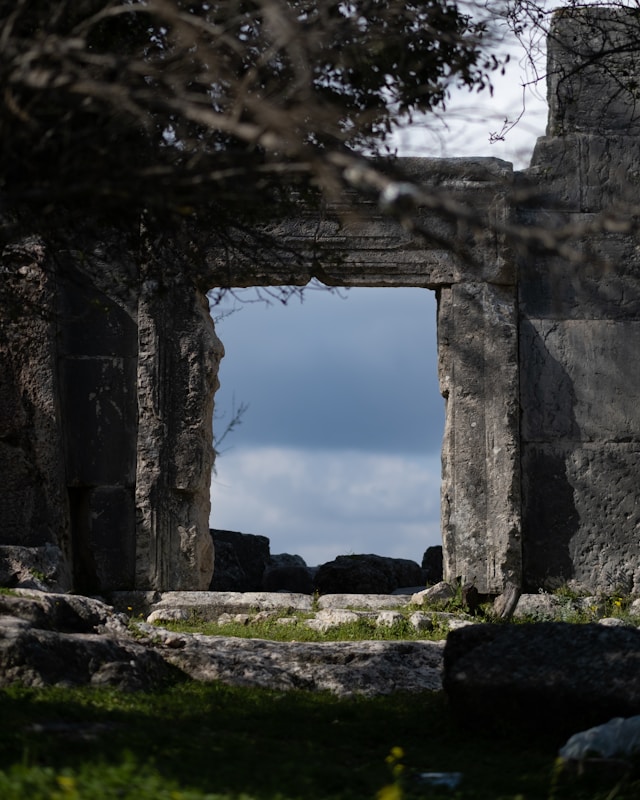
A man crosses Jerusalem in the dark. He is not poor, not uneducated, not desperate in any way the world can see. He holds a seat on the highest governing body in the nation. He has spent decades mastering the Scriptures. His name is known in the halls of power, his opinions solicited by priests and politicians alike. And yet he moves through the streets at night, avoiding the eyes of colleagues and servants, making his way toward an unaccredited rabbi from Galilee who sleeps wherever people will have Him.
To read this scene as a simple theological conversation is to miss almost everything. Nicodemus did not come to Jesus the way a modern person walks into a church service — casually, anonymously, with nothing at stake. He came as a man who had everything to lose. His social position. His professional reputation. His standing in the most powerful institution in Jewish life. Every step he took toward Jesus was a step away from the world that had made him who he was.
And Jesus, rather than offering diplomacy or flattery, told this accomplished man that he could not even see the kingdom of God unless he was born all over again. To understand why that statement was so devastating — and why it was so necessary — we need to enter the world Nicodemus inhabited. We need to understand the Sanhedrin he sat on, the purity rituals that shaped daily Jewish life, the bronze serpent that every Israelite child learned about, and the wild prophetic movement in the Jordan valley that was shaking the foundations of the religious establishment.
What follows is an attempt to reconstruct that world — not as an academic exercise, but so that the next time you read John 3, you hear the conversation the way Nicodemus heard it: as a man standing at the edge of everything he knew, staring into the abyss of grace.
The Sanhedrin: The Highest Court in Israel
Composition and Authority
When John introduces Nicodemus as “a ruler of the Jews” (“archōnGreek“ἄρχων“archōn“noun“ruler), he is identifying a member of the Sanhedrin — the supreme legislative, judicial, and religious authority in the Jewish nation. This was not a local council or a provincial committee. This was the body that governed the internal affairs of the Jewish people under Roman oversight, the institution that would, within a few years, orchestrate the trial and condemnation of Jesus Himself.
The Sanhedrin consisted of seventy-one members, a number drawn from Numbers 11:16, where God instructed Moses to gather seventy elders of Israel. With the addition of the high priest as president, the body reached its traditional count. The composition was drawn from three groups: the chief priests (“archiereis”Greek“ἀρχιερεῖς”“archiereis”“noun,“chief), the elders representing powerful lay families, and the scribes who were professional scholars of the Torah.1
The high priest presided over the assembly. During Jesus’ ministry, this was Caiaphas (AD 18-36), son-in-law of the former high priest Annas, who continued to wield enormous behind-the-scenes influence. The high priesthood in this era was no longer a hereditary position held for life as the Torah prescribed. Rome appointed and deposed high priests at will — there were twenty-eight between 37 BC and AD 70. The position had become thoroughly political, a favor granted by the empire to cooperative Jewish aristocrats. Every high priest who presided over the Sanhedrin knew that his tenure depended on keeping the peace, keeping the taxes flowing, and keeping the population in line.
The Sanhedrin’s jurisdiction covered all matters of Jewish religious law, civil disputes among Jews, and capital cases — though under Roman rule, the right to carry out executions was restricted. This is why the Sanhedrin would later need Pilate to ratify the death sentence against Jesus (John 18:31). They could condemn, but they could not execute. Rome held the sword.
Meeting procedures were governed by strict rules. The Sanhedrin met in the Chamber of Hewn Stone, a hall built into the southern wall of the temple’s inner court. Sessions could not be held at night, nor on Sabbaths or festival days. Members sat in a semicircle so that they could see one another. Two scribes stood before them — one recording votes for acquittal, the other recording votes for conviction. In capital cases, the trial had to begin with arguments for acquittal. A verdict of acquittal could be pronounced the same day; a verdict of conviction required a second session on the following day to allow time for reconsideration.2
This was the body Nicodemus belonged to. He did not hold a minor civic appointment. He held a seat at the intersection of religious authority, legal power, and political influence — the closest thing first-century Judaism had to a combined Supreme Court, Senate, and faculty of theology. As MacArthur observes, Nicodemus “was ‘a ruler of the Jews’ (3:1), a member of the Sanhedrin, the powerful ruling body of the Jewish nation,” and he came “unlike his colleagues — with a sincere desire to learn” (The Gospel According to Jesus, p. 21).
Pharisees in the Sanhedrin
The Sanhedrin was not a Pharisaic institution. It was dominated by the Sadducean priestly aristocracy — wealthy, politically connected families who controlled the temple and its vast economic machinery. The Pharisees were a minority within the council, but their influence far exceeded their numbers because of their immense popularity with the common people. Josephus reports that the Sadducees “submit to the formulas of the Pharisees, since otherwise the masses would not tolerate them” (Antiquities 18.17).
The theological differences between these two parties were not minor. The Sadducees accepted only the written Torah as authoritative and denied the resurrection of the dead, the existence of angels, and the elaborate oral tradition that the Pharisees considered equally binding. The Pharisees believed in all of these — resurrection, angels, spirits, divine providence operating alongside human responsibility, and a vast body of oral interpretation that they traced back to Moses at Sinai. These were not abstract academic disagreements. They shaped how each party understood God’s relationship with Israel, how the temple should be run, how the law should be applied, and what the future held.
A Pharisee sitting on the Sanhedrin occupied an uncomfortable position. He was part of an institution controlled by his theological opponents, operating under the surveillance of a pagan empire, navigating between his commitment to the oral tradition and the political realities of Roman occupation. MacArthur captures the Pharisaic mindset succinctly: “The Pharisees were hyperlegalists who externalized religion. They were the very epitome of all who pursue a form of godliness with no reality” (The Gospel According to Jesus, p. 21). When Nicodemus came to Jesus by night, he was not simply avoiding nosy neighbors. He was navigating a web of institutional loyalties, factional tensions, and political dangers that would have made any public association with Jesus enormously costly.
The Sanhedrin was a seventy-one-member body combining legislative, judicial, and religious authority — the most powerful institution in Jewish life. Nicodemus held a seat in this body as a Pharisee, a minority party within a council dominated by Sadducean aristocrats and overseen by a Roman-appointed high priest. His visit to Jesus was not a casual conversation. It was a political risk.
Nicodemus: The Man Behind the Name
“The Teacher of Israel”
Jesus’ rebuke in verse 10 is sharper than most English translations convey. He does not say “a teacher of Israel” but “hoGreek“ὁ“ho“noun“THE. The definite article singles Nicodemus out. He was not merely one instructor among many. He was apparently the preeminent theological authority in the nation — the professor’s professor, the rabbi to whom other rabbis deferred. R.C. Sproul captured the force of Jesus’ words: “How did you pass your orals? How did you make it through graduate school? You don’t know this?”3
Erickson notes that the Greek word used here, “anothen, can also be rendered ‘from above,’” and that its deliberate ambiguity is central to the exchange: Nicodemus heard “again” while Jesus meant “from above” — a misunderstanding that exposed the chasm between human religion and divine regeneration (Christian Theology, p. 428). The title “Rabbi” (“rhabbi”Greek“ῥαββί”“rhabbi”“Hebrew“my) in this period was not yet a formal office conferred by ordination. The structured system of rabbinic ordination (“sĕmîkhâh”Hebrew“סְמִיכָה”“sĕmîkhâh”“laying) developed more fully after the destruction of the temple in AD 70. In Jesus’ day, “Rabbi” was an honorific — a term of respect applied to recognized teachers of the Torah. That Nicodemus addresses Jesus as “Rabbi” is itself remarkable: a credentialed member of the ruling council is extending professional courtesy to an itinerant preacher from Galilee who had no formal training in any recognized school.
A Man of Wealth
John provides an extraordinary detail about Nicodemus in 19:39, when he appears at the burial of Jesus bringing “a mixture of myrrh and aloes, about a hundred pounds.” The Greek specifies roughly one hundred “litra”Greek“λίτρα”“litra”“noun,“a — approximately seventy-five to one hundred pounds by modern measure. This was a staggering quantity of burial spices, fit for the burial of a king. The cost would have been enormous. Myrrh and aloes were imported luxury goods; this amount would have represented a small fortune.
This detail aligns with a possible identification of Nicodemus with Nakdimon ben Gurion, mentioned in the Babylonian Talmud as one of the three wealthiest men in Jerusalem before its destruction in AD 70.4 The name “Nakdimon” is a Hebraized form of the Greek “Nikodemos.” The Talmud records that this Nakdimon was wealthy enough to supply the entire city of Jerusalem with food and water during a siege. Whether this is the same man cannot be proven definitively, but the convergence of the name, the era, the Jerusalem setting, and the extraordinary wealth displayed at Jesus’ burial makes the identification plausible and widely discussed among scholars.
Coming by Night
Why did Nicodemus come at night? John does not tell us, and the question has generated centuries of speculation. Perhaps he feared the political consequences of being seen with Jesus. Perhaps he wanted an uninterrupted, unhurried conversation that daytime crowds would not permit. Perhaps the evening was simply the first available opening in a busy man’s schedule.
MacArthur suggests that “perhaps he came by night because he did not want the whole world to see him and think he was representing all the Sanhedrin. Or maybe he was afraid of what the other Pharisees would think. They were known to put people out of the synagogue for believing in Jesus” (The Gospel According to Jesus, p. 21). But John is a theologian who handles details with surgical precision, and throughout his Gospel, “night” and “darkness” carry moral and spiritual weight that transcends mere chronology. Judas departs to betray Jesus “and it was night” (“ēnGreek“ἦν“ēn“verb“and) — John 13:30. The disciples fish all night and catch nothing until Jesus appears at dawn (21:3-6). The prologue announces that “the light shines in the darkness, and the darkness did not comprehend it” (1:5). In John’s symbolic vocabulary, darkness is the native habitat of humanity apart from Christ — the condition of those who have not yet come into the light.
Nicodemus comes in the dark. Physically, yes — but the reader is meant to sense a man groping toward something he cannot yet name. He is moving out of the familiar darkness of his established world toward a light that will eventually demand everything he has. And the chapter itself will close with John’s reflection on this very theme: “Men loved darkness rather than light, because their deeds were evil” (3:19). Nicodemus’ nighttime visit is the embodied counterpoint — a man who loved darkness but who was, perhaps, beginning to love something else more.
Water, Purification, and the Background of the New Birth
The Mikveh: Ritual Immersion in Daily Jewish Life
When Jesus tells Nicodemus that a person must be “born of water and the Spirit” to enter the kingdom of God (3:5), He is speaking to a man whose entire life was structured around water’s purifying power. Ritual immersion was not an occasional religious ceremony in first-century Judaism. It was a pervasive daily practice woven into the fabric of ordinary life.
The “miqveh”Hebrew“מִקְוֶה”“miqveh”“ritual was the instrument of this purification. Archaeological excavations have uncovered hundreds of miqva’ot (plural) in and around Jerusalem alone — in private homes, near the temple mount, at the entrances to synagogues, beside agricultural installations.5 Every priest entering the temple for service had to immerse. A woman after menstruation immersed. A man who had touched a corpse immersed. Anyone who had contracted ritual impurity of any kind — and the sources of impurity were numerous — went to the miqveh before reentering sacred space or resuming normal communal life.
The requirements for a valid miqveh were precise. The water had to be “living water” (“mayimHebrew“מַיִם“mayim“living) — rainwater, spring water, or river water, not drawn or stagnant water carried by human hands. The pool had to contain at least forty se’ah (approximately 200 gallons). The person had to be fully submerged, with nothing intervening between the body and the water — no clothing, no jewelry, no bandages. The immersion was total, complete, and symbolic of a transition from impurity to purity, from exclusion to inclusion, from spiritual death to spiritual life.
This is the world “water” would have evoked for Nicodemus. Not baptism in the Christian sense — that institution did not yet exist. Not merely physical bathing. But a rich, layered practice of ritual purification that touched every dimension of Jewish life and that pointed, in the prophets, to something far greater. Walvoord and Zuck catalog no fewer than five scholarly interpretations of “born of water and the Spirit,” including water as natural birth, as the Word of God, as baptism, as a symbol of the Holy Spirit, and as a reference to John the Baptist’s repentance ministry — a range that itself testifies to the density of the phrase in its first-century setting (The Bible Knowledge Commentary, p. 236).
Ezekiel 36:25-27: The Prophecy Nicodemus Should Have Known
When Jesus says “born of water and the Spirit” and then rebukes Nicodemus for not understanding — “Are you THE teacher of Israel, and do not know these things?” (3:10) — He is pointing to a specific Old Testament background. The most direct reference is Ezekiel 36:25-27:
“Then I will sprinkle clean water on you, and you shall be clean; I will cleanse you from all your filthiness and from all your idols. I will give you a new heart and put a new spirit within you; I will take the heart of stone out of your flesh and give you a heart of flesh. I will put My Spirit within you and cause you to walk in My statutes, and you will keep My judgments and do them.” (NKJV)
The passage combines exactly the two elements Jesus identifies: water (purification, cleansing from defilement) and Spirit (transformation, the gift of new life, a new heart). And the adjacent chapter, Ezekiel 37, provides the most vivid illustration possible: the valley of dry bones. Israel is spiritually dead — scattered bones, bleached and lifeless on the desert floor. And God commands Ezekiel to prophesy to the bones, to call upon the “ruach”Hebrew“רוּחַ”“ruach”“wind, to blow upon the dead and give them life. The breath comes. The bones reassemble. Sinew and flesh cover them. They stand on their feet, “an exceedingly great army” (Ezekiel 37:10).
This is what Jesus expected Nicodemus to know. The Anchor Bible Dictionary underscores how deeply the concept of regeneration is embedded in the Old Testament itself: “Though the word palingenesia does not occur in the LXX, the concept of regeneration is central to the OT, as circumcision of the heart (Deut 30:6), in Ezekiel’s restoration of dead bones (Ezek 37:1-14), and in God’s promise to raise Israel from spiritual death (Jer 24:7; Ezek 11:19; 36:26-27)” (The Anchor Bible Dictionary, ed. David Noel Freedman, p. 7378). The foremost theologian in Israel should have recognized that the prophets had already announced a coming day when God would cleanse His people with water and raise them from spiritual death by His Spirit. The miqveh that Nicodemus used daily was a shadow; the new birth Jesus described was the substance the prophets foretold. R.C. Sproul put it bluntly: “I’m telling you something that any knowledgeable teacher of the Old Testament should have grasped a long time ago.”6
Proselyte Baptism and the “Newborn Child”
There was another water practice in the Jewish world that deepens the resonance of Jesus’ words. When a Gentile converted to Judaism, the conversion required three things: circumcision (for men), a sacrifice at the temple, and immersion in a miqveh. This proselyte baptism was understood as a radical transition — the convert emerged as a fundamentally different person. The rabbinic literature uses a striking phrase: a proselyte who converts is “k’qatanHebrew“כְּקָטָן“k’qatan“like.7
Like a newborn child. The language is unmistakable. The rabbis already had a concept of “new birth” applied to those who entered the covenant community from outside. The convert’s former family ties were considered dissolved; legally, the proselyte was a new person. The immersion in water was the instrument of this symbolic rebirth.
Ferguson reinforces this point, observing that “the verbal parallels equate the birth of water and the Spirit (3:5) with the birth from above (3:3) and contrast it with the natural birth that Nicodemus mentions (3:4). The one begetting is derived from two elements — water and Spirit,” though “the emphasis is on the activity of the Spirit, the element that distinguished the new birth from the baptism of John with which Nicodemus would have been familiar” (Baptism in the Early Church, p. 96). Now consider the scandal of what Jesus says to Nicodemus. Proselyte baptism was for Gentiles — for those outside the covenant, who needed to die to their old identity and be reborn into Israel. Jesus is applying this logic to a man who was born Jewish, raised Jewish, educated in the Torah, and seated on the Sanhedrin. He is telling the insider that he needs the outsider’s remedy. He is telling the teacher that he needs the proselyte’s rebirth. Everything Nicodemus had inherited by blood and earned by study was insufficient. He needed to start over — not as a Gentile entering Judaism, but as a dead man needing the breath of God. The Evangelical Dictionary of Theology traces how subsequent centuries grappled with this very concept: “The church fathers did not formulate the concept of regeneration precisely. They equated it, broadly speaking, with baptismal grace.” It was Augustine who “realized, and vindicated against Pelagianism, the necessity for prevenient grace to make people trust and love God,” and Calvin later “used ‘regeneration’ to cover humanity’s whole subjective renewal, including conversion and sanctification” (Evangelical Dictionary of Theology, ed. Daniel J. Treier, p. 730) — a theological trajectory whose seeds are already visible in this midnight conversation.
The miqveh (ritual bath) was central to Jewish daily life, with hundreds found archaeologically in Jerusalem alone. Ezekiel 36-37 combined water purification with the Spirit’s life-giving power — the prophetic background Jesus expected Nicodemus to recognize. Even proselyte baptism carried the concept of rebirth: a Gentile convert was called “like a newborn child.” Jesus’ scandal was applying the outsider’s remedy to Israel’s greatest insider.
John the Baptist’s Revolution at the Jordan
An Astonishing Innovation
To understand the controversy swirling around chapter 3, we need to appreciate how radical John the Baptist’s ministry was. The Baptist did not invent immersion — as we have seen, the miqveh was ubiquitous in Jewish life. What he did was take a practice reserved for Gentile converts and apply it to Jews. He stood in the Jordan River and told the covenant people of God — sons and daughters of Abraham — that they needed to be immersed as though they were pagans entering the faith for the first time.
Jensen observes that John’s baptism “was administered to sinners who wished to repent and change their lives,” and that John himself “proclaims that his baptism is preparatory; it prepares those who receive it for the time when the one coming after him will bring them something different. His baptism in water is supplemented or completed by the one who brings a baptism with the Holy Spirit” (Baptismal Imagery in Early Christianity, p. 158). This was not a minor liturgical adjustment. It was a prophetic provocation. It implied that Jewish birth, Jewish identity, Jewish covenant membership, even Jewish obedience to the Torah was insufficient. Something was so fundamentally wrong with Israel that the entire nation needed the convert’s treatment — repentance, immersion, a fresh start. Luke records that the Pharisees and lawyers “rejected the will of God for themselves, not having been baptized by John” (Luke 7:30). Of course they rejected it. John was telling them they were no better off than Gentiles. For men who had built their entire identity on their covenant status, this was an intolerable insult.
The Geography of the Jordan
The Baptist’s choice of location was itself a theological statement. “Bethany beyond the Jordan” (John 1:28) — the site where John began his baptizing ministry — placed him on the eastern bank of the Jordan, in the wilderness. This was the same river Israel had crossed under Joshua to enter the Promised Land (Joshua 3-4). The symbolism was unmistakable: John was reenacting the entrance to the land. By calling Israel back to the Jordan, he was saying that the nation had forfeited its inheritance and needed to cross over again, to reenter the promises of God from the beginning.
The wilderness setting echoed Isaiah 40:3 — “The voice of one crying in the wilderness: ‘Prepare the way of the LORD’” — the text John the Baptist claimed as his identity (John 1:23). In Jewish prophetic imagination, the wilderness was where God met His people in the raw. It was where Israel was tested and purified. It was where God stripped away everything comfortable and familiar and spoke directly to the heart. The Baptist’s ministry was a deliberate return to that primal encounter.
Later in chapter 3, we learn that John moved his operations to “Aenon near Salim, because there was much water there” (3:23). The location of Aenon has been debated, but most scholars place it in the Jordan valley, either in Samaria or the northern part of the valley near the confluence of smaller streams. The name Aenon derives from the Aramaic “‘aynā’”Hebrew“עַיְנָא”“‘aynā’”“springs,, indicating a location with abundant natural water sources. The note that “there was much water there” confirms that Baptist’s practice required substantial quantities of flowing water — consistent with the miqveh requirements for “living water” rather than stagnant or drawn water.8
The Dispute About Purification
John 3:25 provides a seemingly minor detail that is, in fact, the hinge connecting the Nicodemus conversation to the Baptist’s final testimony: “Then there arose a dispute between some of John’s disciples and the Jews about purification” (“katharismos”Greek“καθαρισμός”“katharismos”“noun,“purification,).
The exact nature of this dispute is not specified, but the context makes its subject clear. Both Jesus and John were baptizing (3:22-23). The Jewish establishment had its own elaborate system of ritual purification through the miqveh. And now a question was being raised: whose purification was valid? Which immersion was authoritative? The Baptist’s? Jesus’? The traditional practices of the temple establishment?
This dispute was not academic. It was existential. If the Baptist’s baptism replaced or superseded the temple’s purification system, it challenged the entire institutional authority of the priesthood. If Jesus’ baptism now superseded the Baptist’s, it raised questions about the Baptist’s ongoing relevance. The dispute about purification was a dispute about authority — who had the right to declare a person clean before God. And it was this dispute that drove John’s disciples to come to him with their anxious report: “Rabbi, He who was with you beyond the Jordan, to whom you have testified — behold, He is baptizing, and all are coming to Him!” (3:26).
The Bronze Serpent: Death in the Desert, Healing on a Pole
The Historical Event: Numbers 21
When Jesus tells Nicodemus, “As Moses lifted up the serpent in the wilderness, even so must the Son of Man be lifted up” (3:14), He draws on one of the strangest episodes in Israel’s history — an event every Jewish child would have known.
The story is recorded in Numbers 21:4-9. Israel was journeying through the wilderness after the exodus from Egypt, traveling by a difficult route around the territory of Edom. The people grew impatient and began to complain — not for the first time — against God and against Moses: “Why have you brought us up out of Egypt to die in the wilderness? For there is no food and no water, and our soul loathes this worthless bread” (21:5). The “worthless bread” was the manna — the miraculous provision God had sustained them with daily, which they now called contemptible.
God’s response was devastating. He sent “nĕchashimHebrew“נְחָשִׁים“nĕchashim“fiery among the people. The adjective “fiery” (“saraph”Hebrew“שָׂרָף”“saraph”“burning,) likely refers to the burning sensation of the venom — a pain described as internal fire spreading through the body. Many died. The camp became a field of agony. R.C. Sproul evoked the horror vividly: “I can’t think of a few things that are worse than imagining being thrown into a pit of vipers where all around me are these fiery serpents, one bite of which can be fatal.”9
The people repented: “We have sinned, for we have spoken against the LORD and against you; pray to the LORD that He take away the serpents from us” (21:7). Moses prayed, and God’s answer was not what anyone would have expected. He did not remove the serpents. He did not provide an antivenom. He told Moses to fashion a bronze serpent and mount it on a pole — and anyone who had been bitten needed only to look at it and live.
The remedy was absurdly simple. No ritual. No payment. No pilgrimage to a sacred site. No priestly mediation. Just look. Turn your eyes to what God has lifted up, and you will not die. And the implication of the text, as Sproul noted, is that some looked and some did not. Some, writhing in agony, could not bring themselves to do the one thing that would save them — lift their eyes.
Nehushtan: When the Remedy Became an Idol
The bronze serpent did not disappear after the wilderness. Israel preserved it — and eventually, human nature being what it is, they began to worship it. By the time of King Hezekiah (ca. 715-686 BC), the bronze serpent had become an object of idolatrous devotion. Hezekiah destroyed it along with the high places, sacred pillars, and wooden images that had corrupted Israel’s worship:
“He removed the high places and broke the sacred pillars, cut down the wooden image and broke in pieces the bronze serpent that Moses had made; for until those days the children of Israel burned incense to it, and called it ”Nĕchushtan”Hebrew”נְחֻשְׁתָּן””Nĕchushtan””bronze.” (2 Kings 18:4, NKJV)
The name Hezekiah gave it — Nehushtan — is deliberately dismissive. It is a wordplay on “nĕchoshet”Hebrew“נְחֹשֶׁת”“nĕchoshet”“bronze, and “nachash”Hebrew“נָחָשׁ”“nachash”“serpent”. By calling it Nehushtan, Hezekiah reduced it from a sacred relic to “a bronze thing” — a piece of metal, nothing more. What God had used once as an instrument of grace, human beings had turned into an object of worship. The sign had replaced the Signmaker.
This pattern — receiving God’s gift and then worshiping the gift instead of the Giver — runs through the entire biblical narrative. The Israelites worshiped the golden calf at the foot of Sinai. They worshiped the bronze serpent in Canaan. Human nature does not change. We take the instruments of grace and turn them into idols, substituting the creature for the Creator, the means for the end.
Jewish Interpretation: Looking Upward
The rabbis were not content to leave the bronze serpent story as a simple narrative. They asked the obvious question: How does looking at a bronze snake heal a snakebite? The answer preserved in the Mishnah and the Targums is theologically significant:
“Does a serpent kill or does a serpent give life? Rather, when Israel looked upward and subjected their hearts to their Father in heaven, they were healed; but when they did not, they perished.” (Mishnah, Rosh Hashanah 3:8)10
The serpent itself had no power. The bronze had no magical properties. What healed was the act of looking — the turning of the heart toward God, the trust that God’s remedy, however strange, was sufficient. The physical act of lifting one’s eyes to the pole was an external expression of internal faith. This is precisely the point Jesus makes to Nicodemus. The Son of Man must be lifted up. And the response required is the same: look. Believe. Turn your eyes to the one God has provided, and live.
Bronze Serpent Imagery in the Ancient Near East
The serpent was not a uniquely Israelite symbol. Bronze and copper serpent artifacts have been found across the ancient Near East — in Egypt, Mesopotamia, and Canaan. At the copper mines of Timna in the southern Negev, archaeologists have discovered a small bronze serpent in a Midianite shrine dating to the twelfth century BC.11 In Egyptian religion, the serpent was associated with healing and royal power. In Canaanite culture, serpent imagery appeared in cultic contexts related to fertility and renewal.
The Dictionary of Biblical Imagery notes that the Numbers 21 account “plays upon common ancient Near Eastern associations with the snake or serpent as a symbol of evil power and chaos from the underworld as well as a symbol of fertility, healing and life,” and that “this image of Moses lifting up the serpent in the wilderness is used by the NT text of John 3:14-15 as a precursor of Jesus who was ‘lifted up’ on the cross, signifying both his” crucifixion and exaltation (Dictionary of Biblical Imagery, ed. Leland Ryken, p. 699). What makes the Israelite account distinctive is not the serpent imagery itself but its theological function. In Numbers 21, the bronze serpent is not a deity to be worshiped or a magical talisman to be possessed. It is a divinely appointed sign — a means by which God mediates healing through faith. The serpent that poisoned them becomes, in bronze form, the instrument of their deliverance. The curse is displayed on a pole, and looking at it — acknowledging the curse, trusting God’s remedy — brings life. The typological connection to the cross, where the sinless One is “made sin for us” (2 Corinthians 5:21) and displayed on a pole for all to see, is not an accident of literary convenience. It is the architecture of redemption.
The bronze serpent of Numbers 21 was one of the most vivid types of Christ in the Old Testament. The dying Israelites needed only to look and live — no ritual, no payment, just faith. The rabbis themselves taught that the serpent had no inherent power; what healed was the act of looking upward and subjecting the heart to God. Jesus told Nicodemus that the Son of Man must be lifted up in the same way — and the response required is the same: look, believe, live.
“Lifted Up”: What Crucifixion Meant
When Jesus says the Son of Man “must be lifted up” (“hypsōthēnai”Greek“ὑψωθῆναι”“hypsōthēnai”“aorist“to), the double meaning would have struck first-century ears with devastating force. The verb “hypsoō”Greek“ὑψόω”“hypsoō”“verb”“to in ordinary usage meant exaltation, glorification — to lift up in honor, to raise to a position of prominence. But in the Roman world, there was one form of “lifting up” that was anything but honorable.
Roman crucifixion was designed not merely to kill but to humiliate, terrorize, and degrade. It was reserved for slaves, pirates, and enemies of the state — never for Roman citizens, except in the most extreme cases of treason. The condemned person was typically flogged first with a [latin word=“flagellum” meaning=“a whip embedded with bone fragments and metal balls”], which tore the flesh from the back and could itself be fatal. The victim then carried the horizontal crossbeam ([latin word=“patibulum” meaning=“crossbar”]) through public streets to the execution site, often stripped naked, jeered at by crowds, and sometimes bearing a placard listing his crime.
At the site, the victim was nailed or bound to the crossbeam and lifted onto the vertical stake. The physics of crucifixion are well understood: with arms extended, the body’s weight compresses the chest, making breathing increasingly difficult. To inhale, the victim had to push up against the nails in the feet — creating a cycle of agony between suffocation and searing pain. Death could take hours, sometimes days. The Roman orator Cicero called it “the most cruel and disgusting penalty” (crudelissimum taeterrimumque supplicium) and said the very word crux (cross) “should be far removed not only from the person of a Roman citizen but from his thoughts, his eyes, his ears.”12
The bodies of the crucified were typically left on display as a public warning. In Palestine, Jewish sensibilities sometimes secured the removal of bodies before nightfall, in keeping with Deuteronomy 21:22-23: “His body shall not remain overnight on the tree, but you shall surely bury him that day, for he who is hanged is accursed of God.” Paul would later cite this very text to explain the nature of Christ’s atoning work: “Christ has redeemed us from the curse of the law, having become a curse for us; for it is written, ‘Cursed is everyone who hangs on a tree’” (Galatians 3:13).
When Jesus told Nicodemus that the Son of Man must be “lifted up,” He was speaking of the most degrading death the ancient world had devised — and calling it His exaltation. In John’s theology, the cross is not a defeat followed by a later victory. The lifting up on the cross and the lifting up in glory are the same event, viewed from two directions. The shame is the glory. The curse is the redemption. The place of maximum humiliation is the throne from which the Son of Man draws all people to Himself (John 12:32).
The Friend of the Bridegroom: A Jewish Wedding Custom
The Shoshbin
When John the Baptist calls himself “the friend of the bridegroom” (“philosGreek“φίλος“philos“noun“friend) in 3:29, he is not using a vague metaphor. He is invoking a specific, well-known role in Jewish wedding custom: the “shoshbin”Hebrew“שׁוֹשְׁבִין”“shoshbin”“friend.
The shoshbin was far more than a modern best man who gives a toast and organizes a bachelor party. He was the legal and social intermediary between the bridegroom and the bride’s family. His responsibilities began long before the wedding day. He helped negotiate the marriage contract (“kĕtubah”Hebrew“כְּתֻבָּה”“kĕtubah”“marriage), assisted in arranging the bride price, and served as the trusted agent who represented the groom’s interests throughout the engagement period. In some traditions, there were two shoshbinim — one representing the groom and one representing the bride.
On the wedding day itself, the shoshbin’s role was pivotal. He prepared the bridal chamber. He escorted the bride and groom. And at the consummation of the marriage, he stood at the door of the bridal chamber, waiting. The Talmud records that the shoshbin listened for the voice of the bridegroom — the announcement that the marriage had been consummated, that the union was complete.13
This is precisely the image John the Baptist uses. He is the shoshbin — the one who has prepared the way, who has negotiated between heaven and earth, who has brought the bride (Israel, the people of God) to the place where the Bridegroom can receive her. And now the Bridegroom has arrived. The shoshbin’s work is done. He does not compete with the Bridegroom for the bride’s attention. He does not resent the Bridegroom’s joy. He stands at the door, listens for the Bridegroom’s voice, and “rejoices greatly because of the bridegroom’s voice” (3:29).
“Therefore this joy of mine is fulfilled,” John says. Not diminished. Not reluctantly surrendered. Fulfilled. The entire purpose of his ministry was to bring this moment about. To be surpassed by the Bridegroom is not failure — it is success. It is the completion of everything he was sent to do.
Competition Between Disciples: Honor and Shame
The anxiety of John’s disciples is not hard to understand if we appreciate the honor-shame dynamics of the ancient Mediterranean world. In that culture, personal honor was not a private possession but a public commodity — gained, displayed, and defended in the sight of the community. A teacher’s honor was measured by the size and loyalty of his following. When disciples left one rabbi for another, it was a public diminishment — a visible declaration that the former teacher was insufficient.
When John’s disciples report that “all are coming to Him” (3:26), they are announcing a hemorrhage of honor. Their rabbi’s public standing is declining. The crowds — the visible measure of a teacher’s authority — are shifting. In a world where social status was zero-sum (one man’s rise was another’s fall), this was not merely disappointing. It was humiliating.
John’s response demolishes the entire honor-shame framework. “A man can receive nothing unless it has been given to him from heaven” (3:27). Every gift — every follower, every ounce of influence — is a divine allocation, not a personal achievement. And then the statement that overturns all competitive ministry for all time: “He must increase, but I must decrease” (3:30). R.C. Sproul emphasized that this was not a strategy John had devised: “He has not met with his disciples and said, well, all right, fellas, from now on we need to lighten up a little bit… No. John says he must increase.”14 The word “dei”Greek“δεῖ”“dei”“verb”“it — the same word of divine necessity applied to the cross in verse 14 — makes this not an option but an imperative. Christ’s increase is as divinely ordained as the crucifixion itself.
The shoshbin (friend of the bridegroom) was a specific legal and ceremonial role in Jewish weddings — the trusted agent who arranged the marriage, prepared the bride, and then stepped aside when the bridegroom arrived. John the Baptist’s use of this image is not vague metaphor but precise self-identification: his joy is fulfilled, not diminished, when the Bridegroom takes the bride. “He must increase, but I must decrease” is not a strategy — it is a divine necessity.
The Baptism Sites: Parallel Ministries in the Jordan Valley
Bethany Beyond the Jordan and Aenon Near Salim
John 3:22-23 presents a striking historical snapshot: Jesus and His disciples are baptizing in the Judean countryside while John the Baptist continues his ministry at Aenon near Salim. Two immersion ministries operating simultaneously in the same region. Two groups of followers. Two sets of crowds. The conditions for rivalry were perfectly arranged.
The geography matters. “Bethany beyond the Jordan” (1:28), where the Baptist had begun his work, was on the eastern bank of the Jordan — traditionally associated with the place where Joshua led Israel across into the Promised Land. “Aenon near Salim” (3:23) was a different site, chosen specifically “because there was much water there.” The Baptist needed flowing water in quantity, and Aenon — from the Aramaic word for “springs” — provided it.
Jesus’ baptizing activity in Judea places Him in the same region, though John 4:2 clarifies that “Jesus Himself did not baptize, but His disciples.” The parallel ministries created a visible comparison that John’s disciples found alarming. The crowds were shifting. The momentum was moving. And the question pressing on everyone’s mind was not merely practical but theological: whose baptism was authoritative? Whose purification was sufficient? Whose water made you clean?
Baptism Movements in Second Temple Judaism
The Baptist’s movement did not emerge in a vacuum. Second Temple Judaism saw multiple immersion-based movements and practices, each reflecting different theological convictions about purity, repentance, and the coming age.
The Holman Illustrated Bible Dictionary captures the breadth of the term pneuma: “Metaphorically speaking, pneuma could be extended to mean a kind of breath that blew from the invisible realms; thus, it could designate spirit, a sign of the influence of the gods upon persons, and the source of a relationship between mankind and the divine.” Yet the entry is careful to distinguish Judeo-Christian usage: “When we come to the Judeo-Christian understanding, however, the concept and terms retain their dynamic characteristics but rise from cosmic power to personal being” (Holman Illustrated Bible Dictionary, ed. Charles W. Draper, p. 1695). The Essenes at Qumran practiced daily ritual immersion as part of their rigorous purity regimen. The Community Rule (1QS 3:4-9) describes purification by water as part of the process of entering the community, though it emphasizes that water alone is insufficient without the “spirit of true counsel” — a striking parallel to Jesus’ insistence on water and Spirit. The Essenes also practiced communal baptisms in elaborate stepped pools, several of which have been excavated at the Qumran site overlooking the Dead Sea.
Other prophetic figures in the first century attracted followers with messages of purification and renewal. Josephus describes a man named Bannus who lived in the wilderness and “bathed in cold water frequently, both by night and by day, in order to preserve his chastity” (Life 11). Theudas, an unnamed Egyptian prophet, and other would-be messiahs gathered followers with promises of miraculous deliverances — often at the Jordan River or in the wilderness — before being crushed by Roman authorities.15
What made the Baptist unique was not the act of immersion itself but its theological significance and its target audience. He was not purifying Gentile converts. He was not maintaining daily ritual purity. He was announcing the imminent arrival of God’s kingdom and demanding that the covenant people of Israel repent and be immersed as though they were starting over from scratch. And then, when the One he announced actually appeared, he did what no other prophetic figure in the ancient world had done: he pointed his own followers away from himself and toward another. “He must increase, but I must decrease.” In a world where prophetic movements lived and died by the charisma and ambition of their leaders, the Baptist’s voluntary self-effacement was without parallel.
Darkness and Light: The Symbolic World of John 3
One final element of the historical and literary context deserves attention. John’s Gospel operates on two levels simultaneously — the historical and the symbolic — and nowhere is this more apparent than in chapter 3.
The conversation with Nicodemus takes place at night. Jesus speaks of being “born from above” and of the Spirit blowing like wind in the darkness. He speaks of a serpent lifted up in the wilderness — a scene from Israel’s darkest hour of rebellion. And then John’s editorial commentary in verses 19-21 makes the symbolic framework explicit: “The light has come into the world, and men loved darkness rather than light.”
In the ancient world, darkness was not merely the absence of light. It was dangerous, disorienting, associated with predators, evil spirits, and moral confusion. Night travel was avoided whenever possible. The cities had no streetlights; homes were lit by small oil lamps that barely pushed back the gloom. To go out at night was to enter a realm of vulnerability. To come to someone at night was to come in a posture of exposure and need.
John’s prologue had already established the framework: “In Him was life, and the life was the light of men. And the light shines in the darkness, and the darkness did not comprehend it” (1:4-5). The Theological Dictionary of the New Testament observes that the word krino means “to sunder,” then “to select,” “to decide,” “to judge,” “to assess” — with the LXX using it predominantly for legal terms, though it may also denote “deliverance for the oppressed” (TDNT, ed. Gerhard Kittel, p. 266). John’s judgment language thus carries both forensic and salvific weight. The word “comprehend” (“katelaben”Greek“κατέλαβεν”“katelaben”“aorist“grasped,) carries a double meaning: the darkness neither understood the light nor overcame it. When Nicodemus arrives in chapter 3, he embodies the darkness trying to comprehend the light. He comes with genuine curiosity, genuine respect, and genuine confusion. He cannot grasp what Jesus is saying. The light is shining directly on him, and he cannot see it.
But John is a writer who plays a long game. Nicodemus appears three times in the Gospel: here in chapter 3, in the dark; in chapter 7, where he cautiously defends Jesus before the Sanhedrin (“Does our law judge a man before it hears him?”); and in chapter 19, where he comes to the cross with burial spices, publicly identifying himself with the crucified Messiah. The movement is from darkness to twilight to full day. The wind blew where it wished. And across the arc of an entire Gospel, it blew Nicodemus from the shadows into the light.
John 3’s historical context is not background decoration — it is the substance of the text’s meaning. The Sanhedrin, the mikveh, the bronze serpent, the Jordan baptisms, the honor-shame dynamics, the wedding customs, the mechanics of crucifixion — all of these shaped how Nicodemus heard Jesus’ words and how the Baptist’s disciples processed their anxiety. To read John 3 well is to stand in first-century Palestine, feel the weight of the institutions, and hear the scandal of a message that told the best man in Israel he needed to start over.
Sources cited: Flavius Josephus, Antiquities of the Jews and The Jewish War; Mishnah, Sanhedrin and Rosh Hashanah; Babylonian Talmud, Ta’anit, Gittin, Yevamot, Sukkah; Ronny Reich, Miqwa’ot (Jewish Ritual Baths) in the Second Temple, Mishnaic, and Talmudic Periods; D.A. Carson, The Gospel According to John (PNTC); Craig S. Keener, The Gospel of John: A Commentary; R.C. Sproul, sermons on John 3 (St. Andrew’s Chapel, 2002); Andreas J. Kostenberger, John (BECNT); Emil Schurer, The History of the Jewish People in the Age of Jesus Christ; Martin Hengel, Crucifixion in the Ancient World and the Folly of the Message of the Cross; Beno Rothenberg, The Egyptian Mining Temple at Timna; John F. MacArthur, The Gospel According to Jesus; Millard J. Erickson, Christian Theology; David Noel Freedman, ed., The Anchor Bible Dictionary; John F. Walvoord and Roy B. Zuck, The Bible Knowledge Commentary; Everett Ferguson, Baptism in the Early Church: History, Theology, and Liturgy in the First Five Centuries; Robin Margaret Jensen, Baptismal Imagery in Early Christianity; Leland Ryken et al., eds., Dictionary of Biblical Imagery; Gerhard Kittel and Gerhard Friedrich, eds., Theological Dictionary of the New Testament (abridged); Charles W. Draper et al., eds., Holman Illustrated Bible Dictionary; Daniel J. Treier, ed., Evangelical Dictionary of Theology.
This article is part of the John 3 Deep Dive series. For related studies, see: – John 3 Commentary: Born from Above, Lifted on a Cross, Loved Beyond Reason — The full verse-by-verse exegesis – Greek Words That Unlock John 3 — Anothen, pneuma, monogenes, and the language behind the new birth – Born from Above: The Theology of John 3 — Regeneration, sovereignty, and the most important doctrine you’ve never heard preached