Iran’s Proxy Empire: How Tehran Funds Terror Across the Middle East
Introduction: The Octopus Strategy
Iran doesn’t fight its wars directly. It fights through proxies.
Since the 1979 Islamic Revolution, the Iranian regime has built something unprecedented in modern geopolitics: a network of armed proxy groups spread across the entire Middle East, each funded, trained, armed, and strategically directed by Tehran. Intelligence analysts call it many things — the “axis of resistance,” the “ring of fire,” the “forward defense strategy.”
We’ll call it what it is: the octopus strategy.
Tehran is the head. The tentacles reach into Lebanon (Hezbollah), Gaza (Hamas and Palestinian Islamic Jihad), Yemen (the Houthis), Iraq (a constellation of Shia militias), Syria (various Iran-aligned forces), and beyond. Each arm operates with a degree of local autonomy, but the coordination, funding, weapons, and strategic direction flow from one source: the Islamic Revolutionary Guard Corps (IRGC) and its elite Quds Force.
The U.S. Defense Intelligence Agency’s 2019 unclassified report, Iran Military Power, states it plainly: Iran’s use of “partners, proxies and unconventional warfare is central to its regional influence and deterrent strategy.”
The U.S. State Department has designated Iran as a State Sponsor of Terrorism since January 19, 1984 — the longest continuous designation of any nation, now spanning over 41 years.
But why does this matter for Christians?
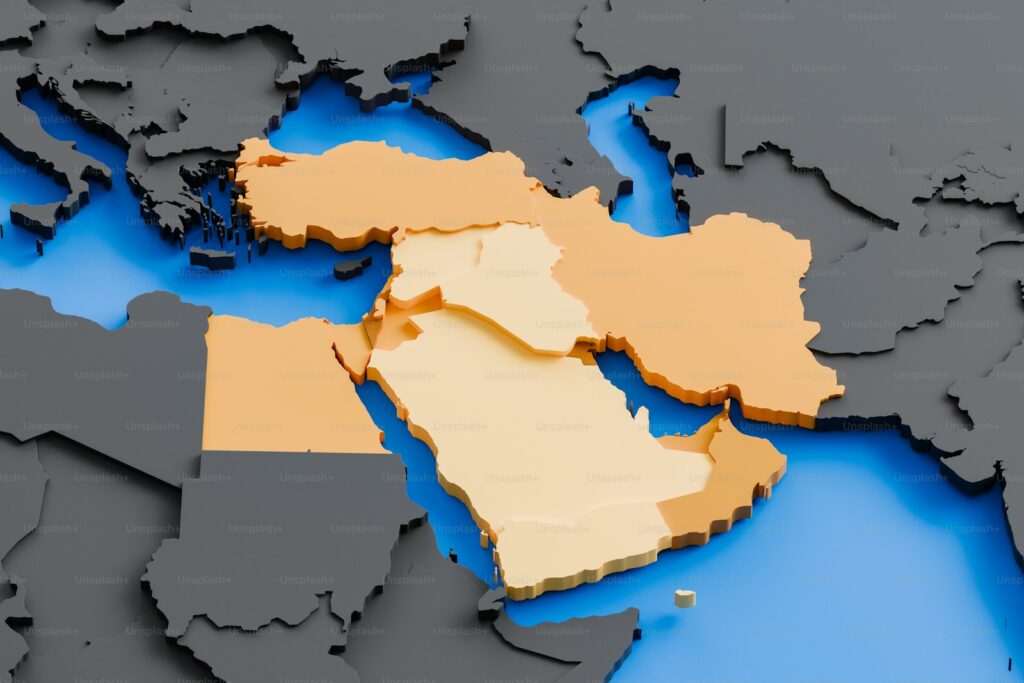
Because every tentacle of Iran’s proxy empire touches land that appears in the Bible. Lebanon is ancient Phoenicia. Syria is Aram. Iraq is Babylon. Yemen is Sheba. Gaza is Philistia. And at the center of the target — always — is Israel.
Understanding Iran’s proxy empire isn’t just geopolitics. It’s watching the stage being set for prophetic events that Scripture describes in detail.
The IRGC and the Quds Force: The Command Center
The Islamic Revolutionary Guard Corps (IRGC) was created in 1979 specifically to protect the Islamic Revolution — not Iran’s borders, but the ideology. It operates as a parallel military alongside Iran’s regular armed forces, but with vastly greater power, resources, and political influence.
Within the IRGC sits the Quds Force (Nīrū-ye Qods — literally “Jerusalem Force”). Named after Jerusalem — because its ultimate strategic objective is the “liberation” of the Holy City — the Quds Force is Iran’s unconventional warfare and intelligence arm responsible for all extraterritorial operations.
The Quds Force:
– Recruits, trains, and arms proxy fighters across the region
– Provides strategic direction and operational planning
– Transfers hundreds of millions of dollars annually to proxy groups
– Supplies advanced weapons including missiles, drones, and anti-tank systems
– Embeds IRGC officers as “advisors” within proxy organizations
From 1998 to his assassination in January 2020, the Quds Force was commanded by Major General Qasem Soleimani — the most powerful military figure in the Middle East, who orchestrated Iran’s proxy expansion from a regional nuisance into a strategic threat capable of multi-front warfare against Israel.
The Tentacles: Iran’s Proxy Network
1. Hezbollah (Lebanon)
Founded: 1982, directly by the IRGC during Israel’s invasion of Lebanon
Estimated fighters: 20,000-30,000 active, 20,000+ reserves
Annual Iranian funding: $700 million-$1 billion
Primary role: Iran’s most capable proxy, strategic deterrent against Israel
Hezbollah is Iran’s crown jewel. It is the most heavily armed non-state actor in the world — possessing more weapons than most national armies, including an estimated 130,000-150,000 rockets and missiles before the 2024 conflict with Israel.
Declassified CIA intelligence from the 1980s observed that Islamic Jihad — Hezbollah’s early operational cover — was “more likely a cover used by Iran for its terrorist operations” and that “surrogates provide Iran with an excellent means for creating the illusion that an independent, international organization is at work against U.S. interests.”
Hezbollah’s role extends far beyond Lebanon. It has:
– Trained Hamas fighters in Gaza
– Deployed fighters to defend the Assad regime in Syria
– Operated intelligence networks in Latin America, Africa, and Europe
– Conducted the 1994 AMIA bombing in Buenos Aires (85 killed)
– Built a global financial network that the U.S. Treasury has spent decades trying to disrupt
In October 2023, the Treasury Department sanctioned entities providing financial support to the IRGC-Quds Force and Hezbollah that had “generated hundreds of millions of dollars in revenue from selling Iranian commodities.”
2. Hamas and Palestinian Islamic Jihad (Gaza)
Hamas founded: 1987 (Iranian support escalated after 2006)
PIJ founded: 1981 (closer ideological alignment with Iran from the start)
Estimated Iranian funding to Hamas: $70-100 million/year
Primary role: Pressure on Israel’s southern front
Iran’s relationship with Hamas is complicated by a fundamental divide: Hamas is Sunni, Iran is Shia. For decades, this theological difference limited cooperation. But shared enmity toward Israel proved stronger than sectarian division.
Iran’s support for Hamas intensified dramatically after Hamas won Palestinian elections in 2006. The IRGC provided:
– Weapons and explosives (smuggled through Sudan, Egypt’s Sinai, and maritime routes)
– Rocket technology and manufacturing expertise
– Military training (Hamas fighters trained in Iran and Lebanon)
– Financial support routed through international networks
October 7, 2023 brought this relationship into focus. While the ODNI assessed in February 2024 that “Iranian leaders did not orchestrate nor had foreknowledge of” the attack, evidence later emerged complicating this picture. Documents seized by the Israeli military and verified by The New York Times indicated that senior Hamas leader Khalil al-Hayya discussed the attack plan with IRGC commander Mohammed Said Izadi in July 2023. Izadi reportedly said that “Hezbollah and Iran welcomed the plan in principle, but that they needed time to prepare the environment.”
Whether Iran knew the specific date is debated. That Iran built the military infrastructure that made October 7 possible is not.
3. The Houthis (Yemen)
Also known as: Ansar Allah (“Supporters of God”)
Founded: 1990s (Iranian support escalated dramatically after 2014)
Estimated fighters: 20,000-30,000
Primary role: Control of the Bab el-Mandeb Strait, pressure on Saudi Arabia and Red Sea shipping
The Houthis are Zaidi Shia — theologically distinct from Iran’s Twelver Shia Islam. But geopolitics, again, overrode theology. Iran saw in the Houthis an opportunity to project power into the Arabian Peninsula, threaten Saudi Arabia’s southern border, and control a chokepoint through which 12% of global trade passes.
Iran provides the Houthis with:
– Advanced ballistic missiles and cruise missiles
– Attack drones (Iranian-designed Shahed and Samad variants)
– Anti-ship missiles
– Naval mines
– Military advisors and training
The result: a rebel group in one of the world’s poorest countries acquired the ability to strike Saudi oil infrastructure (2019 Aramco attack), launch missiles at Israel (2024), and paralyze international shipping through the Red Sea.
4. Iraqi Shia Militias
Major groups: Kata’ib Hezbollah, Asa’ib Ahl al-Haq, Badr Organization, Harakat Hezbollah al-Nujaba
Estimated total fighters: 100,000-150,000 (organized under the Popular Mobilization Forces)
Primary role: Political control of Iraq, pressure on U.S. forces, land bridge to Syria and Lebanon
Iraq is where Iran’s proxy strategy has achieved its most complete political success. The Shia militias — many created, funded, and trained by the IRGC — have been integrated into Iraq’s official security forces while maintaining allegiance to Tehran.
Declassified U.S. Central Command documents revealed that Iraqi Shia militants under Soleimani’s command killed more than 500 U.S. service members in Iraq between 2005 and 2011 — primarily through sophisticated EFP (explosively formed penetrator) roadside bombs designed and supplied by Iran.
These militias now serve a dual purpose:
1. Political: Shia parties aligned with Iran dominate Iraq’s parliament and control key ministries
2. Strategic: They provide the overland “land bridge” connecting Iran through Iraq to Syria and Lebanon — the critical supply corridor for arming Hezbollah
5. Syrian Allies
Iran invested billions of dollars and deployed IRGC officers, Hezbollah fighters, and recruited Afghan and Pakistani Shia militants to save Bashar al-Assad’s regime during the Syrian Civil War (2011-2020). The payoff: Syria became the essential geographic link in Iran’s supply chain to Hezbollah, and Iranian forces embedded throughout the country.
The Funding: Following the Money
How does Iran fund an empire of proxies?
1. State budget allocation. The IRGC consumes an estimated 30-40% of Iran’s defense budget, with significant off-book spending. Total proxy funding is estimated at $6-16 billion annually, depending on the source and year.
2. Oil revenue. Despite sanctions, Iran continues to sell oil — primarily to China — generating tens of billions in annual revenue. The 2015 JCPOA briefly unfroze approximately $100 billion in Iranian assets, though Iran’s actual access to these funds was debated.
3. IRGC economic empire. The IRGC controls an estimated 20-40% of Iran’s economy through construction companies, telecommunications firms, oil and gas operations, and import-export businesses. These generate revenue independently of the state budget.
4. Sanctions evasion networks. The U.S. Treasury has documented extensive networks using shell companies, hawala transfers, cryptocurrency, and front businesses across Lebanon, Turkey, the UAE, and beyond to move money to proxies.
Biblical Perspective: The Pattern of Encirclement
Why should Christians pay attention to Iran’s proxy strategy?
Because the geography isn’t random. Look at where Iran has placed its proxies:
- North of Israel: Hezbollah in Lebanon, Iranian forces in Syria
- South of Israel: Hamas in Gaza
- East of Israel: Iranian-aligned militias in Iraq and Jordan’s borders
- Southeast of Israel: Houthis in Yemen threatening the Red Sea
This is a strategy of encirclement — surrounding Israel with hostile forces on every border.
And it mirrors a prophetic pattern. In Ezekiel 38:5-6, the coalition that will one day move against Israel comes from every direction:
– Persia (Iran) from the east
– Cush (Sudan/East Africa) from the south
– Put (Libya/North Africa) from the west
– Gomer and Beth-togarmah (Turkey/Anatolia) from the north
The strategic architecture Iran is building today bears a striking resemblance to the prophetic picture Ezekiel painted 2,600 years ago.
This doesn’t mean every current event is a direct prophetic fulfillment. But it means Christians should be paying attention. The same God who revealed these patterns to Ezekiel is still sovereign over the nations arranging themselves on the board.
What Happened to the Octopus?
The years 2024-2025 were devastating for Iran’s proxy network:
Soleimani’s assassination (January 2020) removed the architect. His successor, Esmail Qaani, has proven less effective at coordinating the network.
Israel’s 2024 campaign against Hezbollah killed Secretary-General Hassan Nasrallah and decimated Hezbollah’s senior leadership and military infrastructure. The CRS reported that Israel “severely degraded” both Hezbollah and Hamas.
Hamas’s destruction in Gaza following October 7 eliminated much of the group’s military capability and killed many of its commanders.
The fall of Assad in Syria (if it materializes) would sever Iran’s critical land bridge to Hezbollah.
The Houthis remain the most intact arm of the proxy network, but geographically isolated from the Levant.
Yet Iran continues to rebuild. The IRGC has decades of experience constructing proxy infrastructure, and the ideological commitment — destroy Israel, export the revolution — has not wavered. The ODNI’s 2025 Annual Threat Assessment notes that Iran has “become a key military supplier to Russia, especially of UAVs,” and in exchange, “Moscow has offered Tehran military and technical support to advance Iranian weapons, intelligence, and cyber capabilities.”
The octopus has been wounded. It has not been killed.
Conclusion: Sovereign Over the Octopus
Here is the truth that anchors everything:
Iran’s proxy empire is real, dangerous, and consequential. It has killed thousands, destabilized nations, and threatened Israel’s existence. The regime in Tehran genuinely believes it has a divine mandate to destroy the Jewish state and export Islamic revolution worldwide.
But the God of the Bible is sovereign over the nations. He is sovereign over Iran’s mullahs just as He was sovereign over Nebuchadnezzar, over Pharaoh, over the Assyrian kings who thought they were the ones writing history.
“He changes times and seasons; he removes kings and sets up kings.” (Daniel 2:21)
“The king’s heart is a stream of water in the hand of the LORD; he turns it wherever he will.” (Proverbs 21:1)
The proxy empire exists because God has allowed it — not because Tehran’s strategy is brilliant, but because God’s purposes include even the schemes of the wicked. And one day, as Ezekiel prophesied, God Himself will intervene — not through sanctions or diplomacy, but through supernatural judgment that leaves no doubt about who is truly sovereign.
Until then, we pray. We watch. And we remember: the same God who used Cyrus to free Israel can use modern Iran for purposes Tehran’s leaders have never imagined.
Further Reading
- Iran in the Bible: A Complete Guide — The full biblical story of Iran from Genesis to Revelation
- When Persia Freed the Jews: Cyrus the Great — How God used a pagan Persian king
- Will Iran Attack Israel? Ezekiel 38 — The prophetic coalition analyzed
- Rise of the Ayatollahs: 1979-Today — How the revolution created the proxy strategy
- Iran’s Underground Church: The Secret Revival — God’s counter-strategy inside Iran
Sources
- Defense Intelligence Agency, Iran Military Power, November 2019.
- Office of the Director of National Intelligence, 2025 Annual Threat Assessment.
- U.S. Department of State, State Sponsors of Terrorism.
- U.S. Department of the Treasury, Treasury Sanctions Iranian IRGC-QF and Hizballah Financial Network, October 2023.
- U.S. Department of the Treasury, Treasury Sanctions Hizballah Operatives Exploiting Lebanon’s Cash Economy, 2025.
- Congressional Research Service, Iran: Background and U.S. Policy, Updated May 2025.
- CIA FOIA Electronic Reading Room, Iran: Exporting the Revolution, March 1980.