
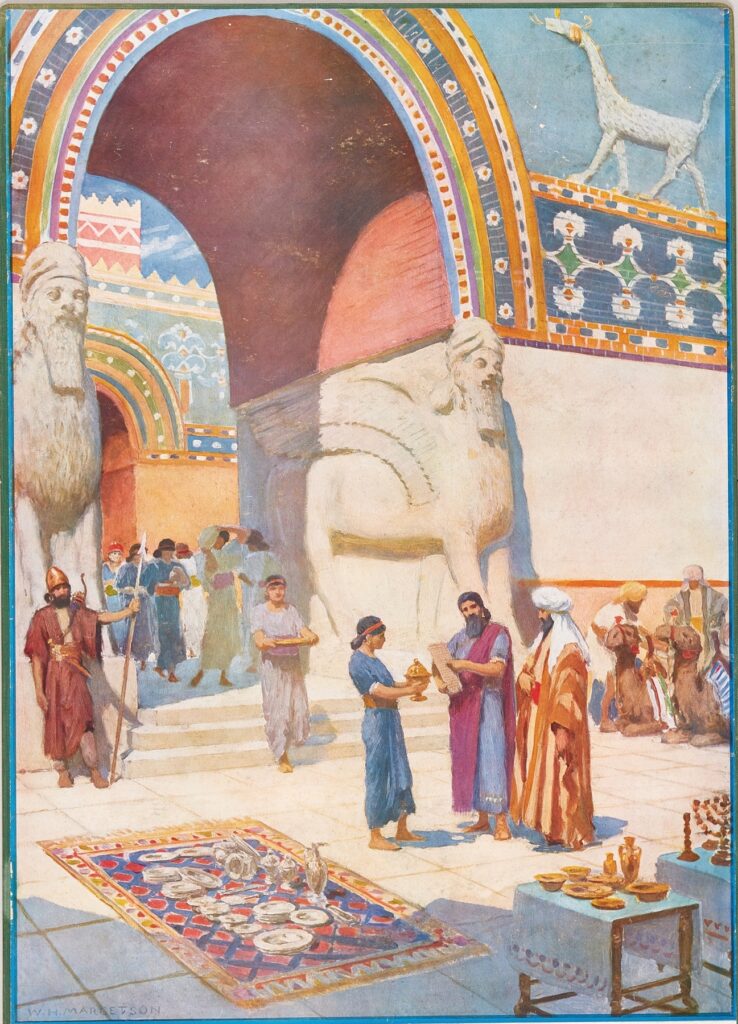
Modern Iran: brutal, oppressive, anti-Christian, anti-Israel.
But ancient Persia: tolerant, sophisticated, liberator of Jews, respecter of religions.
What happened?
When did the nation that freed God’s people become the nation that vows to destroy them? When did the empire known for tolerance become the regime known for terror?
The answer reveals something profound about God’s sovereignty over history—and His purposes for Iran’s future.
Because the God who used Persia to save Israel once can use Iran for His purposes again.
The Persian Empire (550-330 BC)
Cyrus the Great Establishes an Empire
In 550 BC, Cyrus II of Persia unified the Median and Persian kingdoms, founding what would become the largest empire the world had ever seen.
At its height, the Persian Empire stretched from:
- India in the east
- Egypt in the west
- Central Asia in the north
- Arabian Peninsula in the south
Population: 44% of the entire world’s population lived under Persian rule.
Revolutionary Policy: Religious Tolerance
What made Persia unique was its approach to conquered peoples.
Unlike Assyria (brutal deportations) or Babylon (destruction and exile), Persia allowed:
- Conquered peoples to keep their religions
- Local customs to continue
- Self-governance under Persian oversight
- Return of exiled populations
This wasn’t secular humanism. Persians practiced Zoroastrianism (belief in one supreme god, Ahura Mazda). But they didn’t force it on others.
Most significantly for biblical history: In 539 BC, Cyrus conquered Babylon and issued a decree allowing Jews to return to Jerusalem and rebuild their temple (2 Chronicles 36:22-23, Ezra 1:1-4).
We’ll explore this in depth in POST_27, but understand: ancient Persia freed God’s people.
Persia and Early Christianity (1st-7th Centuries AD)
Christianity Arrives Early
Christianity reached Persia very early—possibly as early as the first century.
How?
- Pentecost: Acts 2:9 mentions “Parthians and Medes and Elamites” hearing the gospel
- Thomas’s mission: Church tradition says the Apostle Thomas evangelized Persia
- Trade routes: The Silk Road brought both goods and gospel
By the 3rd century, there were organized Christian communities throughout Persia.
The Church of the East
The Persian church developed distinctly from:
- Roman/Byzantine Christianity (west)
- Alexandrian Christianity (south)
Council of Seleucia (410 AD): Persian Christians organized under their own leadership, separate from Byzantine influence. This was partly theological, partly political (Persian kings didn’t want their Christian subjects loyal to Christian Roman emperors).
Persecution and Growth
Under the Sassanid Empire (224-651 AD), Persian Christians faced:
- Periodic severe persecution (especially when Persia was at war with Christian Rome/Byzantine)
- Long periods of relative peace
- Martyrdom of thousands (including bishops and leaders)
Yet the church grew. By the 6th century, the Church of the East had:
- Bishops throughout Persia
- Monasteries and schools
- Missionary activity into Central Asia, India, and China
- Sophisticated theology and liturgy
The Persian church was vibrant, scholarly, and missionary.
The Islamic Conquest (633-654 AD)
Everything Changed
In 633 AD, Arab Muslim armies invaded Persia.
The Sassanid Empire—weakened by decades of war with Byzantium—couldn’t resist. By 651 AD, Persia had fallen to Islam.
What followed was catastrophic for Persian culture and Christianity:
Forced Islamization
Initially, Muslims allowed Persians to keep their religion (as “People of the Book”) if they paid jizya tax and accepted dhimmi (second-class) status.
But over centuries:
- Heavy taxation drove conversions
- Legal discrimination made non-Muslim life unbearable
- Social pressure pushed conformity
- Periodic violent persecutions decimated Christian communities
- Zoroastrianism nearly disappeared
By 900 AD, Persia was majority Muslim.
What Was Lost
Persian Christians and Zoroastrians faced:
- Churches destroyed or converted to mosques
- Libraries burned
- Scholars killed or forced to convert
- Ancient traditions suppressed
- Rich Christian heritage erased
Within 300 years, Persia went from Christian plurality to Islamic dominance.
But Persian Culture Survived
Remarkably, Persian language and culture persisted under Islamic rule. Persians:
- Kept their language (Farsi) rather than adopting Arabic
- Maintained distinct cultural identity
- Eventually developed Shia Islam as distinct from Sunni Arab Islam
- Preserved pre-Islamic poetry and literature (Ferdowsi’s Shahnameh)
Persia became Islamic but remained Persian.
Shia Islam Becomes Dominant (1501 AD)
The Safavid Dynasty
In 1501, Shah Ismail I founded the Safavid dynasty and made Twelver Shia Islam the official state religion.
Why?
- To distinguish Persia from Sunni Ottoman Empire (their rival)
- To create religious-national identity
- To consolidate political power through religious authority
Result: Persia became the center of Shia Islam globally.
What This Meant for Christians
Under Safavid rule, Christians:
- Continued as dhimmi (second-class citizens)
- Faced periodic persecution
- Paid special taxes
- Restricted from evangelism
- Gradually declined in numbers
But the Safavids weren’t as brutal as what would come later. Christians could still practice privately.
Western Contact and Mission (19th Century)
European Influence Grows
In the 19th century, European powers (Russia, Britain) competed for influence in Persia.
With them came:
- Christian missionaries (Presbyterian, Anglican, Catholic)
- Mission schools educating Persian youth
- Hospitals bringing modern medicine
- Translation work (New Testament in Persian)
Some Persians Convert
Despite legal prohibition (leaving Islam = death penalty), some Persians converted to Christianity.
These converts faced:
- Rejection by families
- Loss of property and status
- Imprisonment
- Sometimes execution
Yet the church grew modestly.
The Pahlavi Era: A Brief Opening (1925-1979)
Reza Shah Modernizes
In 1925, Reza Shah Pahlavi overthrew the Qajar dynasty and began aggressive modernization:
- Secularization of government
- Women’s rights expanded
- Western dress encouraged
- Islamic clergy’s power reduced
- Churches allowed to operate more freely
His son, Mohammad Reza Shah (ruled 1941-1979), continued this trajectory.
Christians Under the Shah
From 1925-1979, Iranian Christians experienced:
- Greater freedom to worship
- Ability to build churches
- Christian schools and hospitals operating
- Less social stigma (still present, but reduced)
- Growth of Christian community (especially in cities)
This was the freest Christians had been in Persia since before Islam.
But It Didn’t Last
In 1979, the Islamic Revolution undid everything.
The 1979 Revolution: Crushing Christian Freedom
When the ayatollahs took power:
- Churches forcibly closed
- Christian leaders arrested or killed
- Converts hunted down
- Christian schools shut
- Bibles confiscated
- Public Christian expression criminalized
Persia returned to medieval Islam.
For 47 years, Iranian Christians have lived under the most severe persecution in the nation’s history.
The Tragedy: What Was Lost
Consider what Persia was versus what Iran is:
Ancient Persia
- Freed Jews from exile
- Funded temple rebuilding
- Practiced religious tolerance
- Allowed self-governance
- Called “anointed” by God (Isaiah 45:1)
Islamic Republic Iran
- Vows to destroy Israel
- Persecutes Christians
- Enforces brutal religious conformity
- Oppresses its own people
- Sets itself against God
Same land. Opposite spirit.
God’s Sovereignty Over Persia/Iran
Here’s what Christians must understand:
God was sovereign over Persia’s rise. God was sovereign over Islam’s conquest. God is sovereign over Iran’s current regime. And God will be sovereign over what comes next.
Why Did God Allow Islam to Conquer Persia?
We don’t know all His purposes. But Scripture gives us principles:
1. God judges nations for their sins (Amos 1-2)
Persia had become corrupt, oppressive, and had turned from truth. God used Islam as judgment. He did the same with Israel at the time of Jeremiah, using Babylon to punish Israel for their sins- even if Babylonians would be judged by God also later on.
2. God uses even demonic systems for His purposes (Habakkuk 1:5-11)
Habakkuk complained: “Why do you use wicked Babylon to judge us?” God’s answer: “I’m sovereign. Trust me.”
3. God’s purposes span centuries
What looks like defeat in one century can be preparation for victory in another.
The Pattern We See
Throughout history with Persia/Iran:
- God used Persia to save Israel (Cyrus)
- God allowed Islam to judge Persia
- God is using Islamic oppression to drive Iranians to Christ (current revival)
- God will use Iran in end-times prophecy (Jeremiah 49, Ezekiel 38)
- God promises restoration for Elam in “latter days” (Jeremiah 49:39)
Every stage serves His purposes.
Hope: God Can Restore What Was Lost
Here’s the incredible truth:
The Persia that freed Jews, the Persia that had vibrant Christianity, the Persia that practiced tolerance—that spirit is not permanently dead.
Jeremiah 49:39 promises:
“Yet I will restore the fortunes of Elam in the latter days, declares the LORD.”
Could the current underground church explosion be the beginning of that restoration?
Could God be preparing to restore Iran to something like its ancient glory—not political dominance, but spiritual significance?
Consider:
- Ancient Persia freed God’s people physically (from Babylon)
- Could future Iran be freed spiritually (from Islam)?
- Ancient Persia funded God’s temple
- Could future Iranian believers fund gospel work globally?
God used Persia before. He can use Iran again.
Prayer
Father,
You used ancient Persia to accomplish Your purposes. You allowed Islam to conquer it. You’re sovereign over all of Iran’s history.
We pray:
- Restore Iran from Islamic oppression
- Bring back the spirit of Cyrus who freed Your people
- Save millions of Iranians
- Fulfill Your promise to restore Elam
- Use Iran for Your glory again
What You used once, You can use again. Do what only You can do.
In Jesus’ name, Amen.
Sources
- Historical background on Persian Empire and Christianity
- Theological foundation: God’s sovereignty over nations (Daniel 2:21) – Savage Mercies Library