
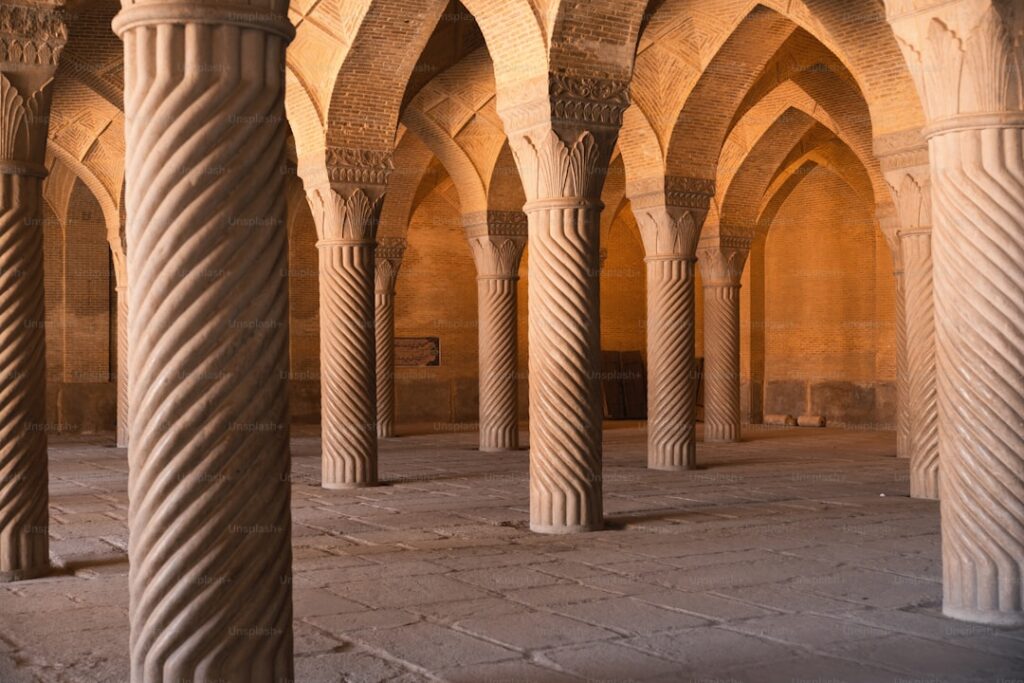
The Book of Esther: A Jewish Queen in the Heart of Persian Iran
Introduction: An Entire Book of the Bible Is Set in Iran
There is a book of the Bible set entirely in Iran.
Not a chapter. Not a verse. An entire book. Ten chapters. 167 verses. A complete narrative arc — with a villain, a heroine, a sleepless king, a gallows, a genocide averted, and a national holiday that Jews still celebrate today.
The Book of Esther takes place in Susa — the ancient capital of the Persian Empire, located in what is now the town of Shush, in Khuzestan province, southwestern Iran. The tomb traditionally identified as Esther’s still stands there. Iranian Jews have venerated it for centuries.
Most Christians don’t think about this. When they read the Book of Esther, they think about courage. They think about Mordecai. They think about the famous line, “for such a time as this.” But they rarely stop to consider the geography.
This story happened in Iran.
And the God who orchestrated every detail of it — the beauty contest, the sleepless night, the timing of a banquet, the reversal of an empire-wide death warrant — never once speaks in the text. His name does not appear. Not once. In the entire book.
That is the point.
The Book of Esther is the Bible’s masterclass on invisible sovereignty — on a God who doesn’t need to be seen to be working, doesn’t need to be named to be present, and doesn’t need friendly governments to save His people.
For more on the broader story of Iran in Scripture, see our complete guide: Iran in the Bible: A Complete Guide.
The Setting: Susa and the Persian Court
The City
Susa was one of the oldest continuously inhabited cities in the ancient world. Its history stretches back to 4000 BC — predating Abraham by two millennia. By the time of the Book of Esther, it had served as the capital of the ancient Elamite kingdom and had been absorbed into the Persian Empire as one of its primary administrative centers.
French archaeological missions, beginning with Marcel Dieulafoy in the 1880s and continuing through the 20th century under Jean Perrot and others, excavated the royal complex at Susa extensively. What they found confirmed the biblical portrait: massive columned halls, glazed brick walls depicting Persian guardsmen, gardens, and courtyards consistent with the lavish descriptions in Esther chapter 1.
The ruins of the apadana — the great audience hall — can still be visited today. The famous glazed brick friezes of the “Immortals” (the Persian royal guard) that once decorated its walls now sit in the Louvre. The palace complex covered an area of nearly 250 acres.
This is where Esther lived. This is where the story happened.
The King
The king in the Book of Esther is called Ahasuerus in Hebrew — almost universally identified by scholars as Xerxes I, who ruled the Persian Empire from 486 to 465 BC.
Xerxes was the son of Darius the Great and grandson of Cyrus. He ruled the largest empire the world had yet seen — stretching from Ethiopia to India, encompassing 127 provinces and tens of millions of subjects. He is the same Xerxes who launched the massive invasion of Greece, crossed the Hellespont with an army ancient sources numbered in the millions, defeated the Spartans at Thermopylae, and was ultimately turned back at the naval battle of Salamis.
The Book of Esther opens with Xerxes throwing a feast. Not a dinner party. A 180-day display of imperial wealth — followed by a seven-day banquet in the palace garden for all the people of Susa (Esther 1:4-5). The text describes the setting in precise detail:
“There were white cotton curtains and violet hangings fastened with cords of fine linen and purple to silver rods and marble pillars, and also couches of gold and silver on a mosaic pavement of porphyry, marble, mother-of-pearl, and precious stones.” (Esther 1:6)
This is not exaggeration. Archaeological findings at Susa — the columned halls, the polychrome glazed bricks, the stone pavements — match these descriptions with striking precision. The drinking was done according to Persian custom: “There was no compulsion” (Esther 1:8), with each guest drinking as much as he wished from golden vessels, no two alike.
This was the world Esther entered. Not a quaint village. The nerve center of the most powerful empire on earth.
For more on Persia’s role in biblical history, see Before the Ayatollahs: Persia’s Forgotten History.
Esther’s Rise: A Jewish Orphan Becomes Queen
Her Hebrew name was Hadassah — meaning “myrtle.” Her Persian name was Esther — likely derived from the Persian stāra (“star”) or, more suggestively, from the Babylonian goddess Ishtar. Even her name carries the tension of the entire book: a Jewish girl bearing a pagan name, living in two worlds.
She was an orphan. Her parents were dead. She was raised by her cousin Mordecai, a descendant of the tribe of Benjamin, whose family had been deported from Jerusalem during the Babylonian exile (Esther 2:5-6). Mordecai’s family never returned to the land. They stayed in the Persian world — part of the Jewish diaspora scattered across the empire.
When Xerxes deposed Queen Vashti for her public refusal to appear at his banquet, the court officials proposed a search for a new queen — essentially a beauty contest drawn from across 127 provinces. Young women were gathered to the royal harem, given twelve months of beauty treatments (six months with oil of myrrh, six with spices and cosmetics), and presented to the king one by one.
Esther was taken into this process. She “won favor in the eyes of all who saw her” (Esther 2:15). The king chose her. A Jewish orphan from a deportee family became queen of the Persian Empire.
But there was a condition. Mordecai had instructed Esther: “Do not reveal your people or your kindred” (Esther 2:10). She concealed her Jewish identity. She lived as a hidden minority in the most powerful court in the world.
This detail matters more than most readers realize. The Jewish community in Persia was a diaspora minority — tolerated but vulnerable, prosperous in places but always dependent on the goodwill of rulers who could revoke that tolerance at any moment. Esther’s concealment was not cowardice. It was survival strategy. The same strategy Jewish, Christian, and other minority communities in Iran have practiced for centuries — and still practice today.
Haman’s Plot: The Genocide That Almost Happened
Enter Haman the Agagite.
Xerxes elevated Haman to the highest position in the court — above all other officials. Everyone was commanded to bow before Haman when he passed. Everyone did. Except Mordecai.
The text says simply: “Mordecai did not bow down or pay homage” (Esther 3:2). The reason is left unstated, but the genealogical marker is the clue. Haman is called an Agagite — a descendant of Agag, king of the Amalekites. The Amalekites were Israel’s oldest enemy, the people God commanded Saul to destroy (1 Samuel 15). Mordecai, a Benjaminite — from Saul’s own tribe — refused to bow to the ancient enemy’s descendant.
Haman’s response was not personal revenge against one man. It was genocidal rage against an entire people.
“When Haman saw that Mordecai did not bow down or pay homage to him, Haman was filled with fury. But he disdained to lay hands on Mordecai alone. So… Haman sought to destroy all the Jews, the people of Mordecai, throughout the whole kingdom of Ahasuerus.” (Esther 3:5-6)
Haman cast lots — purim in Hebrew — to determine the date for the extermination. The lot fell on the twelfth month, Adar. He then went to the king with a calculated proposal: there is a people whose laws are different, who do not obey the king’s laws. It is not in the king’s interest to tolerate them. Issue a decree to destroy them, and Haman would deposit 10,000 talents of silver into the royal treasury.
Xerxes agreed. The decree went out to all 127 provinces. Every Jew in the Persian Empire — men, women, and children — was to be killed on the thirteenth day of Adar.
Pause on the historical weight of this. The Persian Empire at this time contained the vast majority of the world’s Jewish population. Many had never returned from exile. If this decree had been carried out, it would not have been a regional pogrom. It would have been the end of the Jewish people. No Judaism. No Second Temple. No Jesus of Nazareth.
The fate of redemptive history hung on what happened next.
“For Such a Time as This”: The Theology of Divine Appointment
Mordecai learned of the decree and went into public mourning — tearing his clothes, putting on sackcloth and ashes, crying out in the streets of Susa. When Esther heard, she sent a message asking what had happened. Mordecai told her everything and urged her to go before the king and plead for her people.
Esther hesitated. The law was clear: anyone who approached the king without being summoned would be put to death — unless the king extended his golden scepter. Esther had not been summoned in thirty days.
Mordecai’s response is the theological center of the book:
“Do not think to yourself that in the king’s palace you will escape any more than all the other Jews. For if you keep silent at this time, relief and deliverance will rise for the Jews from another place, but you and your father’s house will perish. And who knows whether you have not come to the kingdom for such a time as this?” (Esther 4:13-14)
Three truths embedded in this verse:
First, no one is exempt from God’s purposes. Mordecai tells Esther that her position in the palace will not protect her. Privilege does not exempt anyone from the call.
Second, God’s purposes will be accomplished regardless. “Relief and deliverance will arise from another place.” Mordecai does not say might arise. He says will arise. This is a statement of theological certainty — God will preserve His people, with or without Esther’s cooperation. The question is not whether God will act, but whether Esther will participate.
Third, your position is not accidental. “Who knows whether you have not come to the kingdom for such a time as this?” Every circumstance — the beauty contest, the king’s favor, the hidden identity, the timing — was preparation. Not coincidence. Providence.
This verse has echoed through every generation of believers who found themselves in impossible positions: the right person, in the right place, at the right time, facing a choice between safety and obedience.
Esther’s decision:
“Go, gather all the Jews to be found in Susa, and hold a fast on my behalf… I and my young women will also fast. Then I will go to the king, though it is against the law. And if I perish, I perish.” (Esther 4:16)
The Great Reversal: When God Turns the Tables
What follows is one of the most intricately plotted narratives in all of Scripture — a sequence of “coincidences” so precisely timed that no honest reader can miss the invisible hand behind them.
The king’s sleepless night. On the very night before Haman planned to ask the king for permission to hang Mordecai, Xerxes could not sleep. He called for the royal chronicles to be read to him. The section read — out of years of records — happened to describe how Mordecai had once uncovered an assassination plot against the king. Xerxes asked what honor had been given to Mordecai. The answer: nothing (Esther 6:1-3).
Haman’s humiliation. The next morning, Haman arrived at court planning to request Mordecai’s execution. Before he could speak, the king asked him: “What should be done for the man the king delights to honor?” Haman, assuming the king meant him, proposed an elaborate public parade through the city. The king agreed — and ordered Haman to do all of it for Mordecai (Esther 6:6-11).
Esther’s banquet. At Esther’s second banquet, she finally revealed her identity and Haman’s plot. The king was furious. Haman fell on the couch where Esther was reclining, begging for mercy — which the king interpreted as an assault on the queen (Esther 7:8).
The gallows reversal. Haman had built a gallows seventy-five feet high on which to hang Mordecai. The king ordered Haman hanged on it instead (Esther 7:10).
The decree reversal. Since Persian law could not revoke a royal decree, the king issued a second decree authorizing the Jews to defend themselves. On the very day they were to be annihilated, the Jews instead defeated their enemies throughout the empire (Esther 8-9).
This reversal pattern is the signature of God throughout Scripture. The last become first. The stone the builders rejected becomes the cornerstone. The cross — Rome’s instrument of shame — becomes the instrument of salvation. Death is swallowed up in victory.
The Jews instituted the feast of Purim — named after the pur (lot) that Haman had cast. The day chosen by lot for their destruction became the day celebrated for their deliverance. What was meant for evil, God intended for good (Genesis 50:20). What the enemy meant as a death sentence, God rewrote as a victory feast.
Jews still celebrate Purim today — reading the Book of Esther aloud in synagogues, feasting, giving gifts, booing at every mention of Haman’s name. It is the most joyful holiday on the Jewish calendar.
God’s Invisible Sovereignty: The Theology of Absence
Here is the most remarkable fact about the Book of Esther: God is never mentioned. Not once. His name — Yahweh, Elohim, Adonai — does not appear anywhere in the text. There is no prayer recorded. No prophet speaks. No angel appears. No miracle occurs. No one hears a voice from heaven.
And yet God is on every page.
Scholars and rabbis have long noted the wordplay embedded in the book. The Hebrew word for “hidden” or “concealed” is hester — phonetically identical to the name Esther (Ester in Hebrew). The theological concept of hester panim — “the hiding of the face” — refers to periods when God seems absent, when His presence is not visible, when He works behind the curtain of ordinary events.
Esther is the book of the hidden God.
This is not a lesser form of divine action. It is a different form. In Exodus, God splits the sea. In Esther, God gives the king insomnia. In Daniel, God shuts the mouths of lions. In Esther, God ensures that the right page of the royal chronicles is read on the right night. The outcomes are equally sovereign. The methods are radically different.
The theological distinction matters: providence is not the same as miracles. Miracles are God overriding natural processes. Providence is God directing natural processes — orchestrating human decisions, timing, emotions, and circumstances to accomplish His purposes without ever visibly intervening.
“Your eyes saw my unformed substance; in your book were written, every one of them, the days that were formed for me, when as yet there was none of them.” (Psalm 139:16)
“And we know that for those who love God all things work together for good, for those who are called according to his purpose.” (Romans 8:28)
The Book of Esther demonstrates Romans 8:28 in narrative form. Every event — even the wicked ones — is woven into a pattern that preserves God’s people. Haman’s plot, Xerxes’ vanity, the arbitrary beauty contest, the casting of lots — all of it, directed by an unseen hand toward an outcome no human architect could have engineered.
God doesn’t need to be visible to be sovereign. He doesn’t need to be named to be present.
This is precisely what Cyrus the Great’s story demonstrates from a different angle — God working through a pagan king who didn’t even know His name.
Esther and Iran Today: The Hidden Church
The parallel is almost too obvious.
In the Book of Esther, a Jewish minority lives hidden inside a hostile empire, concealing their identity, worshiping their God in secret, vulnerable to the whims of rulers who could issue a decree of destruction at any moment. God’s name is never mentioned — but His hand is on every page.
Today in Iran, a Christian minority lives hidden inside a hostile regime, concealing their faith, worshiping their God in secret, vulnerable to arrest, imprisonment, torture, and death. The Islamic Republic has declared Christian conversion from Islam to be apostasy — a crime punishable by death. House churches operate underground. Bibles are smuggled. Converts use code names.
And yet. The Iranian underground church is the fastest-growing church in the world.
Estimates vary, but credible sources suggest that between 800,000 and over one million Iranians have come to faith in Christ in recent decades — almost entirely through underground networks, satellite broadcasts, dreams, visions, and personal testimony. This in a country where conversion can cost you everything.
The Esther parallel is precise:
- Hidden identity. Like Esther concealing her Jewish heritage, Iranian believers conceal their faith.
- Hostile empire. Like Xerxes’ court, the Islamic Republic is not a neutral environment. It is an environment where the wrong revelation at the wrong time means death.
- Divine positioning. Like Esther placed in the palace “for such a time as this,” Iranian believers are placed inside Iran — not by accident, but by providence — for purposes they may not fully see.
- Invisible sovereignty. Like the unnamed God of the Book of Esther, God is working in Iran without fanfare, without visible intervention, through ordinary people making extraordinary choices.
For the full story of this revival, see Iran’s Underground Church: The Secret Revival.
“For such a time as this” is not ancient history. It is the daily reality of believers in Tehran, Isfahan, Shiraz, and Mashhad — believers who risk everything to follow a God whose sovereignty does not depend on government permission.
Conclusion: The God Who Doesn’t Need to Be Named
The Book of Esther proves something that every generation of persecuted believers has learned through blood and fire:
God doesn’t need to be visible to be sovereign.
He doesn’t need to split seas. He can rearrange a king’s sleep schedule.
He doesn’t need to be named to be present.
His name does not appear in Esther. That doesn’t mean He was absent. It means He was hidden — and the hidden God is no less powerful than the revealed one.
He doesn’t need friendly governments to save His people.
He saved them inside the Persian Empire. He saved them under Xerxes. He saved them through a beauty contest, a sleepless night, and a queen who decided that obedience was worth more than survival.
The same God who preserved the Jewish people in Susa is preserving His church in Iran today. The same providence that turned Haman’s gallows into his own execution is turning the Islamic Republic’s persecution into the engine of the fastest-growing church on earth.
The lots have been cast. The decree has gone out. And the God whose name does not appear on a single page of Esther is writing the ending — in Iran, and everywhere else — exactly as He intended.
“And who knows whether you have not come to the kingdom for such a time as this?” (Esther 4:14)
You are where you are for a reason. The question is whether you will act like it.
Sources
Biblical Texts:
– Esther 1-10 (ESV)
– Psalm 139:16
– Romans 8:28
– Genesis 50:20
– 1 Samuel 15
– Isaiah 45:1, 4
Archaeological and Historical Sources:
– Dieulafoy, Marcel. L’Acropole de Suse (1893). French archaeological mission excavation reports on the royal palace complex at Susa, confirming architectural details consistent with the descriptions in Esther 1.
– Perrot, Jean, ed. Le Palais de Darius à Suse (2010). Comprehensive publication of the French archaeological mission at Susa, documenting the apadana, residential palace, and associated structures.
– The Anchor Bible Dictionary, “Esther, Book of” (Doubleday, 1992). Scholarly overview of historical, literary, and theological dimensions of the text.
Commentaries and Theological Works:
– Jobes, Karen H. Esther (NIV Application Commentary; Zondervan, 1999). Thorough treatment of the Book of Esther with attention to Persian historical context, the theology of divine providence, and the concept of hester panim.
– Bush, Frederic W. Ruth/Esther (Word Biblical Commentary; Word Books, 1996). Detailed exegetical commentary with analysis of the Hebrew text and Persian court customs.
Internal Links:
– Iran in the Bible: A Complete Guide
– When Persia Freed the Jews: Cyrus the Great
– Iran’s Underground Church: The Secret Revival
– Before the Ayatollahs: Persia’s Forgotten History