On February 11, 2026, the Islamic Republic of Iran celebrated 47 years since the 1979 revolution that brought the ayatollahs to power.
In Tehran, the regime paraded coffins draped in American flags. In the streets, crowds stepped on Israeli and American flags — a ritual so routine it barely makes the news anymore. Officials congratulated themselves. Foreign sympathizers sent their regards. And the state media broadcast it all with the polished confidence of a government that believes it answers to no one.
But across Iran that same night, in neighborhoods the cameras don’t reach, a different sound rose: “Death to the Islamic Republic. Death to Khamenei.”
Two Irans. One celebrates. The other mourns. And the distance between them is measured in blood.
What the Regime Displayed
The anniversary parade was vintage Islamic Republic theater. Coffins covered with U.S. flags and bearing pictures of senior military commanders processed through the streets — a performative mourning designed to cast the regime as a victim of American aggression.
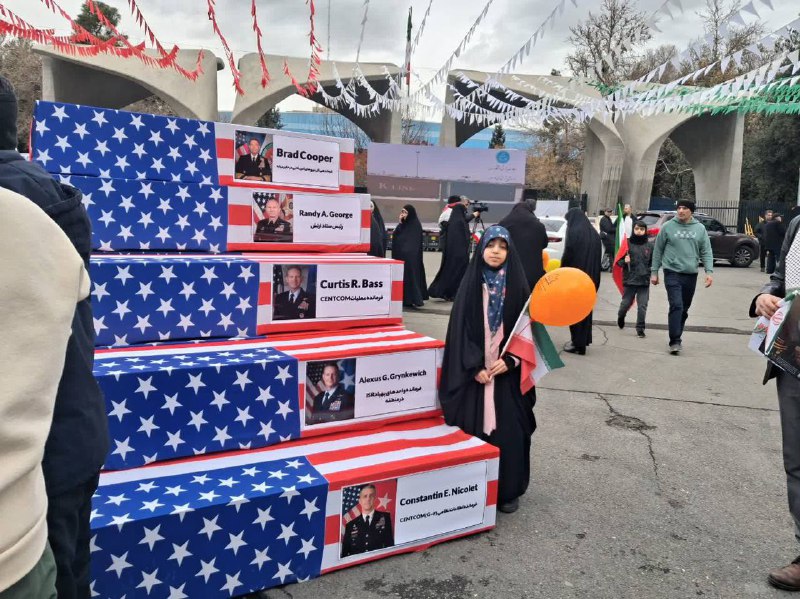
Participants trampled Israeli and American flags — a staple of every revolution anniversary, so predictable it functions less as protest and more as liturgy. The regime has rituals. They are performed. The cameras record. The world yawns.
But this year, the regime also staged something more deliberate.
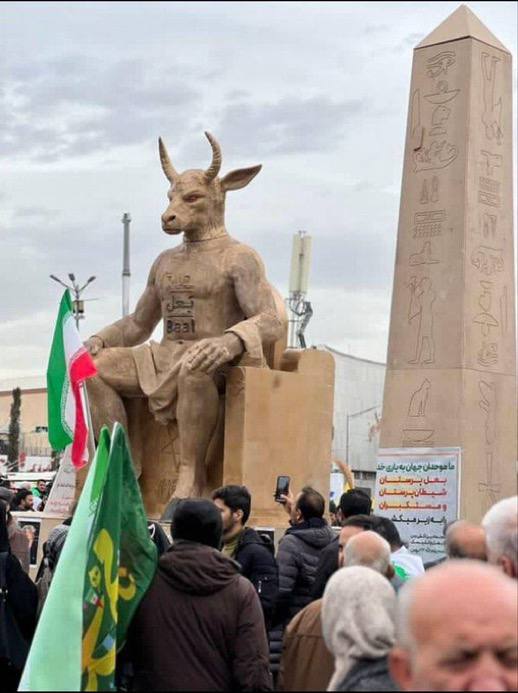
Iranian regime supporters burned a mock-up depicting a Star of David inscribed with “Baal” — the name of an ancient pagan deity — and portrayed as a demonic figure. The crowd chanted “Death to Israel.”
This was not spontaneous rage. It was calculated theological theater. The ayatollah regime continues to present itself as godly and righteous, claiming to fight against what it portrays as ungodly and morally depraved forces. By inscribing “Baal” on the Star of David, the regime explicitly frames the Jewish state — and by extension, the Jewish people — as worshipers of demons.
And while the regime performed its righteousness for the cameras, international allies joined the celebration.
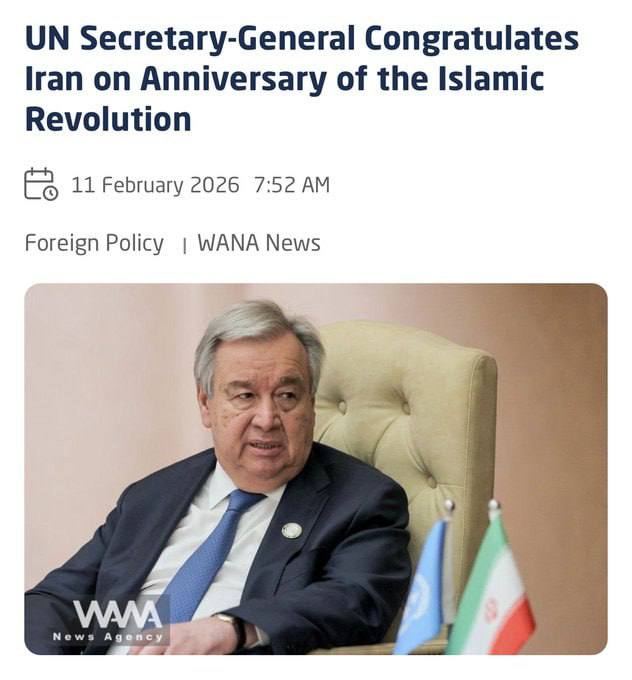
As Israeli-American commentator Amir Tsarfati observed: “Terrorist sympathizer congratulates a terrorist regime.” The congratulatory messages flowed in from the regime’s allies — a reminder that the Islamic Republic does not operate in isolation. It has friends. And its friends are not troubled by what happens to the Iranian people.
What the Regime Justified
While the world watched the parade, a leaked video surfaced that revealed something far more disturbing than street theater.
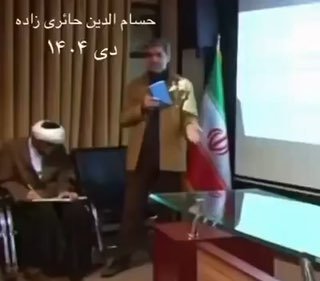
The footage, sourced by defense analyst Babak Taghvaee and shared on X (formerly Twitter), shows a meeting of officials of the Islamic regime. In it, the regime’s security strategist Hesamuddin Haerizadeh attempts to justify the massacre of over 40,000 Iranian protesters.
His argument is chilling in its clarity: the killings were “necessary” to purify Iran from non-Muslims. Opponents of the regime are not political dissidents — they are enemies of Allah. And if purging enemies of Allah requires the killing of tens of thousands — or even millions — of Iranians, then so be it.
Read that again. A senior security strategist of a sitting government, on video, arguing that the mass killing of his own citizens is religiously justified.
Figures like Haerizadeh are not fringe voices. They are the architects of mass violence — the men who design the killing and provide its theological cover. These are the same strategists who, according to reporting, had intended to order the IRGC Aerospace Force to launch ballistic missiles with cluster munitions at any Iranian city under the control of protesters.
Cluster munitions. Against their own cities. Against their own people.
What the People Said
The regime celebrated on camera. The people spoke in the dark.
On the night of the anniversary, as the Islamic Republic marked the 1979 coup d’état with fireworks and speeches, Iranians in neighborhoods across the country opened their windows and chanted into the night:
“Death to the Islamic Republic.”
“Death to Khamenei.”
These are not slogans of a fringe movement. They are the cries of a population that has buried its children, watched its friends disappear into prisons, and learned that the regime views their lives as expendable — a cost of doing the business of God.
All of Iran is mourning at least 40,000 Iranians killed. Yet one of the world’s largest massacres since World War II continues to receive little to no international attention. No UN resolutions. No sanctions tied to the killings. No wall-to-wall cable news coverage. The bodies are buried, and the world moves on.
What the Grief Looks Like
A young daughter scatters flowers on the side of a road.
There is no grave to visit — not yet, maybe not ever. This is the spot where her father was killed. She honors him the only way she knows how: breaking down on the pavement where Islamic Republic death squads took his life during the Iran Massacre.
She is not alone. Across Iran, families visit roadsides, intersections, and unmarked patches of ground where their loved ones fell. The regime does not acknowledge the dead. There are no memorials. There is no official count. The families grieve in silence, or they grieve in defiance — and defiance carries its own price.
This is what 47 years of theocratic rule has produced: a country where a father can be shot in the street and his daughter must scatter flowers on asphalt because there is nowhere else to mourn.
What Scripture Says
The psalmist knew this kind of government:
“O Lord, how long shall the wicked, how long shall the wicked exult? They pour out their arrogant words; all the evildoers boast. They crush your people, O Lord, and afflict your heritage. They kill the widow and the sojourner, and murder the fatherless. And they say, ‘The Lord does not see; the God of Jacob does not perceive.'” (Psalm 94:3-7)
The wicked exult. They pour out arrogant words. They crush God’s people and murder the fatherless. And they say — with the confidence of men who believe they will never be held accountable — “The Lord does not see.”
Haerizadeh believes God is on his side. The regime believes it acts in Allah’s name. The parade floats and the flag-burnings and the demonic Star of David mock-ups — all of it is dressed in the language of divine mandate.
But the psalmist’s answer comes just a few verses later:
“He who planted the ear, does he not hear? He who formed the eye, does he not see? He who disciplines the nations, does he not rebuke?” (Psalm 94:9-10)
God sees. He hears the chanting in the streets. He sees the flowers on the asphalt. He watches the leaked videos and the parade floats and the cluster munition plans. And He is not indifferent.
The mills of God’s justice grind slowly. But they grind. Every regime in history that clothed its violence in religious language has eventually been ground to powder. Babylon fell. Rome fell. The Soviet Union fell. And the Islamic Republic of Iran — for all its missiles and its death squads and its theological theater — is not exempt from the same God who toppled every empire that came before it.
What This Means for You
If you are an Iranian reading this — inside Iran or in the diaspora — know this: your suffering is not invisible. Not to us. Not to God. The 40,000 dead are not forgotten. The daughter scattering flowers is not alone. And the regime that claims to act in God’s name will answer to the God whose name it has taken in vain.
If you are a Western Christian reading this — pray. Pray specifically. Pray for the families who cannot grieve publicly. Pray for the protesters who risk everything to chant truth into the dark. Pray for the leaked videos to reach the eyes that need to see them. And pray that the God who hears the cries of the oppressed will act — in His timing, in His way, with the justice that no human court has been willing to deliver.
The Islamic Republic celebrated 47 years this week. Forty-seven years of revolution. Forty-seven years of promises. Forty-seven years of a government that claims God’s authority while shedding God’s people’s blood.
The parade will end. The flags will be swept up. The cameras will turn off. But the chanting will continue. And the flowers will keep appearing on the roadsides. And the God who sees will not forget.
“He who planted the ear, does he not hear? He who formed the eye, does he not see?”
He does.
Sources: Behold Israel (Amir Tsarfati), Telegram; Babak Taghvaee, X (formerly Twitter). All media sourced from Behold Israel Telegram channel (@beholdisraelchannel).