There’s a woman in Genesis who runs into the wilderness and assumes nobody sees her. She’s pregnant, alone, cast out, and forgotten.
Then God shows up.
She names Him El Roi — “the God who sees me.” And she says something that should stop every one of us in our tracks: “Have I also here seen Him who sees me?” (Genesis 16:13).
Right now, tens of thousands of Iranians are in their own wilderness. The world is watching — sort of. The cameras are pointed elsewhere. The diplomats are negotiating about enrichment levels. And the people who are bleeding and starving and burying their dead are wondering if anyone sees them at all.
God sees Iran. He always has.
The Situation
On December 28, 2025, shopkeepers in Tehran took to the streets. Inflation had made their currency worthless. Energy shortages left them in the dark. The humiliation of the June 2025 Twelve-Day War with Israel — in which Iran’s vaunted missile program proved impotent and its nuclear sites were bombed by both Israel and the United States — had shattered whatever confidence remained in the regime.
Within days, the protests spread nationwide. Students joined. Then workers. Then nearly everyone. These were Iran’s largest protests since the 2022 Mahsa Amini uprising — and they dwarfed it.
On January 8, 2026, the regime responded with what some observers have called “Iran’s Babi Yar” — the deadliest crackdown since the Islamic Republic took power in 1979. The internet was cut to 1% of normal capacity. When connectivity was restored days later, the evidence began pouring out.
The death toll depends on who you ask:
- The Iranian government claims 3,117, including “civilians and security forces.”
- HRANA (Human Rights Activists News Agency) has documented 6,941 confirmed deaths, with 11,630 additional cases under review.
- The Sunday Times estimates 16,500 to 18,000 killed, with 330,000 injured.
- Time, The Guardian, and Iran International report estimates of 30,000 to 36,500 killed during January 8-9 alone.
- As of early February 2026, total estimates exceed 80,000 killed, with mass casualty events still being documented.
Read those numbers again. The low end is nearly 7,000 people confirmed dead. The high end rivals a small war.
And a GAMAAN survey found that 44% of Iranians blame the regime for the war with Israel. Only 33% blame Israel. The people know who is responsible for their suffering.
The Negotiations
On February 6 — yesterday — indirect talks began in Muscat, Oman. Iranian FM Abbas Araghchi and US envoy Steve Witkoff led their delegations, mediated by Omani officials. They didn’t meet face to face.
The US brought Navy Admiral Brad Cooper, the top Middle East military commander, with the USS Abraham Lincoln carrier group sitting off Iran’s coast. That’s not subtle. It wasn’t meant to be.
Araghchi called it a “positive and good start.” Both sides agreed to keep talking.
But here’s the gap that matters: Iran will only discuss its nuclear program. That’s it. Nuclear issues for sanctions relief. Everything else is off the table. They’re good at negotiating, and are playing the Trump administration.
The US — per Secretary Rubio — demands a broader package: nuclear program, ballistic missiles, proxy terror groups, and the treatment of their own people.
Qatar, Turkey, and Egypt are mediating. They’ve proposed a framework including enrichment limits, missile restrictions, and constraints on Iran arming regional proxies: Hamas, Hezbollah, Yemen and others. But Iran has drawn its red line. And every mediating country has its own interests. Saudi Arabia is lobbying against US strikes — not out of love for Tehran, but because a regional war would destroy their Vision 2030 economic reforms. The UAE maintains robust economic ties with Iran through Dubai’s ports. Everyone is jockeying for position.
This is not a peace process. It’s a chess game. And Iranian civilians are not players. They’re pawns.
Why Help Isn’t Coming
If you’re watching the protests and waiting for the cavalry, you should sit down. Here’s why external intervention is almost certainly not coming.
Historical precedent. In 2009, during the Green Movement, millions of Iranians took to the streets. The Obama administration stayed on the sidelines. The calculation was that American support would discredit the opposition as “American puppets.” Whether or not that calculation was right, it established a pattern that has held for nearly two decades.
Military constraints. Since the Gaza ceasefire, the US has reduced forces in the Middle East, limiting its capacity for sustained operations. The Twelve-Day War already strained the region’s military architecture.
The puppet problem. This hasn’t gone away. Any opposition movement visibly backed by Washington becomes, in the regime’s propaganda, an American plot. Iran’s Parliament Speaker Ghalibaf has already warned that “all American centers and forces across the entire region will be legitimate targets” if the US intervenes.
American public opinion. A YouGov poll shows little support for military intervention, though roughly half of Americans think it’s likely to happen. The administration reads those numbers.
Nuclear acceleration. Any intervention risks pushing Iran to sprint toward a nuclear weapon. The IAEA estimates Iran has enough enriched material for nine warheads. Breakout time for fissile material is near zero. Actual weaponization would take longer — but a cornered regime might take the risk. And in October 2025, Khamenei reportedly authorized development of miniaturized warheads for ballistic missiles.
The diplomatic track. The administration is pursuing negotiations, not regime change rhetoric. These two strategies are, for all practical purposes, mutually exclusive.
Nation-building fear. No one in Washington — left or right — wants another open-ended commitment in the Middle East. The calculus is cold but clear: intervention could mean years of nation-building, and there is no appetite for it.
So the protesters are on their own. Earthly powers have done the math, and the math says Iran isn’t worth the cost.
That’s the geopolitical reality. It is not the spiritual reality.
The Fires
There is one more thing you should know about.
In late January and early February, a series of fires broke out in warehouses and military compounds across Iran — facilities that witnesses and human rights organizations say were being used to store the bodies of slain protesters. The regime’s explanation? Electrical short circuits.
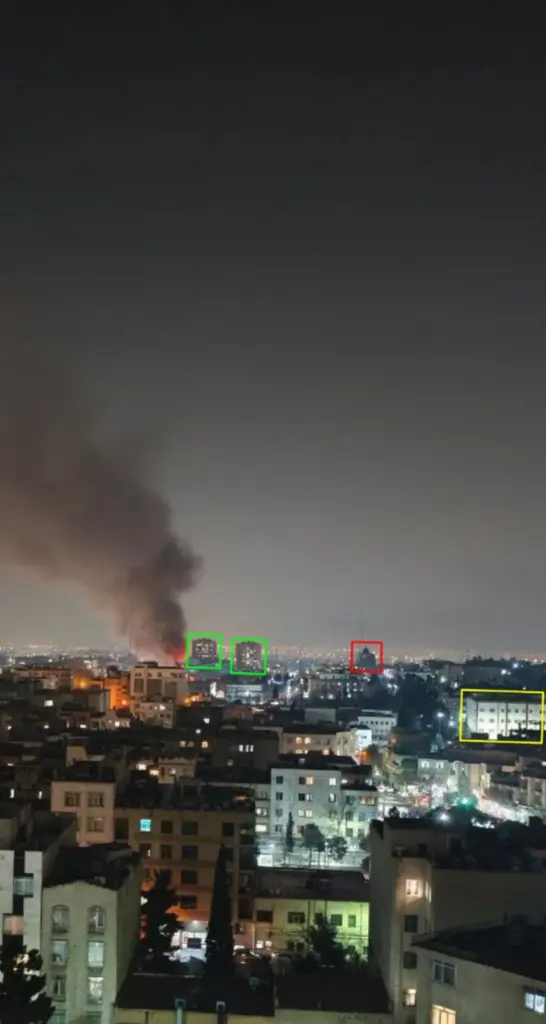
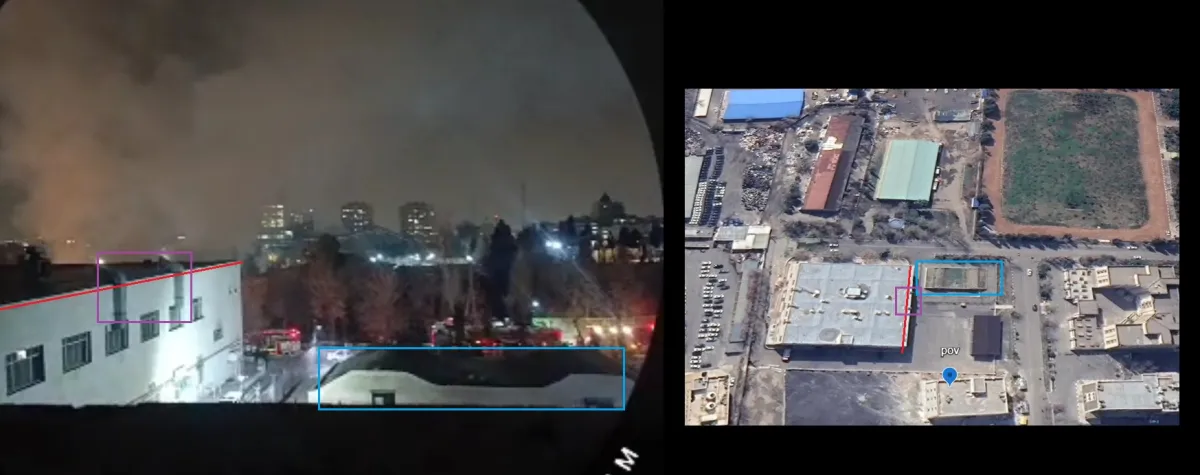
On February 6, a fire erupted at Joint Chiefs Base No. 2 in Tehran. The army attributed it to “an electrical short circuit in a 300-square-meter woodworking workshop.” Open-source intelligence analysts immediately geolocated the blaze using satellite imagery and citizen footage, confirming the fire originated in a section of the compound that witnesses had identified as a temporary morgue.
The pattern is consistent with what happened after the 2019 protests, when families reported being unable to recover the bodies of loved ones. A regime that controls the body count controls the narrative. A regime that burns the evidence controls the history.
Meanwhile, over 160 schoolchildren have been confirmed killed in the crackdown — the equivalent of five full classrooms, according to the spokesperson for the Teachers’ Union.
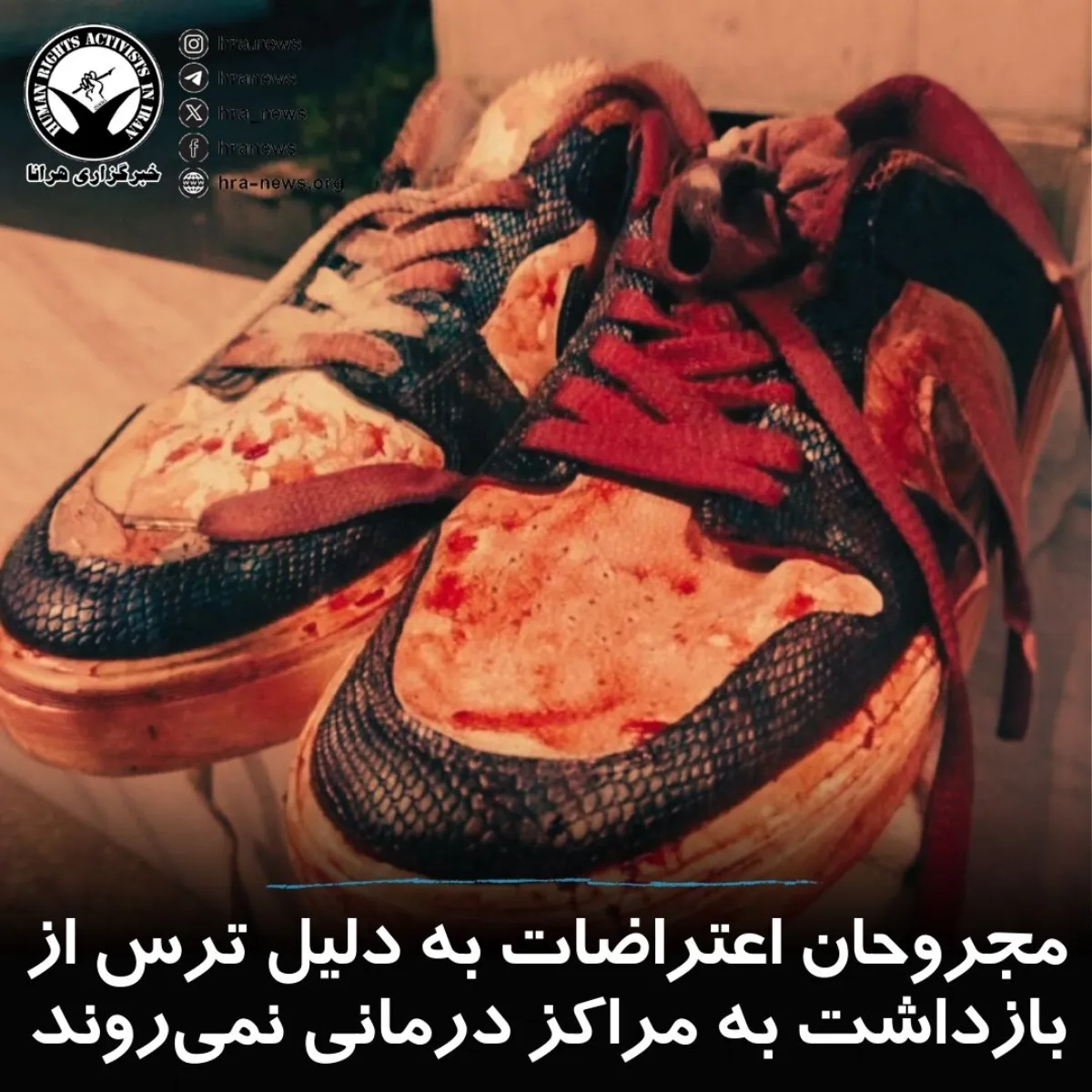
And HRANA reports that thousands of wounded protesters are refusing to seek medical treatment out of fear of arrest. Over 25,000 have been treated, with more than 13,000 requiring surgery. Some have lost limbs. Others have lost their sight. Many are performing emergency care at home, extracting bullets from their own bodies, because the hospital is more dangerous than the wound.
The Persecuted Church
While the streets burn, the church in Iran is under siege — and growing.
In 2025, imprisonment of Christians in Iran increased sixfold. That’s not a typo. Six times the rate of the year before.
In March 2025, three Christian converts — Narges Nasri, Abbas Soori, and Mehran Shamloui — were sentenced to a combined 41 years in prison for their involvement in house churches. Narges received 16 years: 10 for “propaganda activities contrary to Islamic law,” five for house church membership, and one more for good measure. In September 2025, five more converts had sentences upheld totaling over 40 years.
In January 2026, as the protests raged, at least 10 Christians were arrested in three locations in Fars province before January 4. One pastor reported: “Security forces raided the homes of several believers, accusing us of providing ideological fuel for the street protests.”
Think about that. The regime is so afraid of the gospel that it accuses house church members of fueling a national revolution.
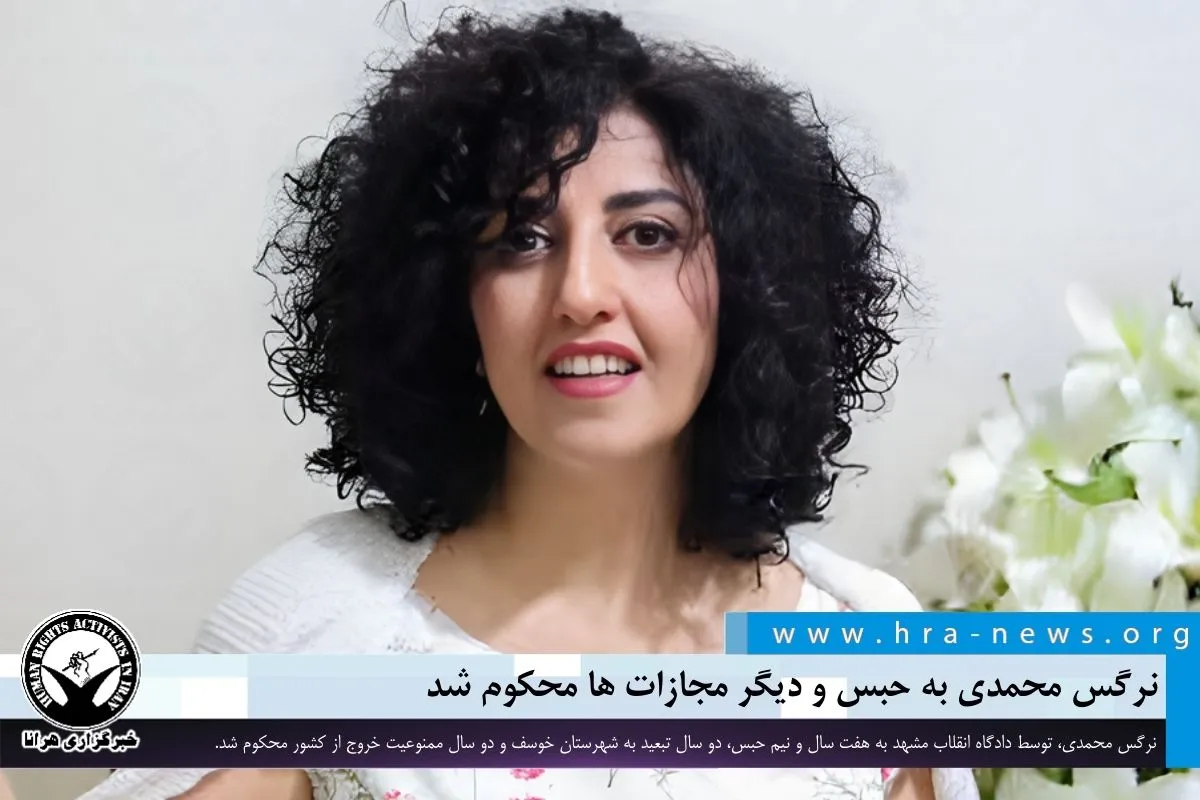
And the crackdown extends far beyond the church. On February 8, 2026, Nobel Peace Prize laureate Narges Mohammadi was sentenced to seven and a half years in prison by a Revolutionary Court in Mashhad, plus two years of exile and a travel ban — for “conspiracy” and “propaganda activities.” She has been imprisoned since December 2025.
The patterns are consistent. Recognized churches are prohibited from admitting converts or using Farsi in services. So converts are pushed into informal house churches — which the regime then targets. Attending or leading a house church carries up to 10 years in prison. Security forces raid meetings, seize Bibles, and detain everyone present. Anyone who speaks — whether Christian house church leader, Nobel laureate, or teachers’ union spokesperson — is silenced.
And the church keeps growing.
Iran is home to an estimated two million or more believers. It’s one of the fastest-growing churches on the planet. The regime framing Christianity as “Western subversion” has not stopped it. Imprisonment has not stopped it. Internet blackouts have not stopped it.
Because you cannot kill what God is building.
The Biblical Connection
Iran is not a footnote in Scripture. Iran is Persia. And God has been at work in Persia for as long as there has been a Persia.
El Roi — The God Who Sees
“She gave this name to the LORD who spoke to her: ‘You are the God who sees me,’ for she said, ‘I have now seen the One who sees me.'” (Genesis 16:13)
Hagar was a foreigner, a servant, pregnant and abandoned in the wilderness. She had no standing, no protector, no advocate. She was invisible to everyone who mattered.
Except God.
God saw her. God spoke to her. God made promises to her son. The God who sees the forgotten woman in the desert sees the forgotten protesters in Tehran. He sees the house church leader in a prison cell. He sees the mother burying her child after January 8.
Daniel in Persia
Daniel served under Persian King Darius and survived the lions’ den. His story is not mainly about lions. It’s about the faithfulness of God under hostile empires. Daniel didn’t escape Persia. He served God inside it. And God preserved him.
The Iranian church is living Daniel’s story right now — faithful service under a regime that throws believers to the lions.
Esther in the Palace
The entire book of Esther takes place in the Persian Empire under King Xerxes. God is never named in the text. Not once. But His fingerprints are on every page. Esther is raised up within the system — not despite it — for a purpose she could not have predicted.
“For such a time as this” (Esther 4:14).
That phrase belongs to the Iranian church today. Believers raised up within a hostile system, for purposes only God can see.
Cyrus the Anointed
This one should unsettle you. In Isaiah 44:28-45:1, God calls Cyrus — a pagan Persian king — “my anointed.” The Hebrew word is mashiach. Messiah. God applied His most sacred title to a foreign ruler who didn’t even know Him.
“I surname you, though you do not know me.” (Isaiah 45:4)
God used Cyrus to free His people from Babylonian exile and rebuild Jerusalem. Cyrus didn’t convert. He didn’t become a believer. God used him anyway — sovereignly, irresistibly, for His own purposes.
If God can call a pagan Persian king “my anointed,” He can work through any leader, any nation, any circumstance. He has done it before in Persia. He can do it again.
Elam‘s Future
Jeremiah 49:34-39 contains a prophecy about Elam — the ancient region that roughly corresponds to modern southwestern Iran.
“But in the latter days I will restore the fortunes of Elam, declares the LORD.” (Jeremiah 49:39)
God scatters Elam. God judges Elam. And then God restores Elam. He sets His throne there.
Whatever you make of the specifics, the trajectory is unmistakable: God has purposes for this nation that extend beyond the current regime, beyond the current crisis, beyond the current headlines. He is not finished with Persia. There’s hope in that.
What Christians Should Do
Pray Specifically
Don’t pray for “Iran” in the abstract. Pray for the house church leaders who gathered in secret last night in Tehran. Pray for the protesters who are mourning their dead. Pray for the families of Narges Nasri, Abbas Soori, and Mehran Shamloui. Pray for the regime — not that they would succeed, but that God would break through. Paul was once a persecutor. So was the Persian Empire.
Support the Persecuted Church
Open Doors and Voice of the Martyrs are doing work on the ground that most of us will never see. Iran is ranked high on the 2026 Open Doors World Watch List. These organizations provide Bibles, support imprisoned believers’ families, and document persecution. Support them. It matters.
Don’t Reduce Iran to a Chess Piece
There are more than two million believers in Iran. Millions more who are secular, who are disillusioned with the regime, who simply want to feed their families. They are not geopolitical chess pieces. They are not data points in a nuclear negotiation. They are human beings made in the image of God.
When you talk about Iran, talk about Iranians. When you read the headlines, remember that behind every number is a name.
Remember What God Is Doing
The church in Iran is one of the fastest-growing in the world. Not in spite of persecution — through it. This is the pattern of Acts. This is what God has always done. The blood of the martyrs is the seed of the church, and that seed is sprouting across Persia.
The God Who Sees
Hagar thought she was invisible. She wasn’t. The protesters in Iran may feel invisible — abandoned by the diplomats, ignored by the media cycle, crushed by the regime. But God’s attention is not governed by news algorithms.
God sees Iran. He always has. He’s the God of Daniel in Persia, of Esther in the palace, of Cyrus the anointed. He’s the God who set His throne in Elam and promised to restore its fortunes. And He’s the God of every house church gathering in secret tonight in Tehran.
El Roi. The God who sees.
You’re in my prayers.
Sources: NPR: At least 6,126 people killed in Iran protests; Human Rights Watch: Growing Evidence of Countrywide Massacres; Al Jazeera: US-Iran talks live from Oman; NPR: US holds indirect talks with Iran; CFR: Unpacking Iran’s Protests and Trump’s Threats; Arms Control Association: Status of Iran’s Nuclear Program; Center for Human Rights in Iran: Imprisonment Jumps Six-Fold; CSI: Iran’s Dramatic Surge in Anti-Christian Persecution; ICC: Iran’s Christians on Heightened Alert; Open Doors: Iran; FPRI: Humiliation and Transformation After the 12-Day War; HRANA: Narges Mohammadi sentenced; HRANA: Wounded protesters avoid hospitals
Media Sources: Featured image and fire documentation via @VahidOnline Telegram channel (864K subscribers). Narges Mohammadi photo and bloodied sneakers image via @Hranews (HRANA – Human Rights Activists News Agency).
This article is part of our current events coverage. For more on the persecuted church worldwide, see our Christian Persecution 2026 feature.