
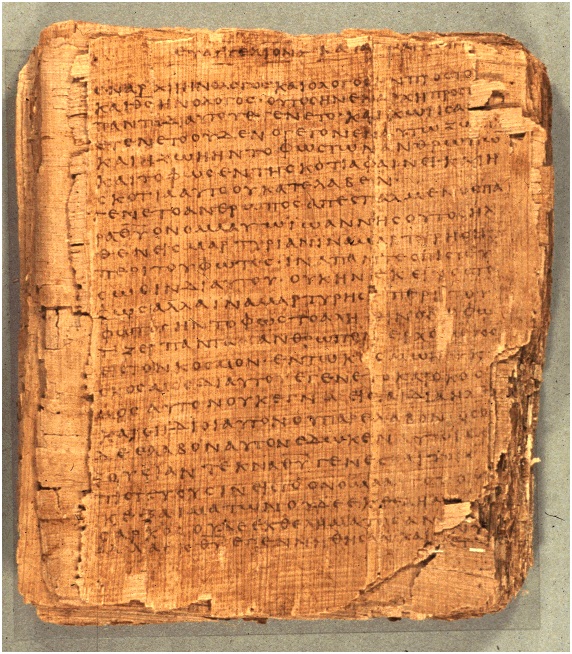
The Greek Words That Unlock John 2: From Wedding Wine to Temple Wrath
John 2 contains two of the most dramatic scenes in the Gospels. A wedding where the wine runs out and a carpenter quietly solves the problem. A temple where the money flows freely and the same carpenter violently shuts it down. In English, you read these stories and come away with a general impression: Jesus is powerful, Jesus cares about worship, Jesus is not to be trifled with. Fine. True. But general.
The Greek is not general. The Greek is a scalpel.
Behind every English word in John 2 sits a Greek term chosen with the kind of precision that turns stories into theology. Where your English Bible says Jesus “made” a whip, the Greek tells you he deliberately, premeditatedly crafted one. Where English says the servants filled the jars “to the brim,” the Greek captures a totality of obedience that becomes its own sermon. Where English says people “believed” in Jesus and Jesus didn’t “commit” himself to them, the Greek reveals that John used the exact same word for both – and the devastating irony is the entire point.
This article examines twenty-three key Greek terms across John 2, organized by the two major scenes of the chapter. For each term, we will look at the original word, its etymology and root meaning, its theological significance within John 2, and its connections to the broader Johannine corpus and the rest of Scripture. Where English translations flatten or conceal what the Greek communicates, we will say so plainly.
You do not need to know Greek to read this. You just need to be willing to discover that the text you thought you knew has been saying more than you heard.
Part One: The Wedding at Cana (vv. 1-11)
The first half of John 2 is a study in quiet power. No fanfare. No public announcement. Water becomes wine, and only the servants know what happened. But the vocabulary John uses to describe this event is anything but quiet. Every term carries theological freight that connects backward to Genesis, forward to the cross, and outward to the entire structure of John’s Gospel. As Robin Margaret Jensen notes, early Christian writers recognized this immediately: “The story of Jesus arriving at a marriage feast and turning water into wine is the first miracle in the Gospel of John and a key, initial event of Christ’s epiphany” (Baptismal Imagery in Early Christianity, p. 221).
1. Hemera Trite – “The Third Day”
“On the third day there was a wedding in Cana of Galilee…” (John 2:1)
The chapter opens with a temporal marker that functions as a theological detonator. “tēGreek“τῇ“tē“dative“on is not merely a calendar reference. It is an echo chamber.
The phrase “the third day” in the Old Testament is repeatedly associated with divine manifestation and deliverance. On the third day, Abraham lifted his eyes and saw Mount Moriah, where God would provide the ram (Genesis 22:4). On the third day, Joseph released his brothers from prison (Genesis 42:18). On the third day at Sinai, God descended on the mountain in fire and smoke to meet His people (Exodus 19:11, 16). Hosea prophesied: “After two days He will revive us; on the third day He will raise us up, that we may live in His sight” (Hosea 6:2). The third day is the day when God acts decisively.
But there is something more specific happening in John’s chronology. As the structural analysis in Art and Meaning: Rhetoric in Biblical Literature observes, R. Brown and others consider “the third day” to be, by our reckoning, the second after the events at the close of chapter 1, creating a deliberate parallel: “if water-to-wine points to new life through Christ when ‘his hour has come’ there may be an intended parallel to Jesus’ answer in 2:19, ‘Destroy this temple, and in three days I will raise it up’” (Clines, Gunn, et al., Art and Meaning, JSOT Supplement, p. 248). If you trace the days from John 1:19 forward – “the next day” in 1:29, “again the next day” in 1:35, “the following day” in 1:43, and then “the third day” in 2:1 – you arrive at approximately the seventh day from the beginning of John’s narrative. John opened his Gospel with “In the beginning” (1:1), echoing Genesis 1:1. Now his narrative reaches a climactic seventh day that culminates in abundance, joy, and the revelation of glory. This is a creation week. The first creation week ended with God resting over a world He declared “very good.” This new creation week ends with a wedding feast and wine that surpasses everything that came before.
And of course, “the third day” will become the most theologically significant temporal marker in all of Scripture – the day of resurrection. John plants this seed at the very beginning of Jesus’ public ministry. The first sign and the final sign share the same calendar: on the third day, transformation comes.
John’s “third day” is simultaneously a chronological note, an echo of Old Testament theophanies, the completion of a new creation week, and a foreshadowing of the resurrection. A single phrase does the work of a sermon.
2. Gynai – “Woman”
“Jesus said to her, ‘Woman, what does your concern have to do with Me?’” (John 2:4)
Modern English ears hear rudeness. Ancient Greek ears heard respect. The word “gynai”Greek“γύναι”“gynai”“noun,“woman, is the vocative form of gyne (woman), and in first-century usage it was a formal, dignified address – roughly equivalent to “Madam” or “Ma’am” in English. It was the term used to address women of standing. Homer used it for queens. Emperors used it for empresses. There is not a single recorded instance in all of ancient Greek literature where gynai functions as a term of disrespect.1
What makes the address unusual is not its content but its context. Jewish sons in the first century typically addressed their mothers with more intimate familial terms. By using gynai instead of a word like “mother,” Jesus was not being cold – He was establishing a principle. His ministry was governed by the Father’s will, not by family ties. The same word appears again at the cross in John 19:26, when Jesus commits Mary to the care of the beloved disciple: “Woman, behold your son!” In both instances – the first sign and the final hours – Jesus uses gynai at moments when He is acting in His capacity as the Son of God rather than the son of Mary.
There may also be an echo of Genesis 3:15, where God addresses Eve as “the woman” and promises that her seed will crush the serpent’s head. Mary is the woman through whom that seed has come. The address is not a demotion; it is a coronation.
3. Ti Emoi Kai Soi – “What to Me and to You?”
“‘Woman, what does your concern have to do with Me?’” (John 2:4)
English translations struggle with this phrase. “What does your concern have to do with Me?” (NKJV). “What does this have to do with me?” (ESV). “How does that concern us?” (NASB). None of them quite capture what the Greek says.
The original is “tiGreek“τί“ti“Semitic“what, a Semitic idiom rendered literally: “What to me and to you?” It appears repeatedly in the Septuagint – Judges 11:12 (Jephthah to the king of Ammon), 2 Samuel 16:10 (David to the sons of Zeruiah), 1 Kings 17:18 (the widow of Zarephath to Elijah), 2 Kings 3:13 (Elisha to the king of Israel). In every case, it establishes a boundary. It says: “Your concern is not my concern. Our agendas are not the same. Do not presume to direct me.”
This is not hostility. It is clarity. Jesus was telling Mary: I understand the social crisis. But my actions are not governed by social crises. I operate on a different timetable. The Father sets the hour; I follow it. The idiom distances without rejecting. It draws a line without burning a bridge. And Mary, to her immense credit, understood perfectly – because her response was not offense but instruction to the servants: “Whatever He says to you, do it” (2:5). She heard the boundary and submitted to it. She trusted that Jesus would act according to the Father’s will, not her suggestion, and she was content with that.
4. Hora – “Hour”
“‘My hour has not yet come.’” (John 2:4)
This is one of the most theologically loaded words in John’s Gospel, and its first appearance here sets the trajectory for everything that follows. “hōra”Greek“ὥρα”“hōra”“noun,“hour, does not mean sixty minutes. It means the divinely appointed moment – the kairos, the fixed point on God’s sovereign timetable when the purpose of the Son’s mission reaches its climax.
In John’s Gospel, the hora always points to the cross and glorification. Jesus says “my hour has not yet come” in 2:4, 7:30, and 8:20 – and in each case, the statement explains why He cannot be seized, rushed, or redirected. The hour is coming but has not yet arrived. Then the pivot: in 12:23, Jesus declares, “The hour has come that the Son of Man should be glorified.” In 13:1, “Jesus knew that His hour had come.” In 17:1, “Father, the hour has come.” The long-anticipated hour is the cross – simultaneously the moment of deepest humiliation and highest glory.
What this means for the Cana narrative is startling. Jesus connects a wedding’s wine shortage to His own death. MacArthur draws out the implication: “Since the prophets characterized the messianic age as a time when wine would flow liberally (Jer. 31:12; Hos. 14:7; Amos 9:13, 14), Jesus was likely referring to the fact that the necessity of the cross must come before the blessings of the millennial age” (The MacArthur Study Bible, NKJV, p. 7174). The hora that governs His refusal at a banquet is the same hora that will see Him hanging on a cross. The wine at Cana and the blood at Calvary are on the same timeline. John wants you to feel the shadow of the cross falling even across the wedding feast.
5. Hydria – “Waterpot”
“Now there were set there six waterpots of stone, according to the manner of purification of the Jews…” (John 2:6)
The word “hydria”Greek“ὑδρία”“hydria”“noun,“water derives from hydor (water) and denotes a large stone vessel designed specifically for holding water. John’s description is unusually detailed: six in number, made of stone, used for Jewish purification rituals, holding twenty to thirty gallons apiece.
Every detail is theologically loaded. Stone vessels were preferred for ceremonial purposes because, according to Jewish law codified in the Mishnah (Kelim 10:1), stone does not contract ritual impurity the way clay does. These were not ordinary household containers. They were instruments of the old covenant’s purification system – the ritual washings (netilat yadayim) that the Pharisees practiced before meals, after contact with Gentiles, and upon returning from the marketplace.2
The number six carries symbolic weight. Seven is the number of divine completion in Jewish thought. Six falls one short – it represents the incomplete, the not-yet-finished. Six stone jars of purification water symbolize the old covenant’s washing system: genuinely given by God, genuinely valuable, but inherently incomplete. What Jesus does to the contents of these jars is what Jesus does to the old covenant itself: He does not abolish it. He fulfills it. He transforms it into something so superior that the master of the feast is astonished.
The physical details also matter for the historicity of the account. The capacity – 120 to 180 gallons total – is staggering. This is not a modest blessing. This is messianic abundance, the kind the prophets foretold: “The mountains shall drip with sweet wine” (Amos 9:13). Eric M. Meyers and Mark A. Chancey confirm the archaeological evidence: “The use of stone vessels to protect liquids from ritual impurity is an element of Jewish culture that is much better understood after the uncovering of stone vessels at so many sites in Palestine” (Archaeology of the Land of the Bible, vol. III, p. 192). Archaeological discoveries of stone vessels precisely matching John’s description at first-century sites in Galilee confirm the accuracy of this kind of detail that only an eyewitness would record.
6. Heos Ano – “To the Brim”
“And they filled them up to the brim.” (John 2:7)
Strack and Billerbeck note that according to the Tosefta, wedding garments could be borrowed “for at least seven days,” and “R. Simeon b. Eleazar (ca. 190) said, ‘At least two weeks, because the family of his father-in-law comes to him on the second Sabbath after the wedding’” (Commentary on the New Testament From the Talmud and Midrash, vol. 2, p. 278). Within such an extended celebration, the sheer volume of wine that Jesus provided takes on even greater significance. Two small words that preach an entire sermon on obedience. “heōsGreek“ἕως“heōs“adverbial“up is an adverbial phrase meaning “up to the very top.” The servants did not fill the jars partway. They did not approximate. They filled them to the absolute maximum capacity – heōs anō, up to the brim, to the point where one more drop would have overflowed.
The theological principle embedded in this physical detail is one that runs throughout Scripture: the degree of obedience determines the degree of blessing. Elisha told the widow to gather vessels, and the oil stopped flowing when the vessels ran out (2 Kings 4:1-7) – more vessels would have meant more oil. Naaman had to dip seven times, not six (2 Kings 5:14). The Israelites had to march around Jericho seven times on the seventh day, not five times and call it close enough (Joshua 6:15-16).
These servants – unnamed, unrecorded, forgotten by history – obeyed completely. They did exactly what Jesus said, in the manner Jesus indicated, to the fullest extent possible. And 120 to 180 gallons of the finest wine in Galilean history was the result. Partial obedience would have yielded partial wine. Heōs anō is the vocabulary of total surrender – and total transformation.
7. Architriklinos – “Master of the Feast”
“When the master of the feast had tasted the water that was made wine…” (John 2:9)
This is one of those Greek compound words that tells you its own story. “architriklinos”Greek“ἀρχιτρίκλινος”“architriklinos”“noun,“master is built from archi- (chief, ruler – the same prefix in “architect” and “archbishop”) and triklinos (a three-couched dining room, the standard layout for a formal banquet where guests reclined on couches arranged on three sides of a central table). The architriklinos was the person who presided over the triklinos – the chief steward, the master of ceremonies, the one responsible for the food, wine, entertainment, and proper ordering of a banquet.
His role was not merely logistical but authoritative. He tasted the wine before it was served. He determined the order of courses. His palate was the standard. When this man pronounced Jesus’ wine superior to anything previously served, it was an expert verdict from the person most qualified to render it. The architriklinos functioned in the narrative as an unwitting witness – his competence authenticates the quality of the miracle even though he has no idea a miracle has occurred.
John draws an ironic contrast: the person with the most authority at the feast knows the least about what is actually happening. The servants with no authority know everything. This inversion – the powerful are ignorant, the lowly are in the know – is a gospel pattern. It recurs in the temple scene (the religious leaders demand a sign while standing in front of one) and throughout John’s Gospel. God’s self-revelation has a way of bypassing credentials and finding the obedient.
8. Methysthosin – “Have Drunk Freely”
“‘Every man at the beginning sets out the good wine, and when the guests have well drunk, then the inferior.’” (John 2:10)
John records the architriklinos using a word that many translators soften. The Greek is “methysthōsin”Greek“μεθυσθῶσιν”“methysthōsin”“verb,“have, from methyskō, which means to become intoxicated. English translations dance around it: “have well drunk” (NKJV), “have drunk freely” (ESV), “have had too much to drink” (NIV). The Greek is less delicate. The root methy- is the same root that gives us the English word “methanol.” The architriklinos is describing a common practice at extended feasts: serve the good wine first, and after the guests’ palates are dulled by generous consumption, bring out the cheaper stuff.
Why does this matter? Because it tells us three things. First, John is not sanitizing reality. He records the frank observation of a first-century wedding professional describing how feasts actually worked. The Bible does not pretend that ancient weddings were tea parties. Second, the quality distinction becomes the platform for the miracle’s authentication: the wine Jesus made was not merely passable – it was recognizably, shockingly superior to what had been served when palates were at their sharpest. Third, it establishes a theological principle. The Anchor Bible Dictionary notes the broader cultural resonance of wine in the ancient world: “In the Greek tradition, wine is considered to be the gift of the god Dionysus to mortals, and its effects, ranging from pleasure to literary inspiration, are viewed as the blessings of the god,” while in Jewish tradition, the “cup of immortality” (Joseph and Aseneth 8:5; 15:5) “refers to a beverage that guarantees eternal life in heaven” (Freedman, The Anchor Bible Dictionary, vol. 6, p. 5954). Against this backdrop, the world operates on a pattern of diminishing returns: the best comes first, then decay. God’s kingdom operates on the opposite principle: He saves the best for last. The old covenant was good. The new covenant is better. History is moving not toward entropy but toward consummation.
9. Semeion – “Sign”
“This beginning of signs Jesus did in Cana of Galilee…” (John 2:11)
This is arguably the single most important vocabulary distinction in John’s Gospel, and English obliterates it. “sēmeion”Greek“σημεῖον”“sēmeion”“noun,“sign, means a sign – a miracle that signifies, that points beyond itself to a deeper meaning. The Synoptic Gospels (Matthew, Mark, Luke) typically use “dynamis”Greek“δύναμις”“dynamis”“noun,“power, to describe Jesus’ miracles – the word from which we get “dynamite.” Dynamis emphasizes raw power. Sēmeion emphasizes communication.
John never uses dynamis for Jesus’ miracles. Not once. He always uses sēmeion. This is a theological choice, not a stylistic preference. As Walvoord and Zuck explain, “John used the word ‘signs’ (sēmeion, v. 11) because he was seeking to draw attention away from the miracles as such and to point up their significance. A miracle is also a ‘wonder’ (teras), a ‘power’ (dynamis), and a ‘strange event’ (paradoxos)” (The Bible Knowledge Commentary: Gospels, p. 232). For John, Jesus’ miracles are not primarily demonstrations of power (though they are powerful). They are acts of communication – each one a visual sermon declaring something specific about who Jesus is. Water into wine is a sign that the Messianic age of abundance has arrived. Healing the nobleman’s son (4:46-54) is a sign that Jesus is Lord over distance and disease. Feeding the five thousand (6:1-14) is a sign that Jesus is the bread of life. Each sēmeion has a meaning that must be read, not merely witnessed.
The word sēmeion also carries Old Testament resonance. As Kittel and Friedrich observe in their entry on sēmeion, “In John, as distinct from the Synoptics, Acts, or the surrounding world, the term is a key one in theological interpretation” (Theological Dictionary of the New Testament, Abridged, p. 590). God gave Moses “signs” (otot in Hebrew, sēmeia in the Septuagint) to authenticate his mission (Exodus 4:8-9). The prophets performed “signs” to confirm their messages. Spicq further notes that “with the prophets, a ‘sign’ is proof that a message is truly from God,” and that “this is how St. John sees miracles: they authenticate Jesus as the Messiah announced by the prophets” (Theological Lexicon of the New Testament, vol. 3, p. 591). By calling Jesus’ miracles sēmeia, John places them in the prophetic tradition – but with a crucial escalation. Moses’ signs proved he was sent by God. Jesus’ signs prove He is God. The sign at Cana does not merely display divine power working through Jesus. It reveals divine glory dwelling in Jesus.
10. Ephanerosen – “Manifested”
“…and manifested His glory…” (John 2:11)
The verb “ephanerōsen”Greek“ἐφανέρωσεν”“ephanerōsen”“verb,“manifested, comes from phaneroō, which means to make visible what was previously hidden, to bring into the open what was concealed. The root is phaino (to shine, to appear), from which we get “phenomenon” and “epiphany.” This is not the language of creation but of revelation. Jesus did not acquire glory at Cana. He revealed glory that was already His – the glory He had “with the Father before the world was” (17:5).
The aorist tense (a point action in past time) indicates a discrete moment of revelation – one specific event in which the veil was lifted. The glory was always there. At Cana, it became visible. Think of the sun behind clouds: when the clouds part, you are not witnessing the sun’s creation. You are witnessing its disclosure. The miracle at Cana was a parting of the clouds – a momentary glimpse of the divine radiance concealed behind the flesh of a Galilean carpenter.
This verb carries enormous weight in the broader Johannine corpus. In 1 John 1:2, the eternal life that was with the Father “was manifested (ephanerōthē) to us.” In 1 John 3:5, “He was manifested (ephanerōthē) to take away our sins.” In 1 John 3:8, “For this purpose the Son of God was manifested (ephanerōthē).” The entire mission of the incarnate Son is captured in this one verb: what was hidden with the Father has been made visible in the Son. Cana was the first time that pattern became concretely, physically, undeniably evident.
11. Doxa – “Glory”
“…and manifested His glory; and His disciples believed in Him.” (John 2:11)
We encountered “doxa”Greek“δόξα”“doxa”“noun,“glory, in the John 1 Greek study, where it translated the Hebrew kabod – the weightiness, the radiant heaviness, the overwhelming splendor of God’s manifest presence. But its appearance here in John 2:11 demands fresh attention because of what it reveals about the nature of glory in the Fourth Gospel.
In classical Greek, doxa meant “opinion” or “reputation” – what people think of you. In the Septuagint, it was commandeered to translate kabod, the visible, tangible radiance of God that filled the tabernacle (Exodus 40:34), that shone on Moses’ face (Exodus 34:29-35), that Isaiah saw in the temple (Isaiah 6:1-4). The semantic shift is dramatic: from human opinion to divine manifestation. When John says Jesus “manifested His glory,” he is claiming that at a village wedding in rural Galilee, the same radiance that filled the Holy of Holies became visible in the actions of a man turning water into wine.
What makes this theologically staggering is the context. The kabod in the Old Testament was terrifying. Moses could not enter the tabernacle when the glory filled it. The priests could not stand to minister when Solomon’s temple was consecrated (1 Kings 8:11). Isaiah cried “Woe is me, for I am undone!” (Isaiah 6:5). But at Cana, the glory is manifested – and people drink it. The wine is the glory made consumable. The same divine radiance that would have destroyed Moses is now served in cups at a wedding. The Incarnation has not diminished the glory; it has made the glory accessible. That is what John means when he says they beheld the glory “full of grace and truth” (1:14). Grace is glory you can survive.
The Greek terms in John 2:1-11 reveal a carefully constructed theological narrative beneath the surface of a wedding story. “The third day” echoes creation and resurrection. The servants’ obedience “to the brim” pictures complete surrender. The semeion (sign) communicates meaning, not just power. The doxa (glory) unveiled at Cana is the same glory that filled the tabernacle – now made accessible in human flesh. Every word is doing double duty: telling a story and preaching a sermon.
Part Two: The Temple Cleansing (vv. 12-25)
The second half of John 2 explodes with a different kind of energy. Where the wedding was quiet and private, the temple scene is public and violent. Where Cana revealed the Creator’s generosity, Jerusalem reveals the Lord’s jealousy. And the Greek vocabulary shifts accordingly – from the language of transformation and abundance to the language of destruction, authority, and devastating insight into the human heart.
12. Katebe / Anebe – “Went Down / Went Up”
“After this He went down to Capernaum… and Jesus went up to Jerusalem.” (John 2:12-13)
Two verbs of movement that function as a geography lesson and a theology lesson simultaneously. “katebē”Greek“κατέβη”“katebē”“verb,“went – He went down to Capernaum. “anebē”Greek“ἀνέβη”“anebē”“verb,“went – He went up to Jerusalem.
The geographic precision is exact. Cana sits in the Galilean hills, roughly 850 feet above sea level. Capernaum lies on the shore of the Sea of Galilee, approximately 680 feet below sea level – one of the lowest inhabited points on earth. Jerusalem perches at approximately 2,500 feet above sea level. You literally go down to Capernaum and up to Jerusalem. John’s vocabulary reflects the topography with eyewitness accuracy.
But anebē (went up) carries additional freight when the destination is Jerusalem. In Hebrew, the verb alah (to go up) was the technical term for pilgrimage to Jerusalem. The Psalms of Ascent (Psalms 120-134) were sung by pilgrims “going up” to the temple. To go up to Jerusalem was never merely to travel. It was to approach the dwelling place of God, to ascend from the ordinary world into sacred space. When John says Jesus anebē to Jerusalem, he places Jesus within this pilgrimage tradition – but with an irony that only the reader can appreciate. The other pilgrims were going up to meet God. God was going up to meet them.
13. Pascha – “Passover”
“Now the Passover of the Jews was at hand…” (John 2:13)
The word “pascha”Greek“πάσχα”“pascha”“noun,“Passover” is itself a linguistic hybrid – an Aramaic/Hebrew loanword (pesach) transliterated into Greek without translation, because the concept was so culturally specific that no Greek equivalent existed. It literally means “a passing over” and refers to the night when the angel of death “passed over” the homes of the Israelites in Egypt, sparing their firstborn because of the lamb’s blood smeared on their doorposts (Exodus 12:1-28).
John mentions three Passovers in his Gospel (2:13; 6:4; 11:55), providing the chronological framework for a three-year public ministry. But these are not mere historical markers. Each Passover in John escalates the Lamb typology. At the first Passover (here in chapter 2), Jesus cleanses the temple and prophesies the “destruction” of His body. At the second (chapter 6), He declares Himself the bread of life – “My flesh, which I shall give for the life of the world” (6:51). At the third (chapters 11-19), He becomes the Passover lamb, crucified at the exact hour when the Passover lambs were being slaughtered in the temple.3
John the Baptist had already identified Jesus as “the Lamb of God who takes away the sin of the world” (1:29). Now the Lamb approaches the temple – the place of sacrifice – for the first time in John’s narrative. Walvoord and Zuck note that “probably there were two cleansings, for there are differences in the narrations. John was undoubtedly aware of the Synoptics, and he supplemented them. The first cleansing caught the people by surprise. The second cleansing, about three years later, was one of the immediate causes of His death” (The Bible Knowledge Commentary: Gospels, p. 233). The foreshadowing is deliberate. The Lamb is inspecting the very institution that was supposed to point to Him. And He finds it corrupt.
14. Phragellion – “Whip”
“When He had made a whip of cords…” (John 2:15)
The word “phragellion”Greek“φραγέλλιον”“phragellion”“noun,“whip, is a Latin loanword in Greek – from the Latin flagellum (a small whip or scourge). It appears only here in the entire New Testament. This is not the mastigoo (to flog) of the Passion narrative, nor the phragelloo of Matthew 27:26 where Pilate had Jesus scourged. The diminutive form phragellion suggests a smaller instrument, likely improvised from the rope and cord used to tether the animals being sold in the temple court.4
The verb that accompanies it deserves equal attention. “poiēsas”Greek“ποιήσας”“poiēsas”“verb,“having – “having made.” This is an aorist participle indicating completed prior action. Before Jesus acted, He made the whip. He gathered the materials. He braided the cords. He fashioned the instrument with His own hands. This was not impulsive. This was premeditated.
The premeditation matters enormously for understanding the nature of Jesus’ anger. Sinful anger is reactive – a burst of emotion that overrides reason. Righteous anger is deliberate – a settled, purposeful response to genuine evil. Jesus did not lose His temper and grab the nearest object. He assessed the situation, determined that prophetic action was warranted, and then carefully, intentionally prepared the instrument of judgment. The whip of cords is the physical evidence of holy deliberation.
15. Execheen – “Poured Out”
“…and poured out the changers’ money…” (John 2:15)
The verb “execheen”Greek“ἐξέχεεν”“execheen”“verb,“poured is a compound of ek- (out) and cheō (to pour). The image is vivid: coins cascading off tables, scattering across the stone pavement, rolling under feet, bouncing off columns. The carefully stacked, meticulously organized currency of temple commerce – the visible symbol of a system that had monetized worship – suddenly scattered in every direction like so much debris.
The verb ekcheō carries Old Testament resonance. In the prophets, God threatens to “pour out” His wrath on the unfaithful (Hosea 5:10; Ezekiel 7:8; 14:19). In Joel 2:28, God promises to “pour out” His Spirit. The word is associated with decisive, overwhelming, irreversible action – whether in judgment or in blessing. At the temple, Jesus pours out the money changers’ profits in an act that previews the greater “pouring out” to come. When He is lifted up on the cross, blood and water will be poured out from His pierced side (John 19:34). The scattering of coins in the temple foreshadows the shedding of blood on Calvary. Both are acts of divine disruption – one dismantling a corrupt system, the other dismantling the power of sin itself.
16. Anestrepen – “Overturned”
“…and overturned the tables.” (John 2:15)
The verb “anestrepen”Greek“ἀνέστρεψεν”“anestrepen”“verb,“overturned, comes from ana- (up, back) and strephō (to turn) – literally, “to turn upside down.” The same root (anastrephō) appears in Acts 17:6, where the citizens of Thessalonica accuse Paul and Silas of being “those who have turned the world upside down.” The verb carries connotations of revolutionary disruption – not mere rearrangement but fundamental inversion of the established order.
Jesus did not nudge the tables aside. He did not politely ask the merchants to relocate. He turned them upside down – an act of physical destruction that obliterated the infrastructure of temple commerce. Tables that had been carefully set up, loaded with coins, organized for efficient trade – inverted. The image is one of total reversal: what was on top is now on the bottom. What was orderly is now chaos. What was profitable is now loss.
This is what the kingdom of God does to the kingdoms of this world. It overturns them. It inverts their value systems. The first become last, the last first (Matthew 20:16). The exalted are humbled, the humble exalted (Luke 14:11). The wisdom of the world is foolishness with God (1 Corinthians 1:20). Jesus’ overturning of the temple tables was a physical parable of eschatological reversal – a preview of the day when every corrupt system, every exploitative institution, every structure that profits from distorting worship will be anestrepen – turned upside down, once and for all.
17. Emporion – “Marketplace”
“‘Do not make My Father’s house a house of merchandise!’” (John 2:16)
The Greek phrase is oikon emporiou – a “house of trade.” “emporion”Greek“ἐμπόριον”“emporion”“noun,“emporium, comes from emporos (a merchant, a trader – literally, one who travels for business), from en (in) and poros (a journey, a passage). An emporos was a traveling merchant, a wholesale trader who journeyed from market to market. An emporion was the place where such trade was conducted – a commercial hub, a marketplace, a center of exchange. The English word “emporium” is a direct descendant.
The term carries no inherent moral condemnation. Commerce is not evil. MacArthur observes that the half-shekel tax “was specifically to be used for the maintenance of the temple,” and that “by the first century, with Herod’s massive rebuilding of the whole temple grounds, this had become an annual donation, required of every devout Hebrew man” (The Jesus You Can’t Ignore, p. 30). The commerce was not inherently wrong; it had become a system of exploitation. But Jesus’ accusation rests on a single devastating contrast: “My Father’s house” versus “a house of trade.” The temple was designed to be a house of prayer for all nations (Isaiah 56:7). It had become a house of wholesale commerce. The purpose had been inverted. The means had devoured the end. What was supposed to facilitate worship had replaced worship.
This is a warning that extends far beyond first-century Jerusalem. Whenever the church’s mission becomes secondary to its revenue, whenever ministry becomes a brand, whenever the house of God is evaluated primarily by its financial metrics rather than by the presence of God and the faithfulness of its proclamation – the temple has become an emporion again. And the One who holds a phragellion is still watching.
18. Zelos – “Zeal”
“Then His disciples remembered that it was written, ‘Zeal for Your house has eaten Me up.’” (John 2:17)
The word “zēlos”Greek“ζῆλος”“zēlos”“noun,“zeal, straddles a semantic divide. Depending on context, it can mean positive zeal (passionate devotion, fervent commitment) or negative jealousy (envy, rivalry). In English, “zeal” and “jealousy” feel like very different things. In Greek, they are the same word. The difference lies entirely in the object and the motive.
The quotation is from Psalm 69:9 (68:10 in the Septuagint): “Because zeal for Your house has consumed me.” The Psalmist – David – described his passionate devotion to God’s dwelling place as something that devoured him from the inside. It was not a controlled, moderate enthusiasm. It was a fire that consumed. The metaphor is graphic: kataphagō (to eat up, to consume utterly). Zeal for God’s house did not merely motivate David; it ate him.
Wiersbe highlights the messianic significance: “Psalm 69 is definitely a messianic psalm that is quoted several times in the New Testament,” including Psalm 69:4 (John 15:25), Psalm 69:8 (John 7:3-5), Psalm 69:9 (John 2:17; Rom. 15:3), and Psalm 69:21 (Matt. 27:34, 48). He adds pointedly, “When Jesus cleansed the temple, He ‘declared war’ on the hypocritical religious leaders… and this ultimately led to His death. Indeed, His zeal for God’s house did eat Him up!” (The Wiersbe Bible Commentary: New Testament, p. 236). In applying this to Jesus, the disciples recognized something crucial: Jesus’ anger in the temple was not a personality flaw. It was the fulfillment of Scripture. It was the inevitable expression of who He is. The Son cannot stand idle while the Father’s house is profaned because the Son’s love for the Father is total, consuming, and all-encompassing. Zēlos is not the opposite of love. Zēlos is the form love takes when the beloved is dishonored.
This is why Jesus’ temple cleansing and His water-to-wine miracle are not contradictions but complementary revelations of the same character. At the wedding, love takes the form of generosity. At the temple, love takes the form of fury. Both flow from the same zēlos – the consuming passion of the Son for the Father’s glory.
19. Naos vs. Hieron – “Sanctuary vs. Temple Complex”
“‘Destroy this temple, and in three days I will raise it up.’” (John 2:19)
This is perhaps the most consequential vocabulary distinction in the entire passage, and English completely erases it. Greek has two words for “temple,” and they refer to different things. “hieron”Greek“ἱερόν”“hieron”“noun,“temple refers to the entire temple complex – the courts, the colonnades, the Court of the Gentiles, the outer structures. It is the word used in verse 14: Jesus found in the hieron those who sold oxen and sheep. The hieron was the whole precinct.
But “naos”Greek“ναός”“naos”“noun,“inner refers to the inner sanctuary – the sacred core where God’s presence dwelt, the Holy Place and the Holy of Holies. When Jesus says “Destroy this naos,” He is not speaking about the outer courts. He is speaking about the most sacred space in all of Judaism – the dwelling place of God Himself.5
And then John provides the interpretive key: “But He was speaking of the temple (naos) of His body” (2:21). The inner sanctuary – the place where God’s presence dwelt – is not a building. It is a body. The naos of God is Jesus Himself. The glory that once filled the Holy of Holies now walks the streets of Jerusalem in human flesh.
This distinction demolishes any reading that reduces the temple cleansing to a protest against corruption. It is far more than that. Jesus is not merely critiquing a broken system. He is announcing its replacement. The stone naos will give way to the bodily naos. The old dwelling place will yield to the new. And when the bodily naos is destroyed on the cross and raised on the third day, the entire temple system – sacrifices, priests, courts, and curtain – will be rendered obsolete. Not because it was bad, but because the reality it pointed to has arrived.
20. Lysate – “Destroy”
“‘Destroy this temple…’” (John 2:19)
The command “lysate”Greek“λύσατε”“lysate”“verb,“destroy, is an aorist imperative – the form used for a direct command. But it functions here as what grammarians call a permissive or prophetic imperative. Jesus was not ordering the Jews to destroy the temple. He was prophetically acknowledging what they would, in fact, do.
The root verb lyō means fundamentally “to loose, to untie, to release.” Its extended meanings include to dissolve, to destroy, to demolish, to break apart. There is something striking about this: the word for “destroy” is actually the word for “untie.” To destroy the naos of Christ’s body was to loose it – to release it from the bonds of mortal life. And what happened when those bonds were loosed? The naos was raised again, more glorious than before.
The permissive imperative is a rhetorical device that lays responsibility at the feet of the addressee. “Go ahead. Do your worst. Destroy this naos.” Jesus was not flinching from what was coming. He was announcing it. He was telling His enemies, in a language they could not yet decode, that their ultimate act of violence against Him – the crucifixion – would become the instrument of their defeat. They thought they were demolishing a blasphemer. They were actually releasing the Savior.
21. Egero – “I Will Raise”
“‘…and in three days I will raise it up.’” (John 2:19)
The verb “egerō”Greek“ἐγερῶ”“egerō”“verb,“I is theologically explosive for one reason: it is in the active voice, first person. “I will raise it.” Not “the Father will raise it.” Not “it will be raised” (passive, with God as the implied agent). I will raise it. Egerō. First person singular. Active voice.
This is a claim to divine prerogative. Elsewhere in the New Testament, the resurrection is attributed to the Father: “God raised Him from the dead” (Acts 2:24; Romans 6:4; 10:9). It is also attributed to the Spirit: “If the Spirit of Him who raised Jesus from the dead dwells in you…” (Romans 8:11). But here, Jesus claims the resurrection as His own act. All three Persons of the Trinity participate in the resurrection, but only God can raise the dead. By saying egerō – “I myself will raise it” – Jesus is claiming a power that belongs to God alone.
This aligns with John 10:17-18, where Jesus states it explicitly: “I lay down My life that I may take it again. No one takes it from Me, but I lay it down of Myself. I have power to lay it down, and I have power to take it again.” The active voice of egerō in John 2:19 is the first hint of this staggering claim. Jesus does not merely submit to death and wait for rescue. He has the authority to reverse His own death. That is not a human prerogative. That is a divine one. The active voice is the grammar of deity.
The Greek terms in the temple cleansing reveal a scene far more theologically rich than a mere protest against corruption. The distinction between naos (inner sanctuary) and hieron (temple complex) shows Jesus identifying His body as the true dwelling place of God. The active voice of egerō (I will raise) is nothing less than a claim to divine power. The permissive imperative lysate (destroy) lays responsibility on the opponents while prophesying the cross. Every verb is calibrated, every noun is deliberate, every grammatical choice is theology.
22. Episteusan / Episteuen – “Believed / Entrusted”
“…many believed in His name… But Jesus did not commit Himself to them…” (John 2:23-24)
This is the most devastating wordplay in John 2, and in most English translations, it is completely invisible. The Greek word behind both “believed” and “commit” is the same word: pisteuō. “episteusan”Greek“ἐπίστευσαν”“episteusan”“verb,“they in verse 23: “many believed in His name.” Then “episteuen”Greek“ἐπίστευεν”“episteuen”“verb,“he in verse 24: “Jesus did not entrust Himself to them.”
The same verb. The same root. Two radically different directions. They pisteuō-ed in Him. He did not pisteuō in them. They placed their trust in Him. He did not place His trust in them. They believed in His name. He did not believe in their belief. The Anchor Bible Dictionary captures the full Johannine tension: “The Johannine Jesus is critical of response to his sēmeia… It is untrustworthy (2:24) and wrongly motivated (6:26); ultimately, it fails (12:37). But there are those who see Jesus’ miracles for what they are, signs identifying him as the life and light of the world” (Freedman, The Anchor Bible Dictionary, vol. 5, p. 6062).
The tenses sharpen the contrast further. Their faith is in the aorist (episteusan) – a completed, point action. They saw the signs, and they believed. Momentary. Reactive. Triggered by spectacle. But Jesus’ refusal to entrust Himself is in the imperfect (episteuen) – continuous, ongoing action. He kept not entrusting Himself. He consistently, repeatedly, continuously refused to hand Himself over to the custody of their superficial enthusiasm.
This is among the most sobering passages in the Gospels. It is possible to “believe” in Jesus in a way that Jesus does not accept. It is possible to be impressed by His power, attracted to His miracles, enthusiastic about His signs – and yet not possess the kind of faith that Jesus entrusts Himself to. Sign-faith is real emotion, real attraction, real excitement. But it is not saving faith. Saving faith is not merely believing that Jesus can do things. It is surrendering to who He is – Lord, not merely wonder-worker.
The wordplay that John constructs here is not clever rhetoric. It is a pastoral warning. The same Greek word – pisteuō – can describe both genuine faith and counterfeit faith. The difference is not in the word but in the object and the depth. These people believed in the signs. The disciples at Cana believed in Him (2:11). The preposition matters. The object matters. The depth matters.
23. Ginoskein – “To Know”
“…He knew all men, and had no need that anyone should testify of man, for He knew what was in man.” (John 2:24-25)
The chapter closes with a word that opens an abyss. “ginōskein”Greek“γινώσκειν”“ginōskein”“verb,“to means to know through experience, perception, or discernment – to understand something at its core, to grasp its essential nature. It is not surface knowledge (oida, to know as fact or information). It is penetrating, experiential, comprehensive knowledge.
The claim John makes here is staggering in its scope. “He knew all men” – not some men, not the suspicious-looking ones, not the obviously insincere. All men. And the knowledge was inherent, not acquired: “He had no need that anyone should testify of man.” He did not need external intelligence. He did not need informants, background checks, or trial periods. His knowledge of the human heart was immediate, comprehensive, and infallible.
The Holman Illustrated Bible Dictionary reinforces this point about the connection between signs and true seeing: “In John’s Gospel semeion is used for the miracles of Jesus as well as other attestations of His deity. John’s use of ‘sign’ for miracle puts the focus on what the miracle signifies rather than upon the supernatural act itself. That significance is the identity of Jesus and the work of God through Him” (Draper, Holman Illustrated Bible Dictionary, p. 1520). In the Old Testament, this kind of knowledge is the exclusive prerogative of God. “I, the LORD, search the heart, I test the mind” (Jeremiah 17:10). “The LORD does not see as man sees; for man looks at the outward appearance, but the LORD looks at the heart” (1 Samuel 16:7). “You alone know the hearts of all the sons of men” (1 Kings 8:39). When John attributes this kind of knowledge to Jesus, he is making an ontological claim: Jesus possesses the divine attribute of omniscience. He is not merely a perceptive teacher. He is God, who knows what is in man – all men, all the time, without exception.
And what does He know? “He knew what was in man” – the phrase “tiGreek“τί“ti“indirect“what encompasses the entire Reformed doctrine of total depravity. Not that every person is as bad as they could possibly be, but that every faculty of every person – mind, will, emotions, desires – is affected by sin. The heart is “deceitful above all things, and desperately wicked” (Jeremiah 17:9). Jesus saw this. He saw the self-deception, the mixed motives, the enthusiasm that would evaporate at the first sign of cost, the faith that was really just fascination.
The placement of this phrase at the end of John 2 is masterful. It serves as the hinge between two chapters. John 2 ends: “He knew what was in man.” John 3 begins: “There was a man of the Pharisees named Nicodemus.” After telling us that Jesus sees through every human heart, John immediately introduces us to the most impressive human heart available – a Pharisee, a ruler, a teacher of Israel – and Jesus tells him: “You must be born again” (3:7). Because even the best human heart, examined by divine ginōskein, is found wanting. Not inadequate. Not slightly off. Dead. And the dead need not improvement but resurrection.
Seeing What Was Always There
John 2 is twenty-five verses long. In English, you can read it in three minutes. In Greek, you could spend three years and still find new layers.
What the Greek reveals is not merely additional information but a different order of meaning. English gives you the story: a wedding, a miracle, a temple cleansing, some people who believed, a Jesus who held back. Greek gives you the theology embedded in the story’s DNA: a creation-week chronology culminating in messianic abundance, a deliberate distinction between the sanctuary of God’s dwelling and the complex of human religion, a single verb that exposes the chasm between sign-faith and saving faith, an active-voice claim to divine power over death itself.
The common thread running through every term we have examined is revelation. The wedding at Cana manifested (ephanerōsen) the glory (doxa) that was hidden in human flesh. The temple cleansing revealed the zēlos (zeal) that burns at the heart of divine love. The prediction about the naos disclosed that the true dwelling place of God is not a building but a body. The closing verses revealed that Jesus’ ginōskein (knowledge) penetrates every human pretense.
John 2 is not two unrelated stories stitched together. It is one sustained act of revelation, told in two movements. The first movement reveals what Jesus gives: superabundant grace, symbolized in 180 gallons of the finest wine. The second movement reveals what Jesus demands: undivided worship, symbolized in the overturning of every table that stands between the human heart and God. Both movements culminate in the same call: genuine faith – not the pisteuō that impresses itself with signs, but the pisteuō that receives the person behind the signs and surrenders to Him as Lord.
The Greek does not add ornamentation to the text. The Greek is the text. What we have in English is a translation – useful, necessary, God-honoring – but a translation nonetheless. And as any translator will tell you, something is always lost in the crossing. What is lost, in this case, is not trivia. It is the architecture of meaning that holds the entire chapter together.
You have now seen what was always there. You cannot unread it. And the next time you sit in John 2, whether in English or in Greek, you will hear the words beneath the words – the sēmeion that points beyond itself, the hōra that ticks toward Calvary, the egerō that defies death in the grammar of deity. You will hear the zēlos that burns and the doxa that shines and the ginōskein that sees straight through you.
And if what you find in that penetrating gaze is not comfort but conviction – if the God who knows what is in man has shown you something in yourself that cannot be fixed but must be remade – then you are exactly where Nicodemus was at the beginning of the next chapter. And the words Jesus spoke to him are the words He speaks to you: “You must be born again.”
Twenty-three Greek words across twenty-five verses, and they reveal that John 2 is a single, sustained act of revelation in two movements. The wedding reveals what Jesus gives (superabundant grace). The temple reveals what Jesus demands (undivided worship). Both culminate in the question of faith – not sign-faith that impresses itself with spectacle, but genuine pisteuō that receives the person and surrenders to the Lord. The Greek does not decorate the text. It is the text.
Sources Cited
- Clines, David J. A., David M. Gunn, et al. Art and Meaning: Rhetoric in Biblical Literature. JSOT Supplement Series. Sheffield Academic Press.
- Draper, Charles W., et al., eds. Holman Illustrated Bible Dictionary. Nashville: Holman Bible Publishers.
- Freedman, David Noel, ed. The Anchor Bible Dictionary. 6 vols. New York: Doubleday, 1992.
- Jensen, Robin Margaret. Baptismal Imagery in Early Christianity: Ritual, Visual, and Theological Dimensions. Grand Rapids: Baker Academic, 2012.
- Kittel, Gerhard, and Gerhard Friedrich, eds. Theological Dictionary of the New Testament. Abridged in One Volume by Geoffrey W. Bromiley. Grand Rapids: Eerdmans, 1985.
- MacArthur, John. The Jesus You Can’t Ignore: What You Must Learn from the Bold Confrontations of Christ. Nashville: Thomas Nelson, 2008.
- MacArthur, John. The MacArthur Study Bible, NKJV. Nashville: Thomas Nelson, 1997.
- Meyers, Eric M., and Mark A. Chancey. Alexander to Constantine: Archaeology of the Land of the Bible, Volume III. New Haven: Yale University Press, 2012.
- Spicq, Ceslas. Theological Lexicon of the New Testament. 3 vols. Translated and edited by James D. Ernest. Peabody, MA: Hendrickson, 1994.
- Strack, Hermann L., and Paul Billerbeck. Commentary on the New Testament From the Talmud and Midrash (Kommentar zum Neuen Testament aus Talmud und Midrasch). Munich: Beck, 1922-1961.
- Walvoord, John F., and Roy B. Zuck, eds. The Bible Knowledge Commentary: Gospels. Colorado Springs: David C. Cook, 1983.
- Wiersbe, Warren W. The Wiersbe Bible Commentary: New Testament. Colorado Springs: David C. Cook, 2007.
This article is part of the John Deep Dive Series. For related studies, see: – John 2 Commentary: Water, Wine, and the Wrath of Holy Love – The complete verse-by-verse pillar article – The World Behind John 2 – First-century weddings, Herod’s temple, and the Passover economy – Temple, Body, Church: The Theology of John 2 – Signs, zeal, and what Jesus knew about the human heart – 27 Greek Words That Change How You Read John 1 – The companion study for the previous chapter