Kaptagon: The Drug That Fuels Iran’s Proxy Wars
Introduction: The Billion-Dollar Pill
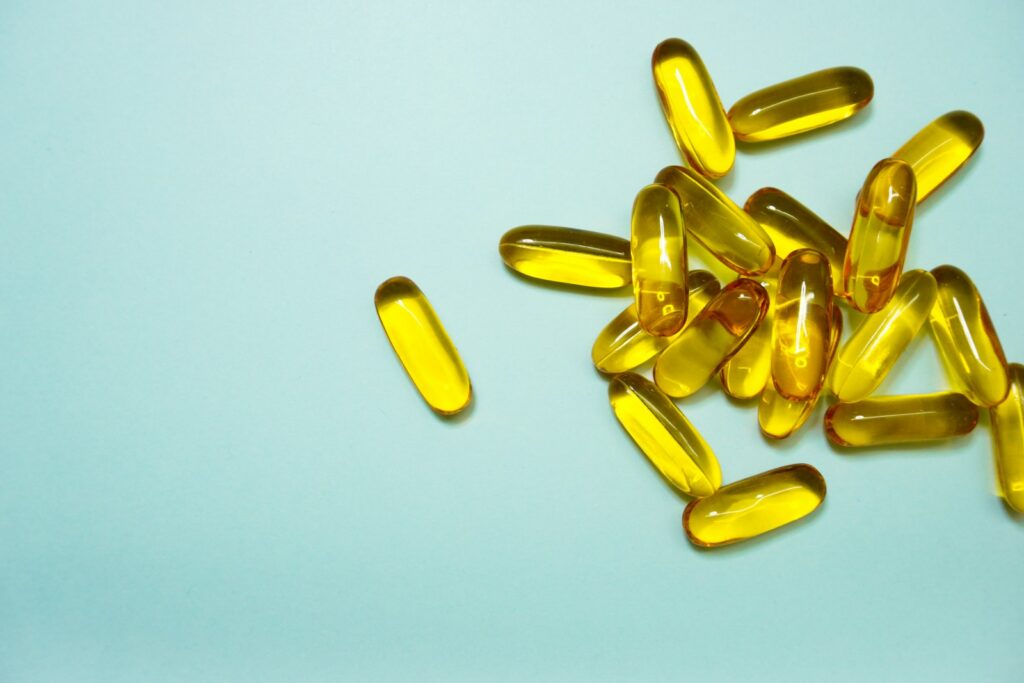
There’s a tiny white pill — stamped with a double crescent logo — that has become one of the most profitable and destructive forces in the Middle East.
It’s called Kaptagon (also spelled Captagon), and it’s an amphetamine-type stimulant that has generated an estimated $5-10 billion annually for the Assad regime in Syria and its Iranian-backed allies. To put that in perspective: Syria’s entire legitimate GDP is approximately $9 billion. The Kaptagon trade may equal or exceed the nation’s legal economy.
But Kaptagon isn’t just about money. It serves two strategic purposes for Iran’s proxy network:
- Funding: Revenue from Kaptagon sales helps fund Hezbollah, Syrian intelligence, and the broader proxy infrastructure
- Combat: The drug is used to create fighters who feel no pain, no fear, and no fatigue — pharmaceutical soldiers capable of extraordinary violence
This is drug warfare — and it deserves the attention of Christians who are watching the Middle East through a biblical lens. Because Scripture has a word for this kind of chemical manipulation: pharmakon (φαρμακόν) — the Greek root of “pharmacy” and the biblical word for sorcery.
What Is Kaptagon?
The Chemistry
The original Captagon was a legitimate pharmaceutical product — a brand-name amphetamine compound (fenethylline) developed in Germany in 1961 as a treatment for ADHD, narcolepsy, and depression. It was legally prescribed across Europe and the Middle East through the 1980s.
When Captagon was banned internationally in 1986, the brand name was hijacked. The pills now produced under the “Captagon” or “Kaptagon” name are counterfeit — they contain not fenethylline but a cruder mixture of:
– Amphetamine (the primary active ingredient)
– Caffeine
– Various fillers and cutting agents
– Sometimes additional substances (ephedrine, theophylline)
The effect is a powerful stimulant that produces:
– Intense euphoria
– Dramatically reduced need for sleep (users can stay awake for days)
– Suppression of pain and fear
– Feelings of invincibility
– Enhanced aggression
The crash, when it comes, is severe: paranoia, psychosis, cardiac damage, and deep depression. Long-term use causes brain damage, addiction, and organ failure.
The Scale
By the early 2020s, Kaptagon had become the Middle East’s most lucrative illicit drug:
– Production: Primarily in Syria, with factories in Lebanon’s Bekaa Valley (Hezbollah-controlled territory)
– Market: Saudi Arabia (the largest consumer), Gulf states, Jordan, Iraq, and increasingly Europe
– Revenue: Estimated $5-10 billion annually at peak
– Seizures: In 2021 alone, authorities across the region seized over 250 million Kaptagon pills — and that was estimated to be a fraction of total production
Who Makes It? Who Profits?
Assad’s Narco-State
Syria under Bashar al-Assad became a narco-state — a government whose survival depended on drug revenue.
During the Syrian Civil War (2011-2020), the Assad regime lost control of most of the country’s legitimate economy. Oil fields fell to ISIS and Kurdish forces. Agriculture was devastated. International sanctions restricted trade. The regime faced a funding crisis.
Kaptagon filled the gap. Production scaled up dramatically in regime-controlled territory, particularly:
– The area around Latakia and Tartus (Assad’s Alawite heartland)
– Damascus suburbs under military intelligence control
– Homs province — a key transit corridor
Multiple investigations — by The New York Times, The Guardian, the BBC, and the Center for Strategic and International Studies (CSIS) — have linked Kaptagon production directly to:
– Syria’s 4th Armored Division (commanded by Bashar’s brother, Maher al-Assad)
– Syrian Military Intelligence
– Air Force Intelligence (one of the most powerful and feared branches of Assad’s security apparatus)
The regime didn’t just allow drug production. It ran it.
Hezbollah’s Role
Hezbollah served as a critical partner in the Kaptagon ecosystem:
Production: Some factories operated in Lebanon’s Bekaa Valley, territory under Hezbollah’s effective control. Hezbollah’s involvement ranged from protection rackets (taxing producers) to direct manufacturing operations.
Distribution: Hezbollah’s established smuggling networks — built over decades for moving weapons from Iran through Syria to Lebanon — were repurposed for drug trafficking. The same routes, the same couriers, the same safe houses.
Revenue sharing: While exact figures are impossible to verify, multiple intelligence agencies have concluded that Hezbollah receives a significant share of Kaptagon profits. This revenue supplements Iranian funding and provides Hezbollah with financial independence that makes it harder to squeeze through sanctions alone.
Iran’s Benefit
Iran benefits from Kaptagon even without directly manufacturing it:
- Proxy funding: Revenue flows to Hezbollah and Syrian allies, reducing the burden on Iran’s budget
- Strategic leverage: Drug money gives Assad the resources to maintain his security apparatus, keeping Syria in Iran’s orbit
- Destabilization: Kaptagon addiction ravages the Gulf states — particularly Saudi Arabia, Iran’s regional rival. Some analysts view this as intentional chemical warfare against Iran’s competitors
Kaptagon on the Battlefield
The Pill Soldiers
Kaptagon’s military use is well documented. Fighters across the Syrian conflict — on multiple sides — used the drug to sustain themselves during extended operations:
- Fighters on Kaptagon could fight for 2-3 days without sleep
- The drug suppressed fear responses, creating fighters willing to charge fortified positions
- Pain suppression meant wounded fighters could continue operating long after they should have stopped
- The euphoria and aggression generated a kind of pharmaceutical berserker state
Reports from October 7 survivors described Hamas fighters who appeared to feel no pain and showed no fear — behaviors consistent with amphetamine use, though this has not been definitively confirmed for that specific attack.
The broader pattern is clear: Kaptagon is a tool of war, not just a tool of profit.
The Crackdown and Its Limits
Jordan’s War on Kaptagon
Jordan — squeezed between Syria to the north and Saudi Arabia to the south — became the primary transit corridor for Kaptagon shipments. The Jordanian military has conducted dozens of operations against smuggling networks, including cross-border strikes into Syrian territory.
In 2022-2023, Jordan reportedly killed multiple drug smugglers attempting to cross the border and engaged in firefights with armed convoy escorts. The Jordanian king publicly warned that the Kaptagon trade threatened his country’s stability.
Saudi Arabia’s Demand Problem
Saudi Arabia is the world’s largest consumer of Kaptagon, with an estimated 40% of global consumption. The drug’s popularity among young Saudis — as both a party drug and a work enhancer — creates demand that drives the entire supply chain. Saudi authorities have made massive seizures (200+ million pills in a single operation) but struggle to contain demand.
The Fall of Assad and the Future of Kaptagon
If Assad’s regime eventually falls, the Kaptagon industry would be disrupted but not eliminated. Production infrastructure could migrate to Lebanon, Libya, or other ungoverned spaces. Hezbollah has the expertise and distribution networks to continue operating independently of Syria.
Biblical Perspective: Pharmakon — Sorcery and Control
The Bible has a word that connects directly to the concept of drug-enabled control: pharmakon (φαρμακόν).
In ancient Greek, pharmakon meant both “medicine” and “poison” — the same substance could heal or destroy depending on how it was used. The New Testament adopted this word family to describe sorcery — the use of substances and manipulation to control, deceive, and harm.
Revelation’s Warning
In Revelation 18:23, describing the fall of Babylon, John writes:
”…for by your sorcery (φαρμακείᾳ / pharmakeia) all nations were deceived.”
And in Revelation 9:21:
“Nor did they repent of their murders or their sorceries (φαρμάκων / pharmakon) or their sexual immorality or their thefts.”
The word pharmakeia appears in the New Testament’s vice lists as well:
“Now the works of the flesh are evident: sexual immorality, impurity, sensuality, idolatry, sorcery (φαρμακεία)…” (Galatians 5:19-20)
The Connection
This isn’t to suggest that John was predicting Kaptagon. But the biblical framework recognizes something that modern analysis often misses: the use of substances to manipulate, control, and weaponize human beings is a spiritual evil, not merely a policy problem.
When a regime manufactures drugs to:
– Fund wars against God’s people
– Create fighters stripped of natural fear and moral restraint
– Destabilize neighboring nations
– Enrich warlords at the expense of the addicted
…that is pharmakeia in its fullest biblical sense. It is the convergence of commerce, violence, and chemical manipulation that Revelation associates with the Babylonian system — the system that uses every tool available to oppose God’s purposes.
The Human Cost
Behind the geopolitics and the billions in revenue are real people:
- Addicted youth across the Gulf states whose lives are being destroyed by a drug their governments can’t control
- Child soldiers in Syria given pills to make them fight without fear
- Farmers in the Bekaa Valley forced into production by Hezbollah threats
- Jordanian border guards killed trying to stop smuggling convoys
- Syrian civilians living in communities where drug production has replaced legitimate economy
Kaptagon is a tool of empire — Iran’s proxy empire. And like every empire built on exploitation, it consumes the weak to feed the powerful.
Conclusion: The Pill and the Kingdom
Iran’s proxy empire runs on many things: ideology, weapons, money, and drugs. Kaptagon is one of the least-discussed but most revealing elements of how the system works. It funds proxy armies. It creates fearless fighters. It destabilizes rivals. And it destroys lives — of users, of producers, of the communities caught in its wake.
The Bible calls this pharmakeia — sorcery. The use of substances to manipulate and destroy. And Revelation promises that the Babylonian system that relies on it will fall:
“Fallen, fallen is Babylon the great! … For all nations have drunk the wine of the passion of her sexual immorality, and the kings of the earth have committed immorality with her, and the merchants of the earth have grown rich from the power of her luxurious living.” (Revelation 18:2-3)
The empires that profit from human destruction have an expiration date. And the God who sees every pill manufactured, every life destroyed, every profit counted — He is not indifferent.
He is patient. But He is not indifferent.
Further Reading
- Iran in the Bible: A Complete Guide — The full biblical story of Iran
- Iran’s Proxy Empire: How Tehran Funds Terror — The network that Kaptagon funds
- Soleimani’s Master Plan — The strategy behind the proxy empire
- Rise of the Ayatollahs: 1979-Today — How Iran’s revolutionary government works
Sources
- Center for Strategic and International Studies (CSIS), reports on Captagon trade and Syrian narco-state, 2022-2024.
- Congressional Research Service, Iran: Background and U.S. Policy, Updated May 2025.
- Defense Intelligence Agency, Iran Military Power, November 2019.
- U.S. Department of the Treasury, Treasury Sanctions Iranian IRGC-QF and Hizballah Financial Network, October 2023.