
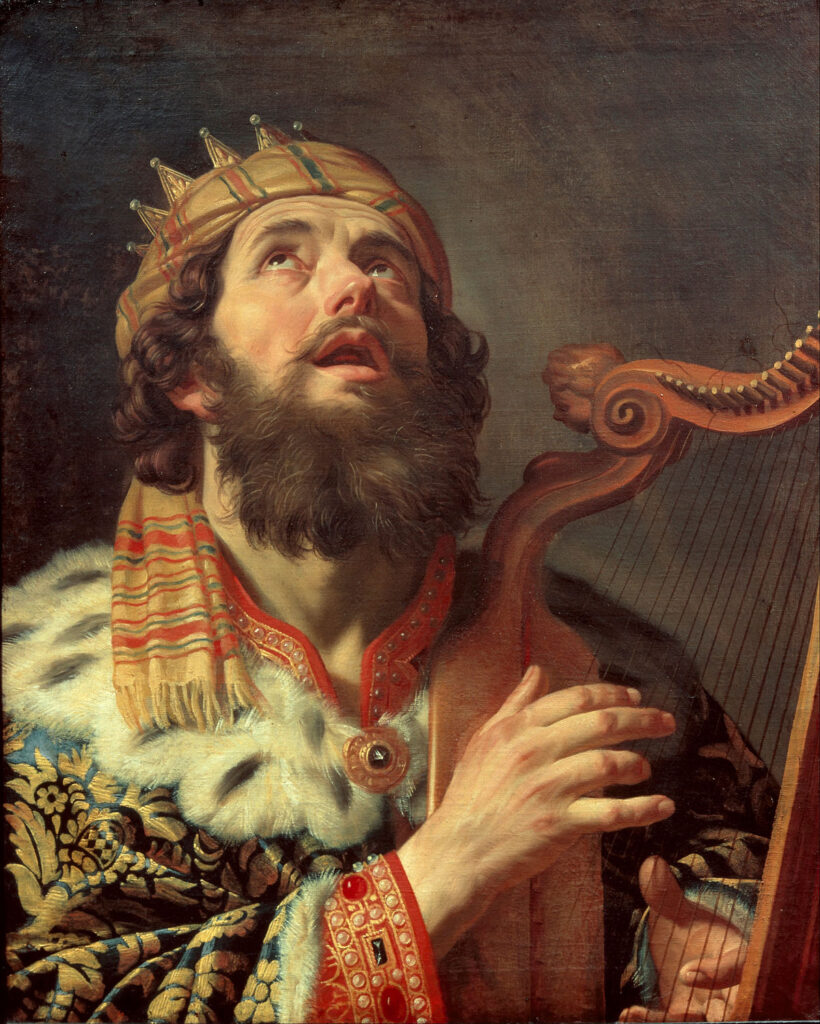
Psalm 1 Commentary: Two Trees, Two Paths, Two Destinies
Introduction: The Porch of the Psalter
Six verses. Forty-three Hebrew words. And with them, the Psalter lays down the most important binary in all of Scripture.
Psalm 1 has no title. No superscription. No attribution to David or Asaph or the sons of Korah. It stands without introduction because it does not need one. It is the introduction – the porch through which every reader of the Psalms must pass before entering the great cathedral of Israel’s worship. As Keil and Delitzsch observed, it serves as the prooemium of the entire Psalter, just as Isaiah 1 serves as the prologue to the prophetic collection. Both are anonymous. Both are programmatic. Both demand a decision before the reader is permitted to proceed.
Grant Osborne confirms the scholarly consensus on the Psalter’s deliberate arrangement: “Scholarship no longer considers the psalms as isolated works artificially collected together in haphazard fashion. Rather, the psalter is recognized as a canonical whole, and studies tend to center either on the macrostructure, considering ‘overarching patterns and themes’ or on the microstructure, namely, ‘connections among smaller groupings of psalms’” (The Hermeneutical Spiral, Osborne, p.286). Psalm 1’s position at the head of this carefully edited collection is therefore itself a hermeneutical statement.
The placement is deliberate and ancient. The Talmud records that Psalms 1 and 2 were originally considered a single composition (Berachoth 9b), bound together as the double gateway to the Psalter – one ethical, the other prophetic. The early church father Hippolytus confirms that the Hebrews joined these two psalms into one section. Bruce Waltke confirms their programmatic function: “Most agree that Psalms 1-2 are the Psalter’s introduction and Psalms 146-50, its climactic finale of praise.” He observes that these two psalms “lack a superscription, unlike the rest of Book I; share similar vocabulary; and expound a uniform message: the pious and righteous are fully rewarded, and in the time of judgment they triumph over the wicked. The didactic generalization that the righteous prevail over the wicked (Ps. 1), is fleshed out in salvation history as happening through I AM’s anointed king (Ps. 2)” (An Old Testament Theology, p.507). But their functions are distinct. Psalm 2 introduces the Psalter’s prophetic and messianic vision: the nations rage, the kings conspire, and God laughs from heaven as He installs His Anointed on Zion’s holy hill. Psalm 1, by contrast, introduces the Psalter’s ethical and sapiential vision: there are exactly two kinds of people, living exactly two kinds of lives, heading toward exactly two destinations.
No middle ground. No third option. No spectrum of moral gradations. The psalm divides the entire human race with surgical precision. You are either a tree or chaff. You are either rooted or rootless. You are either known by God or perishing away from Him. The categories are exhaustive and mutually exclusive. Gordon Wenham, in his landmark study The Psalter Reclaimed, frames the psalm’s challenge in precisely these terms: “There are two types of people, two types of life, and two conclusions. Which will you choose to follow? is the question posed by Psalm 1” (The Psalter Reclaimed, p.53).
This is not accidental. The psalm was placed at the head of the Psalter because the Psalter is the devotional companion to the Torah – the response of the faithful heart to the revealed word of God. As the Torah begins with God speaking the world into existence, the Psalter begins with the blessedness of the one who listens. As the Torah divides light from darkness on the first day of creation, Psalm 1 divides the righteous from the wicked as the first word of Israel’s hymnbook. The echo of Genesis is intentional: this is a new creation text, establishing the fundamental categories of moral reality.
Matthew Henry captured the psalm’s function perfectly: “Whoever collected the psalms of David with good reason put this psalm first, as a preface to the rest, because it is absolutely necessary to the acceptance of our devotions that we be righteous before God, and therefore that we be right in our notions of blessedness and in our choice of the way that leads to it.”1
The structure of the psalm is a masterwork of compression. Two panels of unequal length present two portraits:
- Panel 1: The Portrait of the Blessed Man (vv. 1-3) – three full verses of rich, layered description, culminating in the image of a tree planted by water.
- Panel 2: The Portrait of the Wicked (vv. 4-6) – three verses of devastating brevity, beginning with the blunt negation “not so” and ending with the word “perish.”
The asymmetry is itself a statement. The righteous deserve extended contemplation. The wicked receive dismissal. Light warrants description; darkness is defined only by the absence of light. The psalm spends twice as much time on what the blessed man is as on what the wicked man is not – because evil is, in the final analysis, parasitic on the good. It has no independent substance. It is chaff.
Every verse. Every word that matters. Let us begin where the Psalter begins – with a word of pure, unqualified blessedness.
Panel 1: The Portrait of the Blessed Man (vv. 1-3)
Verse 1: The Three Negatives
“Blessed is the man who walks not in the counsel of the ungodly, nor stands in the path of sinners, nor sits in the seat of the scornful.” – Psalm 1:1 (NKJV)
“Blessed” – the Hebrew word is “ashre”Hebrew“אַשְׁרֵי”“ashre”“O. It is not the word one might expect. There are two primary Hebrew terms for blessing: “barak”Hebrew“בָּרַךְ”“barak”“to and ashre. The distinction matters enormously. Barak is a priestly and covenantal term – it describes God’s act of conferring blessing upon someone, or a human’s act of blessing God in worship. It moves vertically, between heaven and earth. Ashre is something different entirely. It is a wisdom term – an exclamation of the happiness, the right-going, the enviable state of the person who lives a certain way. It moves horizontally, from observation to commendation. The Tyndale notes observe that ashre appears twenty-six times in the Psalms, while barak is reserved for contexts of divine bestowal.
The New International Dictionary of Old Testament Theology and Exegesis confirms that ashre is rooted in the wisdom tradition: “In Proverbs, the primary emphasis is that the one who finds wisdom and lives wisely is ashre,” and “there are also references to the truly happy state of the one who trusts in and fears the Lord (cf. 16:20; 28:14), all part of the wisdom experience” (NIDOTTE, VanGemeren, p.630). That Psalm 1 opens with this wisdom exclamation rather than a priestly barak signals from the first syllable that the Psalter will be read as a wisdom text – a manual for the examined life.
The form is exclamatory and plural. Literally: “O the blessednesses of the man!” The plural intensifies – this is not a single blessing but a cascade of blessings, a comprehensive state of well-being that encompasses every dimension of life. John Gill renders it: “He is doubly blessed, a thrice happy and blessed man; blessed in things temporal and spiritual; happy in this world, and in that to come.”2
The Psalter opens with this word, and the Sermon on the Mount opens with its Greek equivalent, makarioi. Jesus’ Beatitudes in Matthew 5 are the New Testament exposition of what Psalm 1 inaugurates – the delineation of what genuine human flourishing looks like in the economy of God. Both texts insist that blessedness is not what the world thinks it is. It is not wealth, power, fame, or pleasure. It is a particular orientation of life toward God and His word.
“Is the man who walks not in the counsel of the ungodly.” The blessed man is first described by what he does not do. Before the psalm tells us what fills his life, it tells us what is absent from it. The negatives come first because avoidance of evil is the necessary precondition for the pursuit of good. As Matthew Henry observes: “Departing from evil is that in which wisdom begins.” The verb “walks” (halak) is itself theologically loaded. The Anchor Bible Dictionary notes that the noun halakah is “derived from the Hebrew root hlk, ‘to walk,’” and “denotes a specific ruling, a legal statement or discussion, the general category of legal material” – in other words, the entire Jewish legal tradition takes its name from this metaphor of walking (Anchor Bible Dictionary, Freedman, p.3337). To “walk” in someone’s counsel is to live by their halakah, to adopt their way of life as your operative law.
But these are not merely three random descriptions of sin-avoidance. They form a devastating progression – a downward spiral described in three verbs, three nouns of agency, and three settings.
The three verbs: walking, standing, sitting. The movement is from motion to rest, from passing contact to permanent residence. The man who walks past evil is merely brushing against it. The man who stands in it has stopped, lingered, taken up a position. The man who sits in it has settled down, made himself at home, assumed a posture of permanence and authority. The Hebrew “yashav”Hebrew“יָשַׁב”“yashav”“to in its strongest sense denotes permanent dwelling – the same verb used for God’s enthronement in heaven (Psalm 2:4, “He who sits in the heavens shall laugh”). To sit in the seat of the scornful is to have enthroned oneself in cynicism, to have made mockery one’s settled posture.
This is the gravitational pull of sin: it begins with a stroll and ends with a throne. No one wakes up one morning and decides to become a scoffer. The process is incremental. First the counsel sounds reasonable. Then the path feels familiar. Then the chair feels comfortable. And by the time you are sitting, you have forgotten that you were ever walking.
R.C. Sproul used to illustrate this progression by observing that no one enters seminary planning to deny the faith. The young theologian does not walk through the doors of the academy intending to become a heretic. He walks. He encounters an argument that seems sophisticated, a line of reasoning that questions some point of orthodoxy. He does not immediately embrace it; he merely considers it. He walks in the counsel. Then the consideration becomes a position. He stands in it, defends it, begins to identify with it. And eventually he sits – he becomes the professor in the chair, teaching the next generation the very errors he once would have rejected. The progression from walking to sitting can take decades, but its direction is fixed from the first step.
The structure also reveals that sin operates in all three domains of the human person simultaneously. It targets the mind through counsel (what you think), the will through the way (what you do), and the affections through the seat (where you belong). A comprehensive defense against sin must therefore address all three: right thinking, right acting, and right belonging. The blessed man does not merely think differently from the ungodly; he walks a different path and sits in a different assembly.
The three categories of evil company. The psalm names three types of people who represent escalating degrees of moral corruption:
The “resha’im”Hebrew“רְשָׁעִים”“resha’im”“ungodly, are the morally lax – those who are, as Keil and Delitzsch define the root, “loose, devoid of stay, and as it were gone beyond the reasonable bounds of true unity.” The cognate Arabic roots suggest slackness, looseness, the absence of firm moral structure. They are not necessarily flagrant sinners; they are simply untethered from God. They have no moral anchor, no fixed reference point. They drift. And drifting people always drift downward.
The “chatta’im”Hebrew“חַטָּאִים”“chatta’im”“sinners, are those who have moved from moral looseness to deliberate transgression. The root “chata”Hebrew“חָטָא”“chata”“to carries the image of an archer shooting and missing the target – but in its intensive form here, it denotes habitual, practiced sinners, those who have made missing the mark their trade. As Gill notes, the word “signifies such, who in shooting miss the mark, and go aside from it, as such sinners do from the law of God; proceed from evil to evil, choose their own ways, and delight in their abominations.”
The “letsim”Hebrew“לֵצִים”“letsim”“scornful, represent the final stage of degeneration. These are the cynics, the hardened despisers of everything sacred. They have passed beyond mere wickedness and even beyond habitual sin into a posture of intellectual contempt for God, His word, and His people. The Tyndale notes describe them as those who “hate the Lord, scorn his wisdom, and insult anyone who attempts to correct them.” Proverbs 21:24 defines the lets: “A proud and haughty man – ‘Scoffer’ is his name; he acts with arrogant pride.” The scoffer is beyond correction, beyond conviction, beyond shame. He has intellectualized his rebellion and now wears it as a badge of sophistication.
This progression from the ungodly to sinners to scoffers describes a journey that begins in the mind and ends in the marrow. Matthew Henry traces it memorably: “See by what steps men arrive at the height of impiety. Nemo repente fit turpissimus – none reach the height of vice at once. They are ungodly first, casting off the fear of God and living in the neglect of their duty to him: but they rest not there. When the services of religion are laid aside, they come to be sinners, that is, they break out into open rebellion against God and engage in the service of sin and Satan. Omissions make way for commissions, and by these the heart is so hardened that at length they come to be scorners.”3
The three settings: counsel, way, seat. These correspond to three domains of human existence:
The “etsah”Hebrew“עֵצָה”“etsah”“counsel, is the realm of thought and deliberation – the decision-making framework, the principles by which one navigates life. To walk in the counsel of the ungodly is to adopt their worldview, to let their assumptions shape your thinking, to take their advice as your operating system. Sin begins here, in the mind, before it ever manifests in behavior.
The “derek”Hebrew“דֶּרֶךְ”“derek”“way, is the realm of action and habit – the well-worn path, the established pattern of behavior. To stand in the way of sinners is to have adopted their practices, to have made their lifestyle your own, to walk where they walk and do what they do.
The “moshav”Hebrew“מוֹשָׁב”“moshav”“seat, is the realm of identity and belonging – the settled position, the place where one is known and recognized. To sit in the seat of the scornful is to have found one’s community among the cynics, to have made their table your table, their company your company. Keil and Delitzsch note that moshav, like the Arabic majlis, signifies both a seat and an assembly – both the physical position and the social gathering.
The progression is therefore from thought (counsel) to action (way) to character (seat). From how you think, to what you do, to who you are. Sin moves from the head to the hands to the heart – and once it reaches the heart, it has become identity, and identity is extraordinarily difficult to dislodge.
The blessed man is first defined by what he avoids – a downward progression from walking past evil, to standing in it, to sitting down and making it home. Three verbs trace the journey from casual contact to permanent residence. Three categories of company trace the hardening from moral looseness to habitual sin to intellectual contempt. Three settings trace the infiltration from thought to action to identity. The psalm’s first lesson: blessedness begins with refusal.
Verse 2: The Two Affirmations
“But his delight is in the law of the LORD, and in His law he meditates day and night.” – Psalm 1:2 (NKJV)
After the three negatives of verse 1, verse 2 pivots with a single conjunction – “kiHebrew“כִּי“ki“but, – into two towering affirmations. The blessed man is not defined merely by what he avoids. He is defined by what he loves. Avoidance without affection is mere moralism. The blessed man does not simply keep his distance from the wicked; he is consumed by something so much better that the wicked hold no attraction. The negative holiness of verse 1 is sustained by the positive passion of verse 2.
“His delight is in the law of the LORD.” The Hebrew for “delight” is “chephets”Hebrew“חֵפֶץ”“chephets”“delight,. This is not the language of dutiful compliance. Chephets is a word of deep desire, of passionate attraction, of the kind of pleasure that draws the whole person in. It is the same word used in Isaiah 53:10 – “Yet it pleased the LORD to bruise Him” – where God’s chephets denotes His sovereign, purposeful will. And it is the word used in Psalm 16:3 for the “excellent” in whom is all David’s delight. When the psalmist says the blessed man’s chephets is in the law of the LORD, he is describing not a man who reads his Bible because he ought to, but a man who reads it because he cannot stop. His affection is engaged. His appetite is aroused. He finds in Scripture what other men find in wealth, pleasure, or power – the satisfaction of his deepest longings.
The word translated “law” is “torah”Hebrew“תּוֹרָה”“torah”“instruction,. English readers instinctively narrow this to “legislation” – a set of rules, a legal code. But torah is far broader. Its root “yarah”Hebrew“יָרָה”“yarah”“to means “to direct” or “to instruct.” The Anchor Bible Dictionary traces this semantic range historically: “The transition from Torah as a specific instruction to the sacred ‘Book of the Torah’ of the Josianic period marked a turning point in Israel’s spiritual life. The ritual instructions which were kept in priestly circles were written by scribes and wise men (Jer 8:8) and became part of the national lore” (Anchor Bible Dictionary, Freedman, p.2025). Torah is God’s comprehensive instruction – His revelation of who He is, what He has done, what He requires, and how life is to be lived. In David’s time, this encompassed the Pentateuch and whatever additional revelation had been given. For the Christian reader, it encompasses the full canon of Scripture – every word breathed out by God for teaching, reproof, correction, and training in righteousness (2 Timothy 3:16). The Evangelical Dictionary of Theology identifies what it calls “the Torah-serving function of wisdom,” noting that the prophets anticipated a day when the law would be written not on stone but on the heart: “Jeremiah’s reference point was Yahweh’s covenant made with Israel when they came out of Egypt. This new covenant, in contrast to the old, would be written in Israel’s heart rather than on stone tablets” (Evangelical Dictionary of Theology, Treier, p.617). Psalm 1’s portrait of the man whose delight is in the torah anticipates precisely this internalization – the law loved rather than merely obeyed. As Gill rightly observes, the word “signifies ‘doctrine’ and may intend the evangelic doctrine,” the full scope of God’s self-disclosure to His people.
Wenham, in Psalms As Torah, emphasizes that the law in the Psalter is far more expansive than modern readers assume: “Both the first psalm and the longest psalm focus on the law. The variety of terms for the law – ‘commandment,’ ‘word,’ ‘promise,’ ‘precepts’ – points to the fact that law is understood to be much more than regulations and rules, such as are found in the Pentateuch. ‘Law’ or ‘instruction’ covers all God’s revelation to Israel, whether it is found in the Pentateuch or other parts of the Bible” (Psalms As Torah, Wenham, p.114). The psalmist’s delight, in other words, encompasses not merely Mosaic legislation but the whole sweep of divine self-disclosure.
The relationship between verses 1 and 2 is causal, not merely sequential. The blessed man avoids the counsel of the ungodly because his delight is in the torah of the LORD. Matthew Henry makes this connection explicit: “This is that which keeps him out of the way of the ungodly and fortifies him against their temptations. By the words of thy lips I have kept me from the path of the deceiver (Psalm 17:4). We need not court the fellowship of sinners, either for pleasure or for improvement, while we have fellowship with the word of God.”4
“And in His law he meditates day and night.” The second affirmation moves from affection to practice, from desire to discipline. The verb is “yehgeh”Hebrew“יֶהְגֶּה”“yehgeh”“he. The root hagah is one of the most evocative words in the Hebrew Bible. It does not describe silent, abstract contemplation in the Western philosophical sense. It describes a physical act – murmuring, muttering, speaking under one’s breath. Rydelnik draws attention to a remarkable phonological feature embedded in this verse: “An additional supporting feature of this reading of the verse is the phonological parallel between the divine name and the verb ‘meditate’ (YHWH … yehegeh). Three out of the four consonants are identical and follow the same order. The effect is to link the act of human meditation with YHWH” (The Moody Handbook of Messianic Prophecy, Rydelnik, p.250). The very sounds of the Hebrew text bind the meditator to the God upon whom he meditates. Keil and Delitzsch define it precisely: “hagah of a deep, dull sound, as if vibrating between within and without, here signifies the quiet soliloquy of one who is searching and thinking.” The cognate Arabic hajas means “to mutter to oneself.” The word is used for the growling of a lion over its prey (Isaiah 31:4), the cooing of a dove (Isaiah 38:14), and the low rumble of thunder. When applied to meditation on Scripture, it describes a man who speaks the words of God to himself as he walks, works, eats, lies down, and rises up – a man whose lips are never far from sacred text.
The Theological Dictionary of the Old Testament confirms the audible, physical dimension of hagah: “Audible murmuring is even more likely when the object of haghah is the law (torah), as in Josh. 1:8, ‘this book of the torah shall not depart out of your mouth, but you shall meditate on it day and night, that you may be careful to do according to all that is written in it’” (TDOT vol. 3, Botterweck, p.338). This is the biblical method of meditation, and it is emphatically not the Eastern practice of emptying the mind. It is the practice of filling the mind – with specific words, specific promises, specific commands. It is reading aloud. It is memorization. It is the quiet rehearsal of Scripture throughout the ordinary hours of an ordinary day. Joshua received this same instruction at the threshold of the Promised Land: “This Book of the Law shall not depart from your mouth, but you shall meditate in it day and night” (Joshua 1:8). The parallel is not accidental. As Joshua was charged to saturate his leadership with the word of God before entering Canaan, so the reader of the Psalter is charged to saturate his worship with the word of God before entering the sanctuary of the Psalms.
“Day and night” is a merism – a figure of speech in which two extremes represent the totality of what lies between them. “Day and night” means “always,” “at every time,” “without cessation.” Not that the blessed man reads Scripture literally every waking and sleeping moment, but that his engagement with God’s word is the constant background frequency of his life. It shapes his thinking while he works. It comforts him when he lies down. It is the first thing that rises with him in the morning and the last thing that settles with him at night. As Matthew Henry writes: “We must have a constant habitual regard to the word of God as the rule of our actions and the spring of our comforts, and we must have it in our thoughts, accordingly, upon every occasion that occurs, whether night or day.”
The verb is in the imperfect tense – “yehgeh”Hebrew“יֶהְגֶּה”“yehgeh”“he – indicating continuous, habitual, ongoing action. This is not what the blessed man did once. It is what he does always. Keil and Delitzsch note the contrast with the perfects of verse 1: “The perfects in verse 1 describe what he all along has never done; the future yehgeh, what he is always striving to do.” The distinction is grammatically precise and theologically profound. The avoidance of evil is a settled achievement; the meditation on Scripture is a perpetual practice.
Here is the positive counterpart to verse 1’s negatives. The blessed man does not merely avoid evil company – he keeps better company. He does not merely reject the counsel of the ungodly – he has found superior counsel. He does not merely refuse the seat of the scornful – he has found a seat at a different table. The word of God is not his duty but his delight, not his obligation but his obsession, not his discipline but his desire. And this desire, pursued day and night with the murmuring lips of a man in love with sacred text, is the root system that produces everything described in verse 3.
The relationship between verses 1 and 2 also reveals the psalm’s implicit anthropology. The human soul cannot remain empty. It will be filled with something. The man who empties himself of the counsel of the ungodly but fills himself with nothing has only created a vacuum – and vacuums do not last. Jesus made this point explicitly in His parable of the unclean spirit (Matthew 12:43-45): the house that is swept clean but left empty becomes the dwelling of seven spirits worse than the first. Psalm 1 understands this. The negatives of verse 1 are sustainable only because verse 2 provides a positive replacement. The blessed man does not merely refuse the wrong food; he feasts on the right food. And the feast is so satisfying that the old diet loses its appeal.
Wenham argues that the Psalter was not merely a text to be read but an anthology to be internalized. In Psalms As Torah, he refines the canonical critics’ approach “by arguing that the Psalter is a sacred text that is intended to be memorized,” drawing on the work of David Carr and Paul Griffiths, who have “called for a re-examination of the way sacred texts were viewed and used in antiquity, before the advent of printing” (Psalms As Torah, Wenham, p.58). The blessed man’s day-and-night meditation is therefore not the modern habit of devotional reading but the ancient practice of committing the text to memory – carrying it in one’s mouth, available for rehearsal at every waking moment.
Calvin pressed this application in his commentary: the blessed man’s delight in the law is not a supplement to ordinary living but the governing center of his entire existence. The torah is not something he adds to his schedule alongside other interests. It is the lens through which he sees everything else – his work, his relationships, his suffering, his joy. It is, to borrow the language of Psalm 19, more desired than gold, sweeter than honey and the drippings of the honeycomb. When a man finds that kind of sweetness in Scripture, the bitter allurements of the wicked lose their power entirely.
The blessed man is sustained not by mere avoidance of evil but by passionate engagement with God’s word. His “delight” (chephets) is the language of deep desire, not dutiful compliance. His “meditation” (hagah) is the physical murmuring of Scripture throughout the hours of the day – a practice that fills the mind rather than empties it. Day and night, his lips are never far from sacred text. This positive passion is what makes the negative holiness of verse 1 sustainable.
Verse 3: The Tree Metaphor
“He shall be like a tree planted by the rivers of water, that brings forth its fruit in its season, whose leaf also shall not wither; and whatever he does shall prosper.” – Psalm 1:3 (NKJV)
Now the psalm shifts from description to metaphor, and the result is one of the most beautiful images in all of Scripture. The man who delights in the torah of the LORD is not merely described as virtuous or praised as admirable. He is pictured. And the picture is a tree.
“He shall be like a tree planted by the rivers of water.” The word for “planted” is “shatul”Hebrew“שָׁתוּל”“shatul”“transplanted,. This is not the common word for “planted” (“natua”Hebrew“נָטוּע”“natua”“planted”). The distinction matters. Shatul carries the sense of transplantation – a tree that was not originally growing here but was deliberately dug up from one location and placed in another. The Talmudic sources amplify this: “In distinction from natua, shatul means firmly planted, so that no winds that may rage around it are able to remove it from its place.”5
This is the language of divine initiative. The tree did not plant itself. It did not wander to the water’s edge by accident. It was transplanted – removed from its original soil and placed, by a gardener’s hand, in the best possible location for growth. The theological implications are immediate. The blessed man is where he is because God put him there. His proximity to the water of life is not his own achievement but God’s sovereign placement. As Gill comments: “Such who are broken off of the wild olive tree, and are grafted into the good olive tree; who are planted in Christ Jesus, and in the church, the house of the Lord; of which transplantation the removal of Israel into Canaan’s land was an emblem.” The new birth itself is here – the act of God by which a soul is taken from its natural soil of sin and planted in the fertile ground of grace.
The phrase “rivers of water” translates “palgeHebrew“פַּלְגֵי“palge“channels. The word “peleg”Hebrew“פֶּלֶג”“peleg”“channel, denotes not a wild river but a managed irrigation channel – water that has been deliberately directed to nourish the tree. The Theological Dictionary of the Old Testament traces this imagery to its ancient Near Eastern roots: “The present habitable world depends on water, rivers, and the chance for irrigation. In and through them, God is at work beneficently.” In Psalm 104, “we can perceive both a horizontal and a vertical dimension of watering: God waters through streams and through rain” (TDOT vol. 15, Botterweck, p.553). The blessed man’s tree is not fed by chance rainfall but by divinely engineered channels. Keil and Delitzsch explain: “Peleg means the brook meandering and cleaving its course for itself through the soil and stones; the plural denotes either one brook regarded from its abundance of water, or even several which from different directions supply the tree with nourishing and refreshing moisture.” The image is of intentional provision. The tree does not depend on rainfall, which may come or may not. It is fed by channels – constant, reliable, abundant sources of water that have been engineered for its benefit.
What are these channels? Gill identifies them comprehensively: “the river of the love of God, and the streams of it, the discoveries and applications of it to regenerate persons; and also the fullness of grace in Christ, who is the fountain of gardens, the well of living waters and streams from Lebanon; as well as the graces of the Spirit of God, which are near the saints, and like rivers of water flow out of them that believe in Christ.” The word, the Spirit, the love of God, the grace of Christ, the fellowship of the church, the ordinances of worship – these are the irrigation channels that keep the blessed man’s roots perpetually supplied with living water.
The image speaks directly to the doctrine of perseverance. The tree that is shatul – deliberately, permanently, irremovably planted – does not relocate itself when the weather changes. It does not pull up its roots when the sun scorches or the wind blows. It stays. And because it stays by the water, it survives what would kill a desert shrub. The perseverance of the saints is not, in the final analysis, the saints’ perseverance at all. It is God’s perseverance in keeping them planted. The tree endures because the Gardener endures. The roots hold because the water holds. And the water – the inexhaustible provision of God’s grace through His word and Spirit – never runs dry.
The contrast with the tree’s environment in Jeremiah 17:5-8 – a passage that is almost certainly dependent on Psalm 1 – makes the imagery even more vivid. Jeremiah contrasts the man who trusts in human strength with the man who trusts in the LORD: “He shall be like a shrub in the desert, and shall not see when good comes, but shall inhabit the parched places in the wilderness, in a salt land which is not inhabited” (17:6). The cursed man is a desert shrub in salt flats. The blessed man is a transplanted tree by irrigation channels. Same species, perhaps. Radically different outcomes – determined entirely by proximity to water.
“That brings forth its fruit in its season.” The tree is not merely alive; it is productive. And its productivity is tied to timing. The blessed man brings forth fruit “be’itto”Hebrew“בְּעִתּוֹ”“be’itto”“in. This is patient, seasonal, sustainable fruitfulness – not the forced productivity of the anxious achiever, not the year-round performance demanded by a culture of perpetual hustle, but the natural, unhurried output of a life that is deeply rooted and well-watered.
Keil and Delitzsch are precise on the emphasis: “The whole emphasis does not rest on be’itto alone… the fruit which one expects from it, it yields, and that at its appointed, proper time, without ever disappointing that hope in the course of the recurring seasons.” The tree does not fail to produce. But neither does it produce out of season. There is a time for blossoms and a time for barrenness, a time for harvest and a time for dormancy. The blessed man trusts the rhythms of God’s timing. He does not panic during the fallow seasons because he knows the fruit will come when it ought to come.
Calvin drew a sharper application: “The impious, though they may display precocious fruits, produce nothing but what is abortive.” The wicked may appear productive – flashy, impressive, immediately fruitful. But their fruit is premature, rootless, and destined to rot. The righteous man’s fruit takes longer but endures.
There is a needed rebuke here for the contemporary church’s obsession with immediacy. We want instant fruit. We want visible results. We want the conference, the program, the technique that will produce measurable outcomes on a quarterly basis. Psalm 1 says: the tree brings forth its fruit in its season. Some seasons are for growing roots, not bearing fruit. Some years are for deepening before widening. The blessed man is not anxious about his output because he trusts the process. He is planted. He is watered. The fruit will come when the fruit is ready – not a moment before, and not a moment late.
“His leaf also shall not wither.” The image of unfading foliage speaks to endurance, vitality, and consistency. A tree whose leaves wither has lost its capacity to photosynthesize – it can no longer convert light into life. But this tree’s leaves remain green, perpetually vital, constantly drawing in the light and air it needs to sustain itself. Matthew Henry spiritualizes this with characteristic precision: “As to those who bring forth only the leaves of profession, without any good fruit, even their leaf will wither and they shall be as much ashamed of their profession as ever they were proud of it; but, if the word of God rule in the heart, that will keep the profession green, both to our comfort and to our credit.”
There is no hypocrisy in this tree. No seasonal Christianity. No public display of faith that withers under private scrutiny. The external appearance matches the internal reality. What you see on the branches reflects what is happening at the roots. This is the mark of genuine spiritual life – not perfection, but consistency. Not sinlessness, but sustainability. The blessed man does not burn out because he is not running on his own fuel. He is drawing from channels of water that never run dry.
“And whatever he does shall prosper.” The Hebrew “yatsliach”Hebrew“יַצְלִיחַ”“yatsliach”“shall comes from the root tsalach, which Keil and Delitzsch define as “to divide, press forward, press through.” It does not mean that everything the blessed man touches turns to gold. It does not promise the prosperity gospel’s fantasy of perpetual material success. The word carries the sense of advancement, of forward motion, of a life that pushes through obstacles and reaches its intended destination. Everything the blessed man undertakes moves forward with divine backing and divine purpose. His projects may encounter resistance. His plans may face delay. But the trajectory of his life is upward and forward, because the same God who planted him by the water is the God who causes the increase.
Gill wisely limits the application: “meaning not so much in things temporal, of which Arama interprets it, for in these the good man does not always succeed, but in things spiritual: whatever he does in faith, from love, to the glory of God, and in the name of Christ, prospers.” The prosperity is real but not carnal. It is the prosperity of a life aligned with the purposes of God – a life that may suffer, may lose, may be persecuted, but that cannot finally be defeated because it is rooted in the only soil that lasts.
The blessed man is pictured as a tree transplanted by divine initiative to the banks of irrigation channels – deliberately placed, perpetually supplied, patiently fruitful. His fruit comes in season, not forced or premature. His leaves do not wither – no hypocrisy, no burnout, no seasonal faith. And whatever he undertakes pushes forward with divine backing. The image is not of effortless success but of sustainable, rooted, God-dependent productivity.
Panel 2: The Portrait of the Wicked (vv. 4-6)
Verse 4: The Chaff Metaphor
“The ungodly are not so, but are like the chaff which the wind drives away.” – Psalm 1:4 (NKJV)
“The ungodly are not so.” Four words in English. Three in Hebrew: “lo-khenHebrew“לֹא־כֵן“lo-khen“not. This is the most abrupt transition in the Psalter. After the lush, extended imagery of the tree – its roots, its water, its fruit, its leaves, its prosperity – one expects a correspondingly elaborate description of the wicked. A contrasting tree, perhaps. A different landscape. A rival metaphor of comparable richness.
Instead, the psalmist simply says: “Not so.”
The Septuagint and Vulgate felt the bluntness so acutely that they doubled the negation: “Not so the ungodly, not so.” As if to say: whatever you just read about the blessed man, reverse it entirely. Everything. The ungodly have no roots. No water. No fruit. No green leaves. No prosperity. Not so. Keil and Delitzsch observe that this abrupt negation is itself a theological statement: “The ungodly are the reverse of the righteous, both in character and condition.”
Three verses for the righteous. Three words to negate the wicked. The asymmetry is devastating and deliberate. Evil deserves less attention than good. Darkness does not merit the same canvas as light. The psalmist will not dignify wickedness with elaborate description. He dismisses it.
“But are like the chaff which the wind drives away.” If the righteous man is a tree, the wicked man is “motz”Hebrew“מֹץ”“motz”“chaff”. The contrast could not be more extreme. A tree is rooted; chaff is rootless. A tree is weighty; chaff is weightless. A tree is fruitful; chaff is the waste product of the harvest – the dry, papery husk that separates from the grain during winnowing. A tree endures for centuries; chaff lasts until the first breeze. Rydelnik observes that the Hebrew itself embeds this contrast phonetically: “They are compared to chaff in another deliberate contrast through sound with the man who is compared to a tree: (ke’ets; like a tree … kamots; like chaff). In the Hebrew, two out of three consonants are identical, as is their order.” He adds that “the contrast between the images of tree and chaff is further supported by the number of words used in each simile. There are 17 words describing the tree” while far fewer are devoted to the chaff (Moody Handbook of Messianic Prophecy, p.251). The psalm’s very syllables mirror its theology: substance versus emptiness, weight versus weightlessness.
The image draws from the winnowing floor, one of the most familiar scenes in ancient Israelite agriculture. The Dictionary of Biblical Imagery describes the full process: grain was threshed by “using the wheels of a cart or a threshing sledge made of boards studded on the underside with either sharp stones or the equivalent in iron,” then “the resulting mixture of chaff and kernels were then winnowed by tossing them into the air and letting the breeze carry the lighter chaff away.” The threshing floor “summed up harvest and therefore God’s provision for his people (Deut 16:13; Joel 2:24).” Conversely, empty threshing floors signaled divine judgment and the withdrawal of blessing (Dictionary of Biblical Imagery, Ryken, p.999). The chaff metaphor thus invokes the entire covenantal framework of agricultural provision and judgment that pervaded Israelite consciousness. At harvest time, the heavy grain fell back to the floor; the light chaff was caught by the wind and blown away, never to be gathered again. Matthew Henry captures the layered meaning: “Would you value them? Would you weigh them? They are like chaff, of no worth at all in God’s account, how highly soever they may value themselves. Would you know the temper of their minds? They are light and vain; they have no substance in them, no solidity; they are easily driven to and fro by every wind and temptation, and have no steadfastness. Would you know their end? The wrath of God will drive them away.”6
The verb “drives away” is “tiddefennu”Hebrew“תִּדְּפֶנּוּ”“tiddefennu”“drives – the imperfect tense, suggesting ongoing, relentless, habitual action. The wind does not blow the chaff once and stop. It drives it continuously, relentlessly, scattering it farther and farther from the threshing floor until it disappears entirely. This is the lived experience of a life without God: not a single catastrophic judgment but a slow, ceaseless scattering. The wicked man’s life is blown apart piece by piece, decision by decision, year by year, until there is nothing left to recognize.
The theological import of the winnowing metaphor is profound. The same wind that blows away the chaff reveals the wheat. Judgment does not create the distinction between righteous and wicked – it reveals it. The righteous and wicked already are what they are before the wind blows. The winnowing simply makes visible what was always true. The chaff was never grain. It only appeared to be part of the harvest because it was mixed in with the grain on the threshing floor. When the wind of God’s judgment blows, the pretense is stripped away, and the chaff is exposed for what it always was: weightless, rootless, fruitless, worthless.
Gill expands the metaphor with pastoral directness: “They are like chaff for lightness, vain in their imaginations, light in their principles, frothy in their words, and unstable in all their ways: they are never long in any position, unsettled, disquieted, and tossed to and fro; and there is no peace unto them.” The chaff metaphor describes not just the wicked man’s destiny but his present experience. He is already rootless. He is already restless. He is already being driven. The final judgment merely completes what his whole life has been – a man without anchor, without substance, without weight.
After three verses of rich imagery for the righteous, the wicked receive three words of negation and one withering comparison. They are not trees but chaff – rootless, weightless, fruitless, and destined to be blown away by the first serious wind. The winnowing metaphor reveals that judgment does not create the distinction between righteous and wicked; it exposes a distinction that was always there. The chaff was never grain. It only looked like it.
Verse 5: The Double Exclusion
“Therefore the ungodly shall not stand in the judgment, nor sinners in the congregation of the righteous.” – Psalm 1:5 (NKJV)
“Therefore” – “al-ken”Hebrew“עַל־כֵּן”“al-ken”“therefore,. The particle draws an inference from what has just been said. Because the wicked are chaff – because they have no roots, no substance, no weight – they cannot endure judgment. The logic is inescapable. What has no foundation cannot stand when the foundation is tested. What has no anchor cannot hold when the storm arrives.
“The ungodly shall not stand in the judgment.” The verb “yaqumu”Hebrew“יָקֻמוּ”“yaqumu”“they means to rise up, to stand erect, to maintain one’s position. In the context of judgment (“mishpat”Hebrew“מִשְׁפָּט”“mishpat”“judgment,), it carries the forensic sense of standing trial and being vindicated. Keil and Delitzsch explain: “In this judgment the ungodly cannot stand (qum to continue to stand), nor sinners be’adat tsaddiqim.” They cannot maintain their case. They cannot present a defense. They cannot endure the scrutiny. When God’s righteous judgment examines their lives, they will be found wanting – convicted, not acquitted; condemned, not cleared.
The Targum renders this verse: “The ungodly shall not be justified in the great day.” Gill applies it to the final judgment with characteristic Reformed precision: “There will be no standing for the wicked when he appears; they will all stand before the judgment seat of Christ, to take their trial and hear their sentence, but they shall not stand in the same place with the righteous, not at Christ’s right hand, but at his left; they shall not stand with a holy confidence, with intrepidity, and without shame.”
“Nor sinners in the congregation of the righteous.” The second clause tightens the exclusion. Not only can the wicked not survive judgment; they cannot be numbered among the righteous. The word “adat”Hebrew“עֲדַת”“adat”“congregation, denotes the gathered community of God’s people. Keil and Delitzsch identify this as the eschatological assembly: “The congregation of the righteous is the congregation of Yahweh, which, according to its nature which is ordained and inwrought by God, is a congregation of the righteous, to which consequently the unrighteous belong only outwardly and visibly.”
The Anchor Bible Dictionary classifies Psalm 1 among the “Wisdom and Torah Psalms,” noting that in these compositions “one does not hear the tones of either lament or praise; for the most part, they are not even addressed to God. Rather, they offer reflections on the possibilities and the problems of life before God and advice on how best to live that life” (Anchor Bible Dictionary, Freedman, p.7209). Psalm 1’s exclusion of the wicked from the assembly of the righteous is therefore not merely a prophetic threat but a wisdom observation: those who reject the way of righteousness have, by definition, disqualified themselves from the company they scorned.
This is one of the most sobering statements in the psalm. In this present age, the congregation of the righteous includes visible members who are not truly righteous. There are tares among the wheat, goats among the sheep, chaff mixed in with the grain. But the day is coming when the sorting will be final and permanent. The wicked will be excluded from the assembly they despised. The scoffers who sat in their own seat (verse 1) will find no seat in the congregation of the righteous.
Matthew Henry draws the double application: “There will be seen, shortly, a general assembly of the church of the firstborn, a congregation of the righteous, of all the saints, and none but saints, and saints made perfect… The wicked shall not have a place in that congregation. Into the new Jerusalem none unclean nor unsanctified shall enter.” The exclusion is permanent, irreversible, and – here is the sting – perfectly just. The wicked are not arbitrarily removed from a company they loved. They are permanently separated from a company they disdained. They sat in the seat of the scornful; now they discover that the scornful have no seat in eternity.
There is a profound symmetry between verse 1 and verse 5 that deserves attention. In verse 1, the blessed man refuses to sit in the seat of the scornful – he voluntarily excludes himself from the company of the wicked. In verse 5, the wicked are involuntarily excluded from the congregation of the righteous. The choices we make about companionship in this life foreshadow the companionship we receive in the next. Those who choose the seat of the scornful over the assembly of the righteous will discover that their choice has been ratified for eternity. And those who chose the company of God’s word and God’s people over the company of mockers will discover that their choice, too, has been honored permanently. Heaven and hell are, in a sense, the final confirmation of the choices we made about where to sit.
The New Testament develops this theme with unmistakable clarity. Jesus’ parable of the sheep and the goats (Matthew 25:31-46) is the narrative expansion of Psalm 1:5. The Son of Man sits on His throne, gathers all nations, and separates them “as a shepherd divides his sheep from the goats.” The sheep are placed at His right hand, the goats at His left. The sheep enter the kingdom prepared for them from the foundation of the world. The goats depart into everlasting fire. There is no third category. No ambiguous middle ground. No appeals court. The sorting is final, and it follows the logic that Psalm 1 laid down a thousand years before Christ spoke it into narrative form.
The wicked face two exclusions: they cannot survive God’s judgment, and they cannot be numbered among the righteous in the final assembly. The winnowing is coming. The sorting will be permanent. Those who despised the congregation of the righteous will discover that the scornful have no seat in eternity.
Verse 6: The Two Ways
“For the LORD knows the way of the righteous, but the way of the ungodly shall perish.” – Psalm 1:6 (NKJV)
The psalm’s final verse is its theological foundation. Everything that precedes it – the blessedness of the righteous, the doom of the wicked, the tree and the chaff, the standing and the falling – rests on the truth stated here: God knows. And what God knows, and what He does not know, determines everything.
“For the LORD knows the way of the righteous.” The verb “yodea”Hebrew“יוֹדֵעַ”“yodea”“knows, is yada – one of the most theologically loaded words in the Hebrew Bible. This is not the mere cognitive awareness that God, being omniscient, is conscious of every person’s existence. God “knows” the wicked too, in that bare, informational sense. But yada in its covenantal usage means something far deeper. It is the word used for the most intimate human knowledge – “Adam knew Eve his wife” (Genesis 4:1). It is the word God uses for His elective, covenantal relationship with Israel: “You only have I known of all the families of the earth” (Amos 3:2). It is the word that denotes not merely awareness but approval, not merely observation but engagement, not merely sight but love.
Keil and Delitzsch define it with precision: “What is intended is, as the schoolmen say, a nosse con affectu et effectu, a knowledge which is in living, intimate relationship to its subject and at the same time is inclined to it and bound to it by love.” The LORD knows the way of the righteous. He watches over it. He approves of it. He sustains it. He guards it. He ensures that it reaches its destination. The righteous man’s path is not a solitary road through an indifferent universe; it is a road that God Himself is walking alongside, watching over, and bringing to its appointed end.
Matthew Henry draws out the comfort: “Let this support the drooping spirits of the righteous, that the Lord knows their way, knows their hearts, knows their secret devotions, knows their character, how much soever it is blackened and blemished by the reproaches of men, and will shortly make them and their way manifest before the world, to their immortal joy and honour.”7
“But the way of the ungodly shall perish.” The final word of the psalm is “toved”Hebrew“תֹּאבֵד”“toved”“shall. The root “avad”Hebrew“אָבַד”“avad”“to carries the sense not merely of cessation but of loss – the tragic squandering of something that might have been otherwise. The way of the wicked does not simply stop. It perishes. It dissolves. It comes to nothing. Everything the wicked built, everything they accumulated, everything they prided themselves on – their counsel, their way, their seat – all of it unravels into “avaddon”Hebrew“אֲבַדּוֹן”“avaddon”“destruction,, the utter negation of meaning and purpose.
Keil and Delitzsch capture the contrast between the two ways with a phrase of devastating simplicity: “The way of the righteous has God as its goal; God knows this way, which on this very account also unfailingly reaches its goal. On the contrary, the way of the ungodly perishes, because left to itself – goes down to avaddon, loses itself, without reaching the goal set before it, in darkest night. The way of the righteous only is derek olam (Psalm 139:24), a way that ends in eternal life.”
The Anchor Bible Dictionary further observes that the pairing of Psalms 1 and 2 creates a deliberate theological contrast at the Psalter’s gate: “The first psalm suggests individual meditation on the teachings of the Lord; the second uses the same verb, hagah, in reference to the plotting and conspiring of nations against the Lord and the Lord’s chosen king. This second psalm makes an abrupt move from the world of private individual meditation into that of public international intrigue” (Anchor Bible Dictionary, Freedman, p.7210). The same verb – hagah – describes both the righteous man’s murmuring of Scripture and the nations’ plotting against God. The reader of Psalm 1 is thus immediately confronted with a choice: what will your murmuring be? Devotion or conspiracy?
The weight of this verse is often lost on modern readers who think of “knowing” as a cognitive function – as information processing. But biblical knowing is never merely cognitive. It is always relational, always personal, always accompanied by either love or judgment. When God says to Israel through Amos, “You only have I known of all the families of the earth, therefore I will punish you for all your iniquities” (Amos 3:2), the knowing is covenantal election – and the punishment flows precisely from the intimacy. God’s knowledge of the righteous is not surveillance but shepherding. He does not watch the righteous the way a security camera watches a parking lot. He watches them the way a father watches his child learning to walk – attentive, invested, ready to intervene, determined that they will reach the end.
This is why the blessed man prospers. Not because he is intrinsically superior. Not because his strategies are better. Not because his discipline is stronger. But because the LORD knows his way. The prosperity of verse 3 is explained by the knowledge of verse 6. The tree bears fruit because the Gardener watches over it. The leaf does not wither because the Water-giver sustains it. The ultimate ground of the blessed man’s blessedness is not his own virtue but God’s covenantal attention.
Notice the asymmetry of the final verse. God knows the way of the righteous – active, relational, sustaining knowledge. But the way of the ungodly simply perishes – no agent is named. God does not destroy the wicked so much as He withdraws from them, and in His withdrawal, they collapse under the weight of their own emptiness. The chaff is not set on fire; it is blown away. The way is not demolished; it simply loses itself. The most terrifying thing about the fate of the wicked is not that God acts against them but that God leaves them to themselves. And a life left to itself, without the sustaining knowledge of God, cannot stand.
The psalm ends on the word “perish.” It is deliberately jarring. After the beauty of the tree, the abundance of the fruit, the evergreen leaves, the prospering of all endeavors – the final syllable of the psalm is destruction. The reader is left with a choice, not a resolution. The psalm does not tell you which path you are on. It simply tells you where each path ends. And it leaves you standing at the fork.
The psalm’s theological foundation: God’s intimate, covenantal knowledge sustains the righteous, while the wicked are abandoned to the natural consequences of their rootlessness. The way of the righteous reaches its goal because God Himself watches over it. The way of the ungodly perishes – not because God destroys it, but because He withdraws from it, and a life without God’s sustaining knowledge cannot stand. The psalm ends on the word “perish,” forcing the reader to decide which path they are on.
Conclusion: The Gateway and the Decision
Psalm 1 is the gateway to the Psalter, and the Psalter is the prayer book of the people of God. But this gateway has a condition. Before you can pray the prayers that follow – the laments, the praises, the confessions, the thanksgivings, the imprecations, the Hallelujahs – you must reckon with the binary that Psalm 1 establishes. There are two kinds of people. Two paths. Two destinations. And you must know which you are before you can know how to pray.
The binary is not arbitrary. It is not a simplistic reduction of moral complexity. It reflects the fundamental structure of reality as God created it. In the beginning, God separated light from darkness, water from dry land, day from night. The world was built on distinctions, on separations, on the refusal to let everything blur into everything else. Psalm 1 extends that creative principle into the moral realm. There are two and only two orientations of the human soul: toward God or away from Him. Toward the living water or away from it. Rooted or rootless. Tree or chaff.
The psalm forces a question that our culture – with its spectrum thinking, its aversion to binaries, its insistence that everything is more complicated than it looks – desperately wants to avoid: Which are you?
Not which do you think you are. Not which do you want to be. But which does your life reveal you to be, right now, in the practiced habits of your days and nights? Is your delight in the torah of the LORD? Do you meditate in it day and night? Are you producing fruit in season? Or have you settled into the counsel, the way, the seat of those who live without reference to God?
The psalm offers no third category. There is no “spiritual but not religious” option. There is no “basically a good person” category. There is no middle path between the tree and the chaff. You are either being watered or being blown. You are either putting down roots or losing substance. You are either known by God or perishing.
Spurgeon, preaching on this psalm, drove the point home with characteristic force: “In this Psalm we have a contrast between the righteous man and the sinner, in their character, their course, their appearance before God, and their ultimate fate. It is the old story – the narrow way and the broad way. You have two men, two paths, two prospects. Be wise, O reader, to choose the right.”8
But the psalm is not only a demand. It is also a promise. The tree by the water is not a fantasy. It is the actual, lived experience of every person who delights in the word of God and meditates on it day and night. Fruitfulness, endurance, prosperity of soul – these are not hypothetical blessings dangled before the righteous to motivate performance. They are the inevitable, organic, natural consequences of proximity to living water. As surely as a tree planted by irrigation channels will bear fruit, so the soul that feeds on Scripture will produce the fruit of the Spirit. It cannot help it. The water does its work.
And behind the tree stands the Gardener. The One who transplanted the blessed man to the water’s edge. The One who dug the channels. The One who knows the way of the righteous with intimate, covenantal, sustaining love. Psalm 1 is not, in the end, about human achievement. It is about divine placement. The blessed man is blessed not because he is strong enough to resist evil or disciplined enough to meditate on Scripture, but because the LORD knows his way – and what the LORD knows, the LORD keeps.
This is why the psalm is the proper gateway to the Psalter. Wenham cites Brueggemann’s suggestion that the Psalms should be seen “as a dramatic struggle from obedience (Psalm 1) through dismay (Psalm 73 after 72) to praise (Psalm 150),” while Wilson argues that “the Psalter is bound together by two frameworks: the inner framework relates to the Davidic covenant (Psalms 2, 72, 89, 144), whereas the outer is a final wisdom frame (Psalms 1, 73, 90, 107, 145)” (The Psalter Reclaimed, Wenham, p.31). Psalm 1 is the starting point of both frameworks. The Psalms that follow will take the reader through every conceivable human experience – triumph and despair, thanksgiving and lament, coronation and exile, praise and imprecation. David will cry from the cave. The sons of Korah will sing from the temple courts. Asaph will agonize over the prosperity of the wicked. Anonymous voices will weep by the rivers of Babylon. But before any of those prayers can be prayed authentically, the reader must settle the question that Psalm 1 raises: Am I rooted or rootless? Am I feeding on the word of God or living on the counsel of the ungodly? Am I a tree or chaff?
The Psalter will not answer this question for you. It will only deepen it. Every psalm that follows is either the prayer of a tree or a warning to the chaff. And the difference between the two is not talent, or education, or temperament, or circumstance. The difference is delight. The blessed man delights in the torah of the LORD. That is his secret, his power, his sustainability, his root system, his water supply, his fruitfulness, and his everlasting hope. Everything else – the avoidance of evil, the production of fruit, the endurance of leaves, the prosperity of endeavors – flows from that single, inexhaustible spring.
The christological dimension of Psalm 1, though implicit, should not be overlooked. The Reformation Heritage KJV Study Bible establishes the interpretive principle: “The Psalms may be studied as a manual for the devotional life and also as prophecies of our Lord Jesus Christ,” and urges that “David was a prophet (Acts 2:29-30) and, as such, the Spirit of Christ was in him, testifying to ‘the sufferings of Christ, and the glory that should follow’ (1 Peter 1:11). The Psalms, with great propriety, are called ‘the word of Christ’ (Col. 3:16)” (Reformation Heritage KJV Study Bible, Beeke, p.1593). The Bible Knowledge Commentary likewise observes that the Psalms must be read not only “as they point to Christ but also as they reflect the struggles of the faithful. The Psalms have served God’s people down through the ages as the inspiration for and often the instrument of praise to God” (Bible Knowledge Commentary, Walvoord/Zuck, p.76). The Tyndale notes observe that the psalm’s portrait of the ideal godly person “highlights the Lord’s expectations of his people and especially of the coming Messiah.” Israel as a nation failed to be this blessed man. David, the sweet psalmist of Israel, failed to be this blessed man. No king of Judah, however righteous, fully embodied the one who never walked in the counsel of the ungodly, whose delight was perfectly and continuously in the torah of the LORD, who brought forth fruit in every season without a single withered leaf. The psalm paints a portrait that exceeds every historical Israelite – and thereby points forward to the One who would fulfill it.
Jesus of Nazareth is the true Blessed Man of Psalm 1. He is the one who never walked in the counsel of the ungodly – who was “in all points tempted as we are, yet without sin” (Hebrews 4:15). He is the one whose delight was in the law of the LORD, who opened the scroll of Isaiah in the synagogue and read it as His own commission (Luke 4:16-21), who responded to every temptation in the wilderness with “It is written” (Matthew 4:4, 7, 10). He is the tree planted by the water – the vine from which every branch draws life (John 15:5), the one who bore the fruit of redemption in His appointed season, on the cross, at the Passover, on the day the Father had determined before the foundation of the world. His leaf did not wither, even in Gethsemane, even on Golgotha, even in the grave. And whatever He did prospered – not with the world’s prosperity, but with the Father’s, as He was raised on the third day and given the name that is above every name.
To read Psalm 1 Christologically is not to allegorize it. It is to read it the way the psalm itself demands to be read: as a portrait of blessedness that no mere human can fully embody, and that therefore cries out for the one Man who could. The blessed man of Psalm 1 is, in the fullest sense, the Lord Jesus Christ. And every other blessed man or woman who has ever lived is blessed only by virtue of being grafted into Him – the tree planted by the water, from whom all fruit, all greenness, all prosperity of soul ultimately flows.
The psalm begins with blessedness and ends with perishing. But it ends with perishing so that you will choose blessedness. It shows you the chaff so that you will put down roots. It describes the wind so that you will seek the water. It is the first word of the Psalter, and it is a word that demands a response before the second word can mean anything at all.
Sources Cited
- Beeke, Joel R., ed. Reformation Heritage KJV Study Bible. Grand Rapids: Reformation Heritage Books.
- Botterweck, G. Johannes, et al., eds. Theological Dictionary of the Old Testament (TDOT). 15 vols. Grand Rapids: Eerdmans.
- Freedman, David Noel, ed. The Anchor Bible Dictionary. 6 vols. New York: Doubleday, 1992.
- Gill, John. Exposition of the Old and New Testaments. London, 1746-1763.
- Henry, Matthew. Commentary on the Whole Bible. London, 1708-1710.
- Keil, C. F. and F. Delitzsch. Commentary on the Old Testament. 10 vols. Edinburgh: T&T Clark, 1866-1891.
- Osborne, Grant R. The Hermeneutical Spiral: A Comprehensive Introduction to Biblical Interpretation. Downers Grove: IVP Academic, 2006.
- Rydelnik, Michael, and Edwin Blum, eds. The Moody Handbook of Messianic Prophecy: Studies and Expositions of the Messiah in the Old Testament. Chicago: Moody, 2019.
- Ryken, Leland, James C. Wilhoit, and Tremper Longman III, eds. Dictionary of Biblical Imagery. Downers Grove: InterVarsity Press, 1998.
- Spurgeon, Charles H. The Treasury of David. 7 vols. London: Marshall Brothers, 1869-1885.
- Treier, Daniel J., ed. Evangelical Dictionary of Theology. 3rd ed. Grand Rapids: Baker Academic, 2017.
- VanGemeren, Willem A., ed. New International Dictionary of Old Testament Theology and Exegesis (NIDOTTE). 5 vols. Grand Rapids: Zondervan, 1997.
- Waltke, Bruce K. An Old Testament Theology. Grand Rapids: Zondervan, 2007.
- Walvoord, John F. and Roy B. Zuck, eds. The Bible Knowledge Commentary: Wisdom. Colorado Springs: David C. Cook.
- Wenham, Gordon J. The Psalter Reclaimed: Praying and Praising with the Psalms. Wheaton: Crossway, 2013.
- Wenham, Gordon J. Psalms As Torah: Reading Biblical Song Ethically. Grand Rapids: Baker Academic, 2012.
This article is part of the Psalms Deep Dive Series. For related studies, see: – Hebrew Words That Unlock Psalm 1 – Key terms the English hides – The World Behind Psalm 1 – Wisdom literature, the Psalter’s structure, and Israel’s worship – Two Trees, Two Paths: The Theology of Psalm 1 – Retribution, meditation, and the binary of blessedness